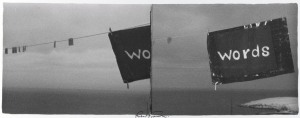
Textual marks for your consumption:


…A decision after examination, a judicial sentence, esp. that of an arbitrator or umpire; the document embodying it….
…To examine a matter and adjudicate upon its merits; to decide, determine, after consideration or deliberation.
The action or fact of flowing in; inflowing, inflow, influx: said of the action of water and other fluids, and of immaterial things conceived of as flowing in. Also concr. flowing matter.
…trans. To exert influence upon, to affect by influence….
Etymology: < French influence (13th cent. in Hatzfeld & Darmesteter) emanation from the stars (also inflow of water; affluence)…
(Oxford English Dictionary)

In the first place, I thank you Madeline Scribes for honoring me with this blogging award – I would think that any blogger is happy to hear that they have influence somewhere, somehow. As concerns its meaning – its effect in ongoing flow – I am thinking that our passing these awards along through the blogosphere is an aspect of recognizing that the world around us matters – that what we encounter continuously throughout our days effects the flow of them. To award such influence must mean that, upon consideration, deliberation, we consider that influence to be of benefit or merit to the flow of our lives. To diminish the function and roles of these eminently reusable and transferable images by querying the authority, justification, compensation or some other arbitrary criteria of significance or import seems to me to miss the point and ideologically dismiss their networked purposes and potentials. I am very honored and very thankful for the effort and gift of recognition and assessment.
That being said – all of these awards (as with any gift) bring responsibilities…This particular badge indicates:

1. What makes you happiest?
developing attachment with my wife and children; inquiring and creating new knowledge.
2. Do you love mountains or oceans more?
mountains
3. What has been a special moment in 2013?
reading has provided millions of them
4. What is your favorite quote?
Today?: “I love quotations because it is a joy to find thoughts one might have, beautifully expressed with much authority by someone recognized wiser than oneself.”
― Marlene Dietrich
5. Do you like yourself?
sometimes
6. Do you stay up until midnight on New Years’ Eve?
rarely
7. Is there something you wish could be done ASAP?
global peace and cooperation
8. What is/was your favorite class in school?
philosophy/social science courses
9. What musical instruments do you / have you try/tried to play?
piano, saxophone, organ, drums, trumpet, harmonica, guitar, voice
10. Anything you wished you would have learned earlier?
the world’s complexity and the constancy of change
11. Do you like to do crafts, drawing or painting?
the effort extends and challenges me uniquely
And, given the reflective caveat above (that ALL we encounter influences us), I pass the award along to these fellow bloggers –
 “Ultimately we find that the cognitive consequences are more about the new meaning systems and activities that occupy our minds than they are just about the character of work with symbols…”
“Whether one form of inscription is more efficient or more easily learned than another (the asserted alphabetic advantage) may be less consequential in its cognitive consequences than if a society has developed a large bureaucracy, literary culture, philosophic tradition, technology, commerce, and educational system using whatever form(s) of inscription it has historically developed”
“The world we know, think about, and act within is saturated by and structured on the texts that travel from place to place and have some durability over the years. The built symbolic world on which we have elaborated new social meanings and relationships and that is the object of our thought and attention as we try to live our lives as successfully as we can within it, in that we find the consequences of literacy.”
-Charles Bazerman, Social Implications of Writing-
art from utterance (orality + literacy)

SERRY
What is said,
This moment,
This word,
Is real, torn, squeezed,
Extruded
From heart and breath
And world.
This sly scribble,
A snake that curves
And curls tight,
Brain deep.
My thoughts
In your voice,
A mask,
A masking.
Laid down,
A trap, cunning gin
Tongue-tying,
Strident
(Though even whispered).
Time bomb.
We sing in chords,
In chorus.
Drum on flesh and earth
Together,
Drum with feet,
Drum with tongues.
Together ululate,
A stampede, a flock.
Syncopate pulse,
We merge.
Never this
String of thought,
Tugged out to tie senses,
Alone, locked on paths
With no cessation.
A spell, an enchanting,
Mazed: ink and electron
Dancing grim tango.
Entangled, entangled
In mind or mouth,
Striving to know escape
Or to know belonging.
The mute language of skies,
The sing of cloud dissolving.
Being nothing
But ourselves
We dive down
And drown.
What i mean is
What eye can mean
View original post 92 more words
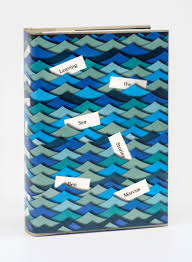
As with bated breath I anticipate the January 7 release of Ben Marcus’ newest collection of stories…I sate myself with these two complex tidbits of his alchemical languaging talents, and invite you to swim in them as well…
 Ben_Marcus_Notes from the Hospital
and
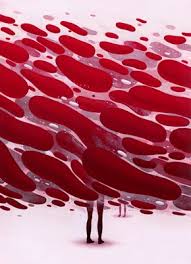

click images for full texts
As I mentioned in yesterday’s post, the notebook I grabbed in case of moments of free creative scribbling contained prior forgotten reflections that carried me into further reflections…recorded below:
 The wonderful thing…
The wonderful thing about writing…
The wonderful thing about writing is that you can always begin. You always face opportunity. BEGIN.
In addition to that…”in other words”…
In other words, you can always start over.
Begin. Start over. Begin. Start over.
It’s a wonderful thing.
Language. like moving your body, there’s a kind of body to inhabit. A world. A way of being. You wake. You move. You remember…by dis-membering.
In other words.
You sleep. As you cease to sleep, you remember. You remember by feeling your limbs, your breath, by seeing, by feeling things (Dismembering). As you dismember (stuffy nose, neck-ache, coffee smell, pain behind the eyes, the need to potty, and so on…) – you also re-member (stitch together, sew, seam, canvas, invent) and become (again). Writing is like this.
Language. A body dismembered – waiting for membering (memory, membership) – invention, use. Beginning. Again.
In other words, like organs instructured in-skinned, awaiting awareness, the fabric of socio-cultural symbology (languaging) lies: in wait: to be animated, enlivened, embodied: woke up.
The substance, the atoms and organs – await. Circulation, enervation, emergence – to live – animate –
to be possible
And become.
In other words, to create, to move, to motivate.
There is no such thing as starting from scratch.
But a scratch is a beginning.
In our bodies, within matter,
in the world – moving gauze, filling quilts,
sensing flesh, donning clothes, filling whispers…
I’m alive. I begin.
The wonderful thing about writing…
…to awake into a way of being.
 p.s… i’m thinking that each begin includes a hope to mean
As I snatched books and items to head to a weekend class I grabbed an old partially used notebook just in case I’d sneak a moment or two to scribble my thoughts. I did, but I also found the following past set of jottings that I catapulted off of for what I wrote next…
They felt like found thoughts that found me again…so I thought I’d share…
 From Old Notebooks
I get a little weary of philosophy. It fascinates and intrigues, has its spectacular, glittering moments – like architecture, hard sciences, and fiction – but with each human activity there can be too much of a good thing. Perhaps it’s the fantasies involved in abstraction, in the “feeling” of figuring things out, or of “making sense” (instead of sensing) – our human super-additives to experience that are also experience themselves – that I, at times, weary of. That eminently falsifiable intuition that everything is made up.
It can be hard work to keep a worldview active. They involve such complexities and details, layer upon layer of biological and logical, illogical and irrational, intuitive – ologies and descriptions, manipulated perceptions and interpretations re-interpreted re-interpreted without ceasing, that a being grows tired. Can grow tired.
Those same realities, capacities, activities are also exponentially inspiring, enervating, exciting – those behaviors of creativity, imagination, and survival – and our weird confounding capacity to think we can observe our perceptions make for a very strange frenzy of energy and productivity…
…our infinitely (perhaps?!) webbed interdependence with our surround provides for mysterious and copious possibilities of activity (material)…all bewildering. Chaos can be so generative. Chaos – so stultifying.
What might we know?
That we are organisms within systems? How would we know that, from within systems?
That we are dynamic organism enmeshed with other dynamic forms of matter and energy, waves and particles, movements? Seems to be our sense of it.
So what?
Alongside and within – in order to be – there is NO way to exist detached or without: to imagine distance, objectivity without imagination capacity of fantasy, illusion, for purposes like logic, mathematics, narratives and codes – DElusion in order to play the games with delusional sincerity – effectively. The delusions are effective, often pragmatic, evolving, so they must also be part of being with/in a myriad of dynamics…
One would hypothesize. Or suppose. Infer, as in fantasize.
All enabled by immersion in symbols, languages, stipulated relations…
…which is what I had set out to consider – immersion in symbols –
the wonder of it
the delusion…
…to follow…
“perhaps our arrival at interpretive conclusions participates in that process and affirms the inescapability of attempting to read the world in an empowered way, even if we are always missing the point”
-Anne McConnell, Approaching Disappearance–
But then there is a reality to writing – the unexpected, the making-up, emergence and invention. I believe in it, in spite of my theories, in spite of acquired knowledge. Something like the terms of paradox. Little matter, much substance (not really).
For fun, let’s say (in the manner of a credo):
that language is a socially constructed resource recursively constituting and innovating meaning potential
‘the notion of meaning potential can be characterized as a heterogeneous totality of knowledge of conventionalized patterns of normatively correct situated verbal behavior which manifests itself and emerges from social practices of a given social community’ (-Mika Lahteenmaki)
that actual meanings are emergent from meaning potentials – are jointly created – recursively and interactively dependent – in their situatedness and perspectivity, unique and irreducible
‘reality works in overt mystery’ (-Macedonio Fernandez, via JL Borges)
that to live ‘is to make all these repetitions coexist in a space in which difference is distributed’ (-Gilles Deleuze)
that living occurs via the ‘conservation of autopoiesis and the conservation of adaptation – a constant and mutual structural coupling of continuous transformations betwixt organisms and environments (envorganisms)’ (-Humberto Maturana, Francisco Varela, Paul Kockelman)
in complexity and meaning, difference and repetition, redundancy and novelty, structures and contingencies, openness and change
Measures of reality (situated and perspectival…partial and relative to) – our As-if-oscope and Toxic spoon-deep. A hurly-burly and chaotic entanglement – intertwingled – adjoined in movements (writing of writing) to use an outdated metaphor: textuality and trace.
that ‘texts record the meanings we make: in words, pictures and deeds…shaping and shaped by our social relationships, politically, as individuals as members of social groups’ (-Jay Lemke)
That no effect is not mutual, recursive, intermingled and intertwined. Life is ambient, writing of writing.
In other words.
that ‘Art is difficult’ (-Viktor Shklovsky) and meanings dialogic/multilogic / multimodal/multivalent (-Mikhail Bakhtin, Gunther Kress, Bruno Latour, semiosis)
Empiricism regarding ourselves is impossible (the situation and perspective necessary are not available) so we rely. i.e. we need one another and beyond. Envorganisms, we. We believe (we could say. I might).
“When we leave each other, we leave.”
A text composed is intertexuality – an Irish monk illuminating a copy; a modern blogger mashing-up – bricolage, meaning – I write, WITH.
To say I instantiate a social practice. It becomes.
Thank you. And welcome.
-a glyph is a hunt for optimism-
Slideshow of works cited:
-please click image for textual content-
Student Magazine of IISER Mohali
Music, Musicology, and related Matters
a photographic pilgrimage to Orthodox Christian monasteries across the continent
Meandering Through a Literary Life
Orthodox Christianity, Culture and Religion, Making the Journey of Faith
Erik Kwakkel blogging about medieval manuscripts
"That's the big what happened."
Networking the complexity community since 1999


 All my Words are Silent