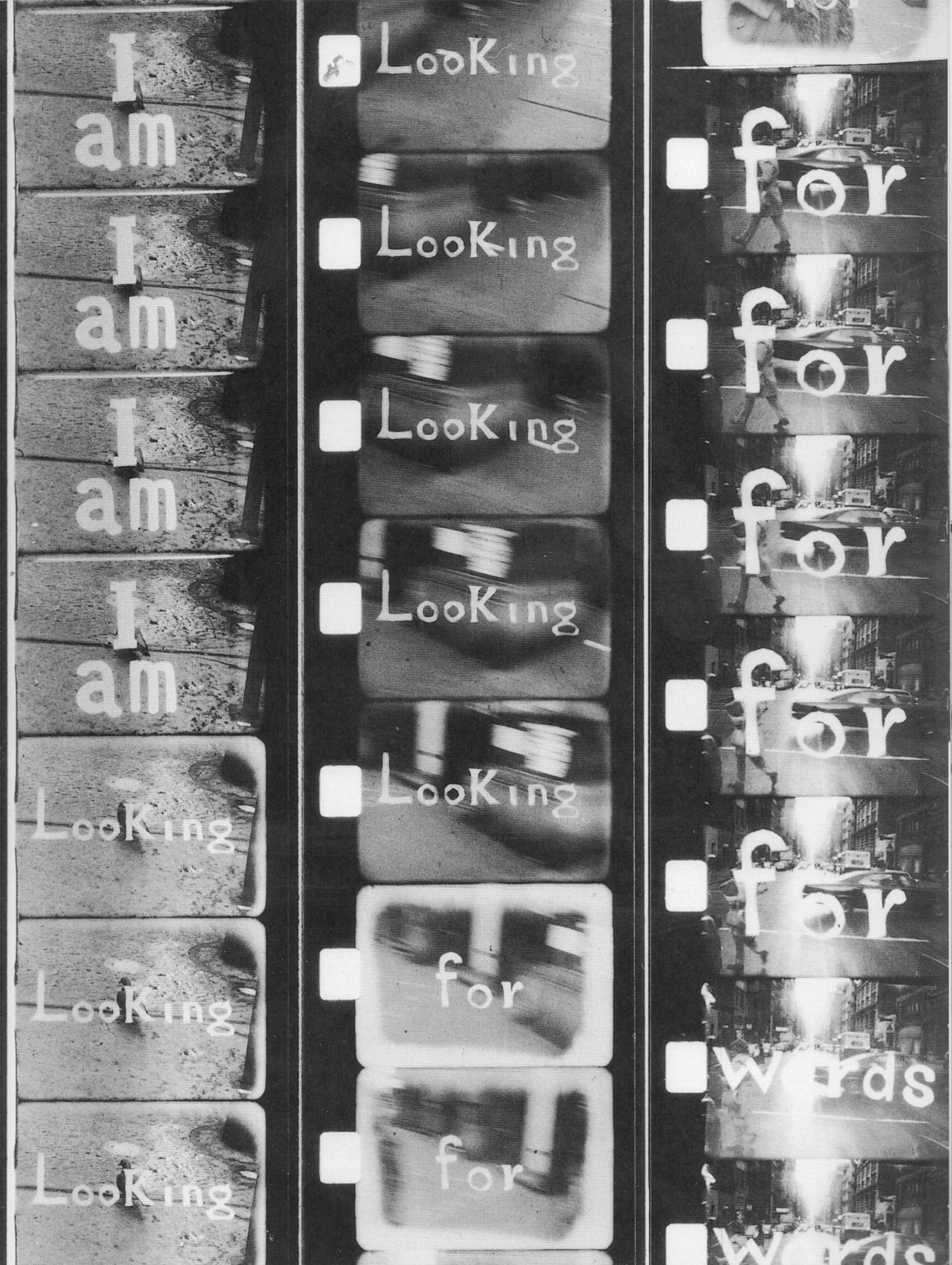
Writing(s)

“Electronic writing will give us a deeper understanding of the instability of texts, of worlds.

Print writing will remind us of our love for the physical, for the sensual world.

Electronic writing shall inspire magic.  Print writing shall inspire magic.  Ways to heal.”

-Carole Maso, Break Every Rule-

Afterwords…more words : up with word(s)

After Words…More Words

UP WITH WORD(S)

and any art, after all the other things if may be about, is fundamentally about its medium”

-Ronald Sukenick-

In conclusion?

Perhaps this entire exercise, this simplistic simplification of what I think I might know about the medium of languaging (a mystery to me) has been undertaken and written for myself alone. Perhaps it is comprised of the sounds of sobbing in a dark little attic, me searching to find a “speech fellowship” in this world, in my life experience. I can guarantee to you that it is an experiment in assaulting frontiers, unknowns, and deep abiding fears of mine: that I don’t know what I’m doing, that my languagings aren’t effective, that I don’t relate/co-relate to others well, that my writings are woefully inadequate to experience and the world, that my life doesn’t mean anything, that I and my words don’t matter.

I have hopes beyond these things though.

My hopes, I believe, in part have been to raise or renew an awareness of the mysterious tangle of being languaging engages us in – our realities. And in part to encourage creativity in our usage of language(s), and an openness to its using us, in order for the medium itself to become, and for us to be aware of our languaging as an experiencing, itself. Not necessarily “about” experiences (though it often accomplishes this as well), nor inherently “about” anything “else” – but languaging as activity of being human.

That a compulsion to use language as art, is a movement toward relation and intimacy…to utilize what language(s) open to us, get funky with it (exercise agency), constructing new common places, possible fields, toward more completeness of overlapping or shared experiencing. That our use and experience of languaging is our shared experience – where we meet – without a necessity of sharing referrals or signifieds behind or beyond the words themselves. Meetings in/at/through the artifacts of languaging.

It is my opinion that this is what works of art have always done, regardless of medium, content or imagery: taken available matter, identifiable to us all and humanly acted in and with it, composing it in a manner that becomes its own unique place of experiencing and being.

This often requires undoing habitual ways of using the mediums of living in order that we perceive the human and the medium again, afresh, and are thereby enabled to engage all matters/persons participant directly as experiencing. This may help explain why art is often confounding or unsettling at first…becoming new and unique experiences…as we always fear the unknown swarm of reality until we risk our personalities against/toward/with it.

I want to encourage you, in both expression and encounter, to take more into account, to open against your fears, to begin to engage the materials of experience, the ubiquity of our borderlands, frames and “frontiers” with courage, existing at the thresholds that you always necessarily are, but not only craving the safety that comes from seeking what you know, are accustomed to, have familiarity or agreement with, nor for what it might “mean” or what might lie “behind” it or that it might be “about,” but learning and challenging yourself to meet it directly – to look at it, to relate openly and expectantly.

Moving you to construct in your own surrounds places unique to yourself and available to your world – welcoming or offering others opportunities and possibilities to join. To become.

To continually recommence and expand…our being.

Closure is misanthropic

-Lyn Hejinian-


instants of i…

i” for instance

(iota)

ABCDEFGHIJKLMNOPQURSTUVWXYZ

And how was it I acquired this alphabet among so many others? Broken and crossed-out from the start, I adapted myself, twisted and stretched, contorted and shaped to become something more, something other than my single digit of a mark. Stumbling about all through the letters I reached, bowing this way and that, even circling round on myself exposing the emptiness inside, the only thing noteworthy surrounding me or attached to me from outside, where reality lies. Pleading and spreading my arms, split apart, right up to my crucified and zig-zagged zero-I-ng end.


fears…more fear…no fear(s)?

My Fears: My Need

I DO. I UNDO. I REDO

What deal must I strike in order to be published by you? What pose, bargain, stance, is it I must make with you now?…

you dance so good, you dance so good, you dance so good…???”

language is still a bunch of sturdy, glittering charms in the astonished hand.

A utopia of possibility. A utopia of choice.”

-Carole Maso-

One of the funny things about experimentalism in regard to language is that most of it has not been done yet”

-Donald Barthelme-

“I am huddled around the fire of the alphabet, still”

-Carole Maso-

Again, doubt again. Having never been taken, accepted, acknowledged even, by a publisher, by the system of makers of books for the world, for others, after all of these years and millions of words and thousands of hours, doubt again. Fear.

I undo.

What is it we want of language? Need? And what needs language do? Be? And where is it that I fail?

And you dance, you dance, you dance (but apparently no “so good”).

I undo.

Having done so much.

I do. In a needing language needing body needing language another body. To incorporate. This body, these needs, what surrounds and infests it, needing embodiment. “Everything happens and everything that happens is part of the story” (Ronald Sukenick). I thought. I do.

I undo.

Because apparently not. Apparently what is needed, what needs languaging in this world, this one my body needs in, is needed in, does not incorporate my languaging as what is needed.

I undo.

I unravel with questions, with doubts. Perhaps I was wrong? I am wrong. I fear. What needs in me has to search its needs meeting. But it finds, I do.

I do.

My language needs language finds every day – E. M. Cioran, Samuel Beckett, Macedonio Fernandez, Ronald Sukenick, Franz Kafka, Franz Kline, Raymond Federman, the great Quixote, Laurence Sterne, Gertrude Stein, W. S. Merwin, Helene Cixous, William Bronk, Edmond Jabes, Clarice Lispector, Jorge L Borges, Lynne Tillman, Anne Carson, Nelly Sachs, Cees Nooteboom, Robert Frank, Alberto Giacometti, Emily Mason, M. M. Bakhtin, Jacques Derrida, Ludwig Wittgenstein, Thomas Bernhard, Paul Celan, Arkadii Dragomoshchenko, Jean-Luc Nancy, Janet Kaufmann…

on, on, on…

languaging needing languaging bodies languaging

I do.

I undo.

I redo.

Those “everything that happens” Carole Maso, Louise Bourgeois, Jacques Roubaud, Georgi Gospodinov, Julio Cortazar, Georges Perec, not abstracted, dissimilated, fantasized into shapes unlike our bodies, unlike our lives, with beginnings, middles, ends, developments and growths, tidiness and causes with effects, not like those “parts,” but “everything” the body needs, languaging, chaos and order, present filled with pasts opening into futures, “everything happens” continuing…

I redo.

Within moments I can feel unreality. In magazines, movies, in TV and books, in art. My body needs reality, realization, not escape, not lies and illusions, it is already made of them, honestly.

Beings needs languaging needs being.

I redo.

Hurt and joy, fear and calm, love and lack, pleasure and harm.

Not redemption, not heroes and heroines, not rights and wrongs or rites and songs. Not reasons or religions, but relations between, between true and false, between black and white, noise and quiet, living and dying, myself and my spouse and my children,

the “ethos of ambiguity” (Ilan Stavans), the dim and the grey-blue-black (Beckett), the marshes and steep climbs…

I do.

I undo.

I redo.

My body is experiencing, and to know it, feel it, sense it, be it, I need stories, I am looking for its languaging and I find it or I make it, I do, undo and redo.

If the codifying systems of bodies and languages do not share this body’s needs, then its needs are unique, but still met, what joy if the needs met needs might be shared.

I do.

I undo.

I redo.

The stairwells lead up and down, inside out, toward or away, each always and also their reverse, inverse, “other” – languaging bodies languaging…

I climb, I descend. I pass in and out, I move. I seek and find seeking,

do. undo. redo.

closure is misanthropic”

-Lyn Hejinian-
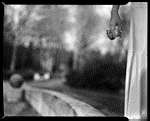
How perfect is that?

photo by Robert Frank

Good ol’ Franz

“The variety of views that one may have, say, of an apple: the view of the small boy who has to crane his neck for a glimpse of the apple on the table, and the view of the master of the house who picks up the apple and hands it to a guest.”

-Kafka, Zurau Aphorisms

photo by Viggo Mortensen

Taking the word(s) further…

Part the Ninth: At the Thresholds: Afraid

the torture of meaning is the vain and interminable agreement between what there is, on the one hand,

and ordinary language, on the other”

-Alain Badiou-

Fear is the original and basic feeling of man; from fear everything is explicable”

-Friedrich Nietzsche-

Fear is the basic condition, and there are all kinds of reasons why we’re so afraid.

But the fact of the matter is, is that, is that the job we’re here to do is to learn how to live in a way that we’re not terrified all the time”

-David Foster Wallace-

Only reality has frightening us as its goal”

-Helene Cixous-

We produce imaginary causes because an explanation of a thing helps to alleviate the fear of it”

-H.L. Hix-

Our culture likes to think of everything as true or false – this is a way it has of fending off enormous realms of experience that make us feel uneasy, and rightly so.

The unknown must be explained and explained until it is explained away and we don’t have to be afraid anymore.

We want to ‘understand’ everything…such is the hysterical strength of our commitment to statistics…

the unknown being the fertile medium in which we live…”

-Ronald Sukenick-

Writing is an assault on the frontiers…”

-Franz Kafka-

to be wrenched from anonymity…”

-J.R. Firth-

Of course it is entirely possible that it is not long-reflected and pondered hopelessness that halts us, not our sense of finitude nor our ennui in the face of things impossible. It is possible that it is not, after all, our angst and frustration at being unable to adequately match our experiences to our languaging, or to cover our borders and fill our betweens with equally accessible, mutually comprehensible signs and gestures, so to share,

but rather a deep and enormous fear of what/who/when/how might emerge there – in that nowhere-that-exists interstice between ourselves and ourselves, ourselves and our world, ourselves and the others that we line with signs and symbols.

That, of one thing, if one thing only (if) we are certain without a doubt…that is: that we are absolutely uncertain…that “within” and with-out we are totally, utterly immersed in unknowns.

Fear of prodding, at guessing, at moving, at assaying our limits (where we expand) – our embodiment, our entity, of realizing that all living is engagement fundamentally, with mystery, with uncertainty, with chaos, that hesitates us, that confines.

To sign these deepest limbic passions is to open them up to all that threatens and grows/strengthens us. To gesture, to sound, to question or proclaim, to posit – these each call the piranhas of difference, expose the inadequacies of our surmisings, offer matter to be broken, perceptions contradicted and undone.

Acting, as a human, is the risk of being. The medium our lives are fueled by and exist in is unknown to us. Those among us who risk, who in courage or desperation try the world and its objects, others and the self, immediately and fragile-ly expose themselves, in “weakness” to being wrong. And it is just so that any advance in our feeling of comfort or safety, predictability or workable hypotheses or theories of reality in living have come about: “every advance in science, such as quantum theory, involves a crisis of communication” (Stuart Chase).

Somewhere reality (a workable correlation between experience and theories about it) doesn’t jibe, and those willing to risk try something else, something new, something different.

For an individual human entity – the entirety of perceptual capacities is FRONTIER. Every moment tests something learned or thought, overheard or felt, everything is every instant in question, except for that very circumstance: limitation/ uncertainty.

the operation of imagination in life is more significant than its operation in or in relation to works of art…the chief problems of any artist, as of anyone, are the problems of the normal and that he needs, in order to solve them, everything that the imagination has to give” (Ronald Sukenick).


So we sign, sign, gesture, move. Listen, speak, touch, look, taste and feel in order to find out…to be wrenched from the chaotic void and our anonymity…to learn our bodies and the world around us…and out pathways and passagings of the thresholds are (indeed can only and must needs be) “languagings” –

From breathing to behaviors, conceptual frameworks to cognizing feelings of hunger, we are porously engaged with everything within and surrounding us. “To learn how to live in a way that we’re not terrified all the time” by the reality of uncertainty, is to recognize the essential relatedness that is a fact (as far as we can surmise) of our existing and to break out and welcome in the “fertile medium” everything is.

Imagining causes, attempting descriptions, ill-seeing and ill-saying all help to “alleviate the fear of it” and are all of them miscommunications, opportunities, that is, to engage reality more fully. Explanation, it appears, will always be unprovable theory, but it is an assault on the frontiers and somehow it helps and can help us.

To experiment experiences of our medium(s) moves us, and moves us along, as a species, a personality, a participant, amidst grave setbacks (certainly),

yet…

Additional Addenda…approaching an end…

Addenda…Creative Languaging

Here I would like to insert some thoughts and observations regarding the import and opportunities of artistic or literary, making-up, collaging, discombobulating, rearranging “ordinary” languaging. If “words are congenitally conceptual,” and I believe they are – that fact alone being one of the fiercest tractions to work through and past in utilizing language as a medium for art – as objects in the world, rather than symbols standing in for (or between or over) objects in the world – then to arrange them or copulate them between languages or existent terms in a language, etc…is a way to bring the word and the activity of languaging toward experience in itself. Being creative with existent languaging systems means often turning accepted uses or meanings back on themselves, undoing “ordinary” uses and definitions in order that the words might be substances of a medium (like paint or clay for plastic arts, the body for dance, shapes and frames and objects for photography, and so on) that then can be its own artifact – its own place of meeting for a community of persons – a field for creating “meaning” in the world.

Ronald Sukenick and kin repeatedly direct us to view novels and poems not as “problems to figure out” but as “experiences to respond to.” Kafka suggested that “language must not be used as a means but must be experienced, suffered.” Given the flexibility and inaccuracies, polysystemic and multivalent capacities and references of existing language systems, to craft new paths of language, tweak or invite new usages provides us with new ranges of possibilities for direct relations. In a way, using language “novelistically” (ever-new) intends and evinces the making of new “speech fellowships” – occasions for overlapping our experiences – in each new reality of speaking, saying, inscribing.

To draw attention to letters and words as things-in-themselves rather than simply signs-referring-to-things-in-themselves, opens up vast territories of potentiality for the meetings and relations of human beings across languaging-systems, cultural contexts, professional or social standings, psychophysiological realities and so on…meeting in the words, the new words, the repurposed words, revised and invented as new objects in the world – artifacts – for us to engage and encounter together.

I would argue that this is precisely what great literature does (and a principal criteria for “greatness” in literature) – serves as a meeting point for the widest range of humans to deepen and expand their engagement with themselves and the world. The “speech fellowship” aspect might help to explain why some persons respond more strongly to particular authors or styles of languaging, but those works which are great, which renew, humans will recognize (given time) from any point of view.

This, I believe, is a challenge to all humans to attend to their languaging – viewing it as an activity much like sex or eating, work or play, that we do, indeed must do, in order to survive, but may also take pleasure and care in – that it might enrich and increase our moments of being alive – and create opportunities for more and more meaning – which occurs when we actualize and accentuate our interrelatedness – the fact of our being.

Well, there’s that…

On another timbre

OUR BECOMING, pt. 1

Presence Sounds Like Love


It would begin with a sound.

If it is to be, it would begin in sound. For sound is the nearest relative of presence, presence to that which exists, and all of it full and invisible.

She spoke.

She mouthed, and her voice made no sound.

But he heard. And he helped, only from much too far away. So far removed it couldn’t register. As empty as can be, sound still requires space, think “silence.”

They were silent and distant, but echoes arrived in his ears on the winds and through wires, his sister, his landscape, his past and the rains.

Might he hear who he’d seen long before, across so many miles? The machines, said his sibling, those designs against timing and space, they can do it, can take sound beyond its own body, beyond its own place, they unravel and ravel again, their logic like that of play, she said.

He tried. He failed. He pressed stop.

She replied.

Her lips moved but produced not a sound. Just an echo, he heard and translated, attached to the waves flowing back to her, so familiar, familiar enough to engage, engaging in her recognition, what seemed a reflection of her.

He flowed in and she spoke and they swam through the wires in their sleep.

And he wrote. In cursive, presenting the shape of the waves while charting their flow, susurration, their absence, the words were transported as whispers.

And she sensed, as did he, empty sounds full of each, making music. Larynxing tones of the sea.

Reflecto Numero Ocho

Pt. 8: Mean What You Say What You Mean

Meaning, the torture of meaning, is the vain and interminable agreement between what there is,

on the one hand, and ordinary language, on the other – between ‘well-seeing’ and ‘well-saying.’

The agreement is such that it is not even possible to decide if it is commanded by language

or prescribed by being”

-Alain Badiou-

What makes a word is its meaning”

-V. N. Volosinov-

As a general rule – each word when used in a new context is a new word”

-J. R. Firth-

A new meaning is the equivalent of a new word

The real is only the base. But it is the base.”

-Wallace Stevens-

I am supposing that it could be inferred from the previous section that since we are implicitly unable to adequate our total experience in language, and that a direct transference of our experience in and through language is not possible; in other words, that our presentations of our experience in language are inherently ill-seen and ill-said efforts; that dipping into the language palette as a member of the human community equals an action or activity of relating rather than an accurate substantive transaction…

that it might not, in fact, matter what signs or gestures are utilized, but merely participating in the activity itself.

A skeptical view, perhaps, that, if all signs are multiplicitous (like all perceptions) – both overly general and inanely individualized – simply using language accomplishes its meaning, not what language(s) is/are used?

Another way of saying – is it possible to effectively mean something, or to translate substantively, matter, in language…communicating content instead of relations?

Common-sensically writing, we are, when speaking, utilizing billions of units of accrued and generally agreed-upon ranges of “meaning” or indications, directions, references and significations attached to these kernels of sound and expression…”words are congenitally conceptual” (Jerome Klinkowitz).

de Saussure might have signed these palettes as langue – the fund of sign-systems in parlay at any given time among certain social systems of persons – the cultural clime, professional environments, demographical contexts of semiotic webs. But accounting for the psychophysiological uniqueness of individual entities in these systems results in a furthering texture of usages, an explosive ganglia of intentions and purposes and desires for each occasion of a gestural item or practice of signs.

Which leaves all manner of matter of languaging approximate. Every time.

If involvement in languaging at its essence is relational, the primary or ontological “meaning” of the fact of languaging is given: languaging is a human system of engagement and encounter. That means a lot already, as a purposive human activity. Beyond that, we demonstrate a need that that fundamental exhibition of relatedness have experiential-personal-specific trans-actional effect.

This is where each palate or hand operating with the ocean of signs always affects and, at its fullest, effects the language(s) utilized…

I’m tempted to say that the languaging experience, whether that experience is of language itself, or is using language to stand in or refer for some other content (feelings, ideas, messages, objects, etc) is an activity of what we “mean” by “meaning” at its core. If by “meaning” we sign something like an experience or sensation plus the rationality of awareness added to agreement, that is, gesturing some aspect of reality in to a field shared in common, therefore a capacity of understanding, a co-relation of questioning or co-mprehension of experiences, then to constantly increase our apprehension of available sign systems and continually developing our facility of utilizing (organizing, selecting and incorporating) this universe of signs seems critical and imperative.

For the function of languaging in humanity it seems crucial, given its relational reality, that although perhaps “any old sign” will arbitrarily “do,” in the fullness of possibles our closeness to well-seen/well-said satisfaction will be in proportion to each entity’s concern and acquisition of the greatest possible breadth and depth of shared sign-systems, and locating or languaging into what J.R. Firth has called “speech fellowships” – something referring to collections of humans sharing the greatest overlappings of sign-systems and contexts they generate/are generated by.

within speech fellowships a speaker is phonetically and verbally content because when he speaks to one of his fellows he is also speaking to himself. That can be the most deeply satisfying form of self-expression” (J. R. Firth)


“And to meet: in my sense, exceeds the power of feeling, however tender, and of bodily motions, however expert” (Samuel Beckett). This harmony that may occur between happenings and their languagings into a shared system, wrenches each inhabitant of the “speech activity” away from anonymity…provokes “meaning” I believe. As does shared feeling (or an overlap of sensory/sensational happenings among persons) or shared movements and embodiments.

This drives the urge of ill-seeing ill-saying toward better-seeing better-saying, the compulsion to recommence and recommence the attempts…extending/expanding utilization and aptitude of sounds and gestures available and seeking “fellows” with similar or overlapping apprehension of languaging-systems…to co-rrelate and co-rrespond, ask and answer toward…to relate…to “mean…”