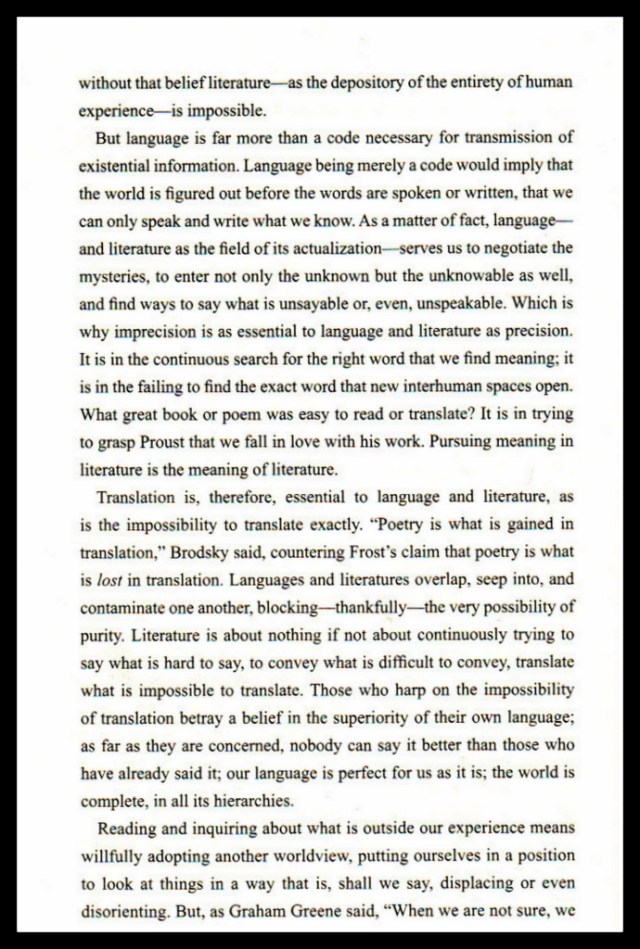
Continuation of the Gift that Explodes: In Which the Wood is Entered, Entering

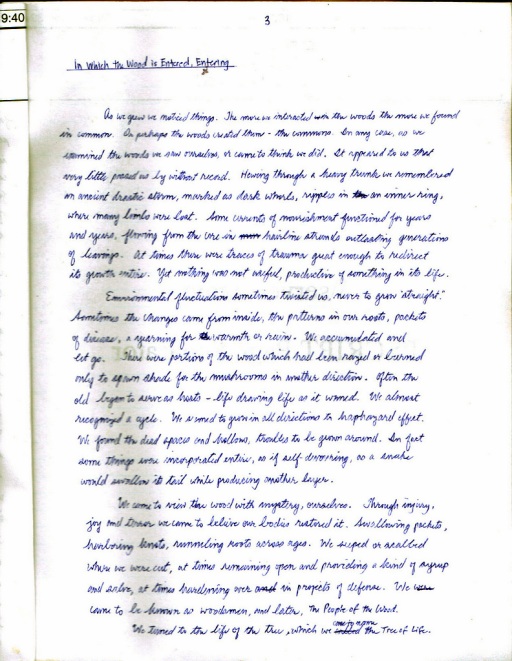
Here is page 3 of my blank-book daughter-gift “The Notebook” (click here for parts 1 and 2)
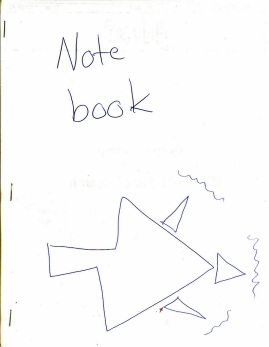
Notebook - Ida


Notebook 3

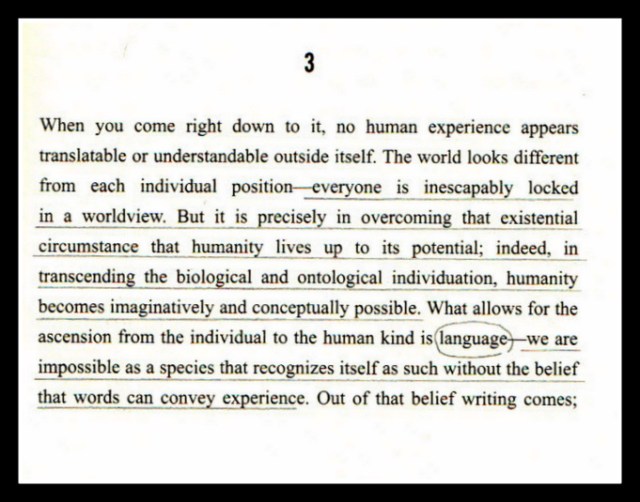
and the typewritten text:

3

In Which the Wood is Entered, Entering

As we grew we noticed things.  The more we interacted in the woods, the more we found in common.  Or perhaps the woods created them – our commons.  In any case, as we examined the woods we came to see ourselves, or began to think we did.  It appeared to us that very little passed us by without record.  Hewing through a heavy trunk we remembered an ancient drastic storm, here marked as darkened whorls, ripples in an inner ring, where many limbs were lost.  Currents of nourishment functioned over years and years, flowing from the core in hairline strands, outlasting generations of leaving.  At times there were traces of trauma strong enough to redirect the growth entire.  Yet nothing was not useful, productive of something in its life.

Environmental fluctuation sometimes twisted us, never to grow “straight.”  Sometimes the changes came from inside – the patterns of our roots, or pockets of dis-ease, a particular yearning for warmth or rain.  We accumulated, and let go.  There were portions of the wood which had been razed or burned, only to spawn shade for mushrooms and ferns in some other direction.  Often the old laid down to serve as hosts – life drawing life as it waned.  We almost recognized a cycle.  We seemed to grow in all directions at once, to haphazard effect.  We found dead spaces and hollows, troubles to be grown around.  In fact some things were incorporated entire, as if a self-devouring, like a snake would swallow its tail if it could, all the while producing another layer.

We came to view the wood with mystery, ourselves.  Through injury, joy and terror we believed our bodies re-stored it.  Swallowing pockets, harboring knots, runneling roots across ages.  We seeped or scabbed where we were cut, at times remaining open and leaking a kind of syrup or salve, at times hardening over in projects of defense.  We began to be known as “the woodsmen,” and, later, The People of the Wood.

We were tuned to the life of the tree, which we revered as The Tree of Life.
 

Writing the Prompts

All that Remains (inspired by Josh Kramer, for Simon H. Lilly)

In the silence that becomes now, it was undeniably clear – there had been things we considered precious.  Recalling faces, moments, landscapes.  Evenings.  Not like nights or day, but poignant equilibria.  These felt like memories, or nostalgia, even tinged with griefs or longings, but mother said the past lacks such power – that we were feeling presently.  Simon says.  Says “grasping after full resonances” by losing them, turning them to language, participant only always in passing.  Says “left side.”  “Right side.”  “Simon says.”  I, at least remember.  Forgetting, and then the buckled alarm.  The tacking it on at the end.  Too lately.  But not quite.  So that all that remained was the grasping.

please feel free to create responses with this music – visual or verbal or otherwise

Intro to the Gift that Explodes

photo 1
daughter Ida – aged 8

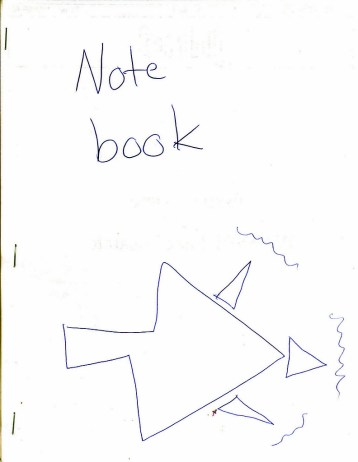
Holidays have a way of obstructing and crowding out creative time for me.  Oh we find ways to express and produce – Holly’s making candles with all sorts of found objects downstairs as I type this, paper snowflakes, new stories and pictures from the children, new compositions sounding throughout the house, but for the snail’s pace of reading/writing processing/producing I prefer…well… I often find the compounding of anxiety-inducing public spaces and family gatherings, people and lights and jangling music and cheer, busying trips and spendings and time limits to all but obliterate my ability to bring anything out of the scraps.  Last Saturday, my daughter Ida, who is forever cabbaging papers, pens, markers and tape anywhere she can find them, metamorphosing them into handmade notebooks, letters, scripts and stories to read and share with her lucky family and friends, handed me the following with the message: “this is for you.”  So today, amid projects and budgets and organizings and so forth…when I was just about to write off the next two weeks for personal creativity…I grabbed this and took it to my desk…

Notebook - Ida


…and so it begins…

Notebook - Ida2


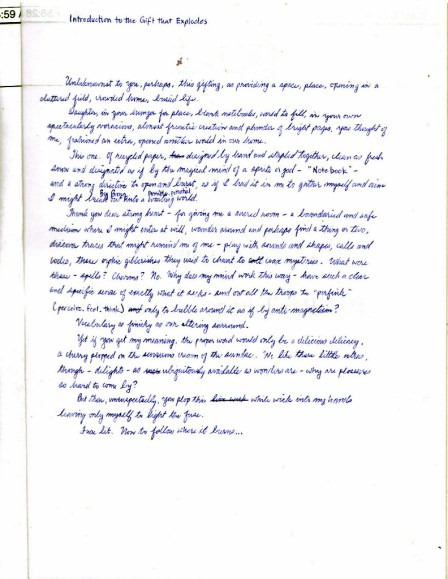
In case you can’t read my mumbling handwriting – here is a typed copy: (have to click a couple of times for some reason?!)

Introduction to the Gift that Explodes

Essential Ignorance : Hypotheses : Possible Worlds

“As I was saying perhaps ignorance is the key.  We all of course know what’s going to happen next.

Only artists don’t know what’s going to happen next a quirk of ignorance they share with history and the weather.

This is the key quirk of the quirky mind that produces the work of the artist…

…Stories don’t have reasons.

Or if they have them they have them after the fact like the weather.

Then the reasons become part of the story.  

The mind is like the weather and this is the reason that everyone likes a good story.”

-Ronald Sukenick-

“For, in effect, the humanities have as their implicit agenda the cultivation of hypotheses, the art of hypothesis generating.

It is in hypothesis generating (rather than in hypothesis falsification) that one cultivates multiple perspectives and possible worlds to match the requirements of those perspectives…

…the language of evocation substitutes metaphors for both given and new, leaving it somewhat ambiguous what they are substitutes for…

the ‘relative indeterminacy of a text’ that ‘allows a spectrum of actualizations.’

And so ‘literary texts initiate ‘performances’ of meaning rather than actually formulating meanings themselves.’

And that is what is at the core of literary narrative as a speech act: an utterance or a text whose intention is to initiate and guide a search for meanings among a spectrum of possible meanings…

…the author’s act of creating a narrative of a particular kind and in a particular form is not to evoke a standard reaction but to recruit whatever is most appropriate and emotionally lively in the reader’s repertory…

…set forth subjunctively to allow them to be rewritten by the reader, rewritten so as to allow play for the reader’s imagination.”

-Jerome Bruner-

ELSE – Aziff : Prompted by Comments

(a continuation of Else  – Erasure : Beginnings)

Aziff : Prompted by Comments

Once begun, and begun in You-ness, though perhaps not – indeed probably not in any way! – in Newness, you take leave in the middle.  Or if not the middle of this brief engagement, somewhere, alas, in its midst, you set out.

“The place I really have to get to is a place I must already be at now” Ludwig Wittgenstein said, which you almost remember, and in any case you think of now, triggered by its inscription among the paper scraps scattered over your writing desk.

Already you’re sick of it.  The You-ness you hijacked in hopes of Newness.  Your playabout with something Else.  Attempting to trip or trick yourself into some place else, somewhere other than where you “must already be at now” – the Else you set about pursuing, by dissecting and deconstructing it on your desk.

You come up short.  Feel foiled.  A stray comment from some other immediately exposing a cheap and shoddy sleight-of-hand you yourself could not perceive.  The danger of others, of else.  The dangers of self-encounter in dialogue.

In any case, you create, or you go on making with all that is already tired and old.  Namely, yourself, and whatever is at your easy disposal, fearing in advance what might be required to move.  Toward what could be New, into the unknown of the Else.

You tackle the pieces, a limited arena of shuffled scraps – quotations, emotions, experiences – in hopes a pattern emerges, an inventive cohesion.  Unlikely, or forced.  The banality of meaning – a fundamentalist smallness of purposes or cause.  You vomit.

It’s a discomfort – as if from some trauma stored throughout your body and brain – a fear of what you cannot identify, having experienced it (“suffered” is how you put it, and “endured”) as an unspecified complexity of connectivities too slender to hold or locate – the incomprehensible self – that atomistic and invisible dot-point in a universe of flickering.

Whereas you are able to imagine others and else as substantial – entities with agency – in all the vastness.  What you can observe with less participation, seeming more real to you, somehow.

Else – you just get lost in the dissection.  Labyrinthine traces of fact upon facts, ad nauseum infinitum…  The searching for cause and impact in a loop within a web caught in a net stranded among strands inextricably interlocuted in endless structures and systems imperfectly operational.  And so forth, you consider the sources.  Always coming up missing or bereft.

Cease.  And breathe like a statue.  It doesn’t.  You don’t.  Else.

Not what you thought you were looking for.

New probably just meaning something different, you repeat yourself, something Other, something Else.

You set out.

ELSE – Erasure : Beginning

Erasure

It will have to be something new, you think to yourself, beginning.  What’s been done before is already present.  All the brief and poignant things gathered.  Already processed and past-eurized.

Heroes are made, families described.  Every aberration.  Otherwise we wouldn’t know, would we?  So much sex and images, and the inner lives of children.  Histories and sciences, and the nothing that affords, beyond.

New probably just means different, you say, using old words already.  If it’s a word it’s definitely been done.  Or an action.  Dreams and thinking too.  Which leaves you with little, if not naught.

You once composed a text of tinntinnabuli – it was fascinating to you.  Also a fugue of sorts, even a classical symphony, all in words, one in the twelve-tone scale.  Little matter with a missing orchestra.  Fit snugly into your drawers.

The series of anthropomorphic fruit.  What they felt and how they perceived, from rind to seed.  Even the veins in their fleshes, bruises, and each distinct and delicious juice.  Cycles of life, inevitability of change, sprout to rot.

Who cares?

Yet it’s what you do.  Identify moments and make them stories to exist.  Wrapped in the tangles of problems, sentence-wriggle-thread your way elsewhere.  A place that looks like knowledge.  And sometimes feels.

Like mathematicians with their unknown variables – it’s the ocean you swim, an amoeba almost.

You sought after mastery but found it banal.  Meaning didn’t make any sense.  You turned to hypotheses, but not the wilder the better.  You had to squeeze through gaps, hoping for openings.  A friend called it spelunking, and it did seem dank and cold and blind.  Often.

Restatement is not what you’re after.  Nor refining.  If thinking is digestion, you order an autopsy and strange foreign parts.  Intake as transplant.

Distinctive takes a while, but quickly regurgitates style, and you’re back to remarking, remembering…remorse.

Today you’re dissecting an Else.  Not again, or if\then, or more, but the Else.  What else? you say.  You don’t know.  But it lies here dismembered, deconstructed on your desk.  It’s pretty messy.  The pieces aren’t going to fit, even though you’ve studied jigsaws and puzzles.  Inventing new ones feels like metaphor or code, a twiddling thumb to decipher, something no one has time for even if they wish they did.

It will have to be something new to count as satisfaction, you consider.  And you take up the large eraser.

Inscribing Beauty : A Portrait of My Wife

On Beauty: A Portrait of My Wife

If I don’t write it, what reality does it possess?  What substance or content are a memory or vision?  Sound?  Fleeting concatenations – experiences.  Which is why I ask.  Like Dante or Cervantes, Homer or Herodotus, does not here a duty lie?

If no one inscribes remarkable things – they will not be remarked, thus no further remarkable.  But is writing a re-mark?  Are we indeed marked by perceptions – jumbled, edited and collated into what we call experience – do they leave some discernible trace like magnets in the guts of a computing machine – that might be recalled, rebooted, reformatted and marked again?  Or is that creation?  New traces born of the old?  What similarity – what identity – obtains?

If the scribe exists to codify – to translate vanishing occurrences into a relatively more stable domain – how should he select?  What criteria?  Whose testimony?  Should he, as artists of old, gather the evidence and forge, in his matter of medium, some combinatory new myth?  Take account of as many angles of appearance or observation as he is able, to contain and collage them into space like Cubists?

We call it “re-presentation” but we are crafting something new, something else.  The eye is not a camera.  Seeing, hearing, what we taste and feel are highly selective pro-activities – never catching a solid snippet or observing still life.  We develop according to what we expect.  Intuitive anticipation.

The façade of a building – you’ve already supplied it with volume.  Unseen.  The photo of your child – gains dimension and sound, perhaps even smell and sense.  Context invested.  Invented.  We cannot stop the alchemy from going on.  Nor would we really want to.  And yet – what might we preserve?

Suggestions?

This began as a portrait of my wife.  An impossible thing.  It will end still farther from its goal.  I meant to remark what has marked me profoundly, filled me of scars and traces, redirected my nerves and my blood, and I am left with the unexpressed, and these scribbled words of a man.

“What does it mean, to know it and not be able to say it?”

-Ludwig Wittgenstein-

Unspoken Fragments

Through someone else’s blog award list I recently discovered The Dream Journal Today – a remarkable blog straightforwardly recounting dreams.  It has stimulated me to pay more attention to what my brain is doing in its “off-hours.”  The post regarding my longing for knowledge of my father is such a result, as is the following post, gathered through the past night.  I have the hunch my psychophysiology works over emotion when I’m out…something my waking mind deters.  Whatever the case, I have found the ritual to be as intriguing as working with photo-prompts to dislodge other-conscious concerns, and recommend it to writers everywhere as a kind of exercise in translation.

Thrown on my back as from a jungle gym – panicked in the way of breath-smashed bodies.  Helpless then, disempowered.

Lying next to you in our warm nest of bed, nose and right eye microscopically near the flesh of your chest – the sharp distinction of its tattoo’s inky night and the blemishless cream covering your major pectorals.

I see it falling, the exploding crush of a thick plate of glass the size of a small wall and maybe four inches thick – variegated and stained – slicing and dicing my face with the stories you don’t share.

The night is full of phrases.  Intimacies shredded by the unspoken, the secrets.  A literal compaction of my face in bloodied fragments – the world a shattered windshield.

Sleeping fitfully you deliver direct language through the dark.  “This is wrong and this is wrong and this is wrong…with you.”  I don’t remember details, only that I’m broken like a vase of porcelain on the floor of an empty manor.

The decompression and drainage, the fracturing damage of all you hold apart.  Discommunication.  What is withheld.  The feeling of what happens when I supply the captions to your silence.

more_fractured_light_by_thescreamingid

“What is fiction after all, if not a kind of purposeful dreaming?”

-Jonathan Franzen-

Words Living

Aleksandr Hemon - Best European Fiction 2013

Hemon2

“When we are not sure, we are most alive”

-Graham Greene-

Voices of the Book of the Dead & Vitality

I have to agree that one major thing I have never been able either to tell when talking with others, nor explicate when trying to share – about writing, the activity – is the pleasure.  For me, if I can move my experience of the world into language and there let language create a new experience with world for me, whether I’m miserable or joyous, in tedium or ennervated, things feel alright with the universe.  Sometimes even if I’m just drawing letters onto paper, words or not, phrases or not, discernable meaning or not – I still feel fine.  But then, if there seems like a resonant flow – if the language available and the experience felt engage recursively – there truly IS nothing quite like it in my experience of life.  David Foster Wallace says it this way, and I’ve heard similar attempts come out of my mouth:

“When I discovered writing I discovered a thing that gave me a combination of fulfillment (moral/aesthetic/existential/etc.) and near-genital pleasure I’d not dared to hope for from anything”

that rang exactly true for me….and…

“when i’d sit down and look up and it would be hours later and there’d be this mess of filled-up notebook paper and I just felt wrung out and well-fucked and, well, blessed.”

I probably wouldn’t blog that term (“blessed” or “f*@ked”), but there it is, and again, it does come as close as I can think to that satisfied, dizzying, emptied loose feeling that comes from a safe and open, intense and releasing session of writing.  I am thinking that the words “combination” and “pleasure” and “fulfillment” do the most to describe the process and experience of experimenting and experiencing in language for me.  And it is very similar to sexual intimacy, because once you have moved into the other (in this case, language) – the other has as much to do with, as much control over, as much effective presence in, the beauty and sense of meaning of, content and activity of the process and results or engagement as you – the writer – do.

Making it with the world is one of those weird mysterious ecstasies that are incomparable and indescribable.  I would be deceptive if I said that anything were “better” than it, though it has (in our limited emotional/emotive base) many similarities to being “spent” with one’s spouse, or those rare and profound connections with one’s children – I guess it ought to make some sense that intimacy-with would draw from the same human wells.  There is a quiver of experiences that no one speaks of without a touch of awe, a befuddled amaze, or a glad bafflement, and for me, the activity of reading and writing is one of these.