Chaos Pieces : Election Day

Election Day

The way things that seem to need doing impose mayhem on those things we were wanting to do (vice-versa).

A sort of ratcheting of oddly shaped pieces tumbling down towards one another on an inclined plane.  Necessary bits and fragments of desire rattling against, around and into one another, oppositely directed, apparently, and all with force or momentum (time, change, survival).  They clatter.  They clatter and clutter, like there’s a microcosm of chaos in us, the spillage of some enormous container of Legos.

Is this unfamiliar?

Something, always, functioning as noise in the wavering systems of our message(s)?

I want.  I  need to….  A hunch, an intuition.  A concrete demand.  An idea spawns.  And tasks arise.

That kind of oscillation is what I’m talking about.  And it goes both ways.  All ways.

I set about a chore and am derailed by an idea.  I dream and the over timer intrudes.  I breath and it hitches to a cough.

Not that it’s always that way.  Sometimes the texts come right on time, just when I was getting up anyway.  Sometimes the activities that need the doing, also fuel the dreams.  Think of such a time.

No wonder it’s called “flow.”

Yet it hardly seems “reality,” or “daily life.”  Perhaps that’s only me, that the pieces that construct me are preiteratively cross-purposed?  Maybe my fragments’ forces are centripetal (or centrifugal), either way multi-directional and simultaneous?  ADD?  ADHD?  “Life?”  Speaking animal?

Like Election Day.

N Filbert 2012

In love with language

Ah, “the perpetually changing, muddied, maid-of-all-work, our common language…a public instrument, a collection of traditional and irrational terms and rules, fantastically created and transformed, fantastically codified, heard and uttered in many different ways”

-Paul Valery-

Summarization often feels inherently erroneous.  Much as I have an insatiable passion for “figuring things out,” for the observable “hows” and “whats” of scientific inquiries and theory, much as it evokes a delight of fascination and sense of knowledge or understanding to learn of the makeup and behaviors of neurons or cells, cerebellums or furry beasts, none of it ever feels comprehensive or resolving.  The human, to me, is some paradoxical wonder of natural capacities and probabilities and dynamics and flexibility that can endlessly occupy and consume us.  Like any part of the cosmic system, from quarks (or smaller?) to global social and environmental systems.  Language has long served as a place of experiment and observation for me of just such probability- and convention-governed behavior coupled with a kind of infinite openness and flexibility.  I believe this is one of the reasons I’m so drawn to working in words as a medium.  But listening to other artists it is easy to see that oils, wax, clay, plastic, etc. also have these inherent qualities.  Dance.  Music.  Craft.  Parenting.  Romantic loves.  Friendships.  Relations.  Essentially, relations.

A primary personal pleasure for me is delving into theories.  Semiotics, linguistics, neurobiology, aesthetics, philosophy, information systems, communications, psychology and the like – all provide  me rich excitement and spell-bound, breathless appetites and anticipations.  The process of learning and becoming – interacting with world, others, ideas, stuff – it is what makes me tick in realms of gladness.  This past week I’ve burrowed down into the work of Max Black and related source documents, particularly Wittgenstein.  I wanted to share some of Black’s “summarizations” because they retain the mess and complexity of what he is observing in a way that feels authentic.  For those of you who share the interests…the following derive from Max Black’s The Labyrinth of Language.

“The extraordinarily ramified network of skills, habits, actions, conventions, understandings, which we bundle together under the label of ‘language’ is too complex to admit of any simple summary…”

“For all its fixity of structure at any given time, a living language has an inherent plasticity and capacity for growth and adaptation (it is more like a developing organism than an inflexible machine).”

so instead of definition, Black offers what he calls a “landing stage” for directing our attention to certain features of language…including the following:

Language is rooted in speech

Language is directed, reversible and self-regulating

Language is an institution (always part of a speech-community, a participatory action)

Language is a particulate system (“a finite repertoire of elements and arrangements generating infinite diversity and novelty”)

Language is meaningful (expressive and evocative)

Language is plastic (of the most rigid and most malleable of human institutions)

so I offer these reflections today as a celebration of the magnificent medium we all of us are using to some extent throughout all of our lives and activities – ah language – ah “open systems” – ah humans – ah world!

What’s Informing Me at Present

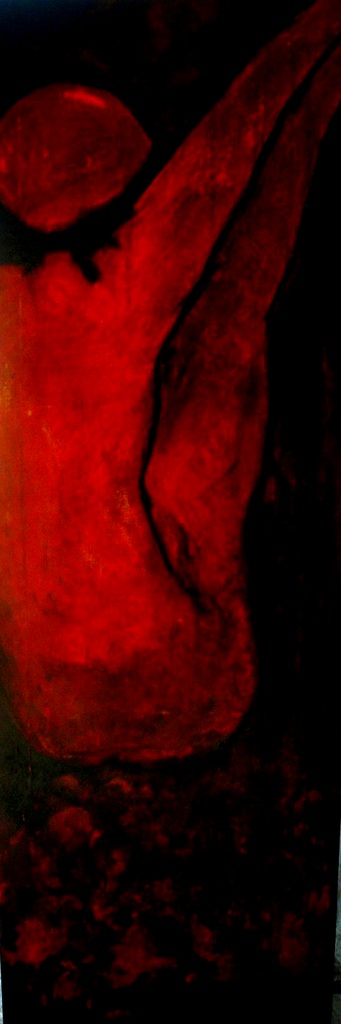
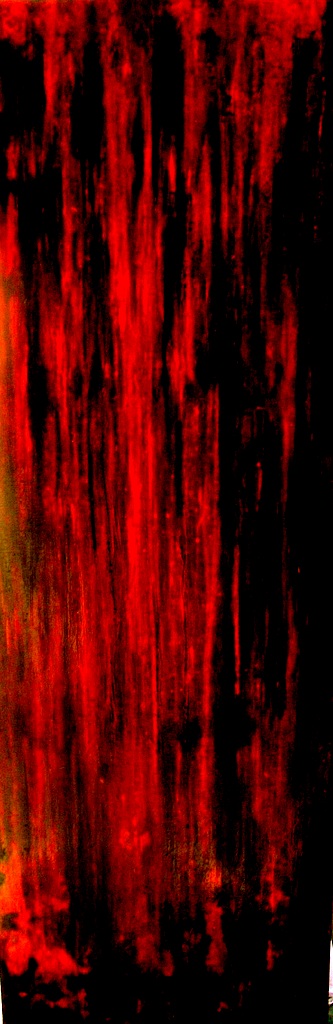
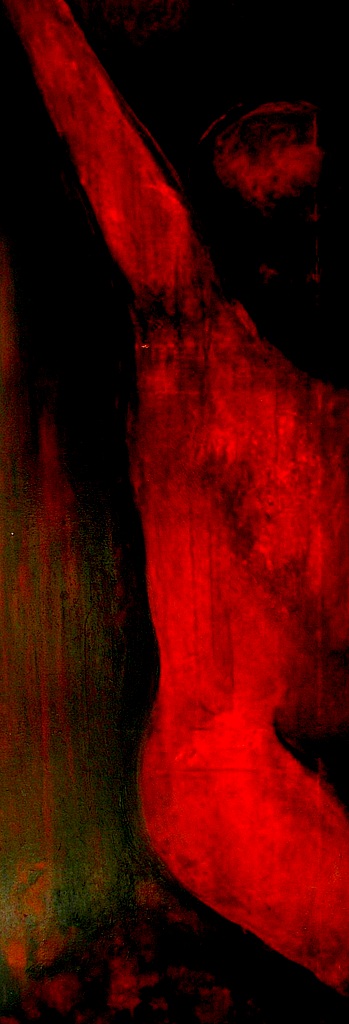
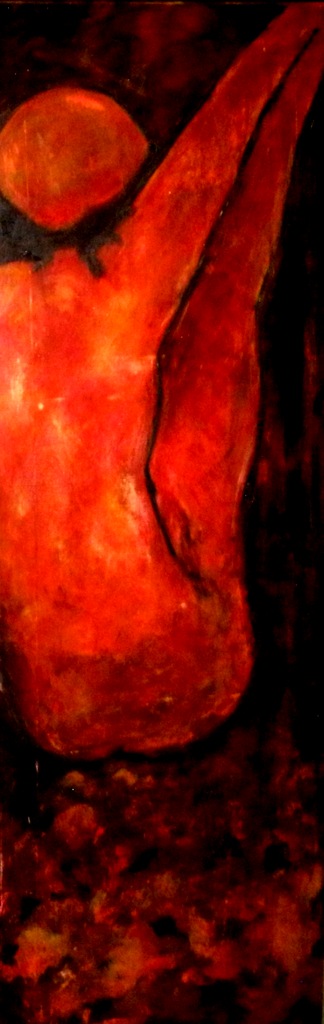
Waterplay – a triptych by Holly Suzanne


Waterplay – a triptych by Holly Suzanne

Waterplay – a triptych by Holly Suzanne


What we know for certain is the steady stream of life, the flood, the flow, replete with bits and currents.  Immersion.

What is less clear is whether we are rising or falling, whether paradoxes hold true, what that might look like.

And if we’re swimming together, how that alters the land, changes the buoyancy, rearranges our standards of measure.

We – individuals – no longer a fixed point of reference.

Now “I” that formerly looked oh-so-much like a “1,” is just a needle in a flurry of dried whirling pines.

Rising up, rising down, in relation.

The self, the other, the flood.

In certain light, it shimmers.  In little light it bleeds dark.

It’s not as if we’re provided decoders, infra-red goggles, enlightenment.

I’m as much in the sea of life as you.

We share, in this sense, an equal, fluid, ground.

And not as something to step up or out of.


The self, the other, surround – weighted flotation devices.

I’m in, at a kind of “over here.”  So are you.

There is no escape.  We sink.  We rise.

N Filbert 2012

(My apologies – these pieces have proven very difficult to photograph in a way that presents the depth of layering and colors truly present.  These are fairly large oil paintings created of Autumnal colorings and glow, many more greens and yellows, oranges and hues filling out the originals.  It is painstaking to present them here struggling with glares and digitalia in a way representative.  Forgive me, and if you are able come see the originals through the month of November at Mead’s Coffee House in Wichita, KS – they are rich to behold!)


I’m Learning

Within the architecture of participation, she asked for plausible promise.  More is different, she said.  I was learning a new society.  Worlds become foreign in very small missteps.  I am learning.

It’s never one-to-one.  Each encounter multiplies complexity.  Even the same.  Identity remains to be found.  Only hints and surmisings.

In that look I believed I had found you.  I suppose I did, and so many, pronouns always plural.

We disparage our language its labyrinths.  Drowning in oceans of context.  Each arriving a  slipping away.

How else might it be true?

“Language discovers what one might know, which in turn is always less than what language might say.”

– Lyn Hejinian –

*phrases lifted from Clay Shirky’s Here Comes Everybody

Question: What Makes a Masterpiece?

“A masterpiece isn’t a masterpiece until it is well known and has absorbed all the interpretations to which it has given rise, which in turn make it what it is.  An unknown masterpiece hasn’t had enough readers, or readings, or interpretations…A work of art isn’t created a masterpiece, it becomes one…the authority, the familiarity and the relevance of a great work of literature: we open it, and it speaks to us of ourselves…naturally every reading affects the book, in the same way as the events we experience effect us…”

Umberto Eco & Jean-Claude Carriere, This is Not the End of the Book

Your thoughts…?  Any “unknown” masterpieces possible?

Sentence Strokes

About running small.  Over a surface made of paint.  Exhilerating lostness.  It is then I know texture.  Arms draped over a streaking swell.  Scritches and scumbles underfoot.  Are there this many colors in the sea?  Splattering like sparrows.  Am I getting the picture?  I lie down.  Cairns and edgings against my back.  What seemed soft – crisp and poky as briars.  What looked hard and smooth gives like dried glue.  I scurry in the trenches left by brush.  Spin through dips and curls.  A painting is a planet I inhabit.  Directed through the paths of subtlest vein.  To explore I engage.  Guard asks that I step away.

N Filbert

What Happens (with a semblance of truth): A True Story (that is never true)

Many things might have happened, indeed, could have happened.  It is impossible to tell until it happens.  Whatever happens.  And so it goes.

Recollection subjects what happens to interpretation, a puzzling assemblage of memory (embodied brains in changing circumstances) and occurrences (embodied brains in specific situations), making it impossible to tell what happens, when it happens, or after it happened, save from a very particularized attention and intention, point-of-view, disposition and enmeshment (the factors being relatively endless).

And so we call histories, scientific observations, statistical reports, etc. al., “stories;” journalism, research, theories or assays (essays), “fictions;” and personal memoirs, dialogue, descriptions or statements – “fantasy.”

Everything that happens or happened is what might have happened.

Let’s theorize that an author or reader, group or individual, has a concern for “truth” – something being what it seems to be – who or what has total and essential access?  The only truth in human expression that I can surmise is that it is truly “made up.”

An individual may have something approximating total and essential access to a thought or feeling, personal experience or idea, but insofar as it actually occurred according to an experiencer, there are already multiple points of view, ranging from molecular to cosmic, matter/energy to cultural.  To say nothing of the complicating fabrics incumbent on expression – whether a grimace or a novel, a shriek of pain or a tally mark on a chart – it has entered uncertain and collaborative interpreted ground.

All to say “experience” is utterly specific and solipsistic (non-transferable “truly”) and is an enabled product of embedded participation in significant (if identifiable as an “event” or “occasion,” “moment” or “intuition” – any feeling, sensation or awareness) surroundings, expanding niches of existing things with variant points of view.

This is how I can guarantee that nothing I show you or tell you is “true.”

It may be more or less accurate to my experience or understanding of it (depending also on your experience/understanding of my presentation of it) but it will in no wise be what it is or was, in truth.  I assume truth to be as impossible as god.  It would require omnipresence, omniscience, boundary less experience (which could not accord with our experience, or a grain of sand, or an ocean) and would be immediately foiled by the omni-ability (omnipotence?) those other necessary qualities would demand.  One could not be absolutely enmeshed or identical-with and entirely and completely objectively separate or alien-from at once.  At always.  That is not a paradox but a contradiction.  If imaginable, incommunicable.

So we speak of a “semblance of truth” or a “truth-seeming” quality to account for our realities and desires (our want for security, to grow order in chaos, to know, to choose or act with less fear or uncertainty).  Things like our ages, census reports, laws and principles (grammar, mathematics, semantics, processes and methods, etc.) a creepage over toward what we think of as “facts” – majority-mutually-agreed-upon-interpretations/perceptions/hypotheses.  These can hold for a long time because they’re held by so many, so widely.  But they most assuredly change over time, again, from atomic behaviors to the shape of the earth and its relation to elsewhere, from what constitutes pain to what gets moniker’d “god.”

What counts as fact does so by being open and shared.  Semblance of truth comes by corroboration, conversation and multiplying points-of-views and expressions of experience.

Perhaps this is one reason we blog.  To try “it” out on everyone, potentially.  If our expressions resonate with others, perhaps they have a semblance of truth, or contribute toward creating it.  Enough “I know, right?’s” and we’re on our way to a fact.  But no amount of data or language, materials or activity makes it so…it rests on agreement and compromise, observation and interaction shared most widely, coagulations of interpretations, accretions of experiencing – fabrication.

Make then, express.  Hypothesize and share your experience – we ask for your two-cents worth – we’re accumulating a fund.
Writing Whys Wherefores


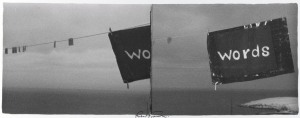
I notice that there has been a recent spate (probably not all that) of authors of blogs I follow and enjoy, reflecting on why it is that they write, and what they think they might be doing by writing…in the current upheaval of things I needed to make some additions to my “About” page and provide a brief bio for another project and in that process stumbled across an earlier writing of mine that seemed to accord or converse with you other creators, so I’m reposting it here in case it adds anything…

Quick sketch of me by Holly Suzanne

Living is a kind of madness (a prose text)

in reference to

Christian Mihai

Brainsnorts

Boy with a Hat

Adventures in American Writing

and others, thanks!

Nothing, In General

In which case, he writes, for life.  As if asked about nothing, in general.  There never has to be a reason, what is called illusion or delusion, he can’t remember which.  He is at a loss, that much he knows, unsure if “at” is place or time, so often hand in hand.

Writing.

He could just as well be painting, singing, creating some other cultural artifact, and all offered up in an aether, but he’s not.  He writes, for life, in this case, as if in general, about nothing.  Which is everything also, for him – writing, at a loss – the nowhere now here is.

The words, like images, serve.  Serve to draw out and reflect.  Like actions or encounters, self-portraits or redundancies.  In other words, those would be.  In writing he extends his veins and neural works, outstrips his body into text – an alchemy of sorts – and then relates to them as if an other, at a loss, in what he sees, or reads, as the case may be, words as much an image when inscribed.

Which are now here, which were not, because he’s writing.  Which, in fact, he does, at a loss –  moments so much like chaos, say “entropy” – for the offering of something indicative, external, outside – as if verifying a place and a time, i.e. organizing a disorder, finding a nowhere.

Similar to nothing, in general, become something, in particular.  Like an idea, or an atom, an interpreted emotion, or a god.  Each action a creation like an assortment of patterns on chaos.  Like nothing in general, or everything in particular.

At which point, in which case, he writes.

N Filbert 2012