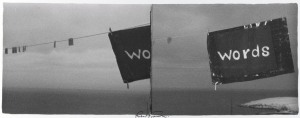

Tag: Writing
Living Traces – Paul Valery
“In the strange faculty of doing certain things irrelevant to life with as much care, passion and persistence as if one’s life depended on them…there we find what is called ‘living.'”
-Paul Valery-
I, for Instants: the writer question


I the Question; I the Answer That Does Not Satisfy
“I am both wound and knife”
“Time is a river that sweeps me along, but I am the river;
it is a tiger that mangles me, but I am the tiger;
it is a fire that consumes me, but I am the fire.”
“The question inaugurates a type of relation characterized by openness and free movment; and what it must be satisfied with closes and arrests it. The question awaits an answer, but the answer does not appease the question, and even if it puts an end to the question, it does not put an end to the waiting that is the question of the question.”
“all things oscillate round me, and I with them, an uncertainty unto myself.
All for me is incoherence and change. All is mystery and all is meaning…”
I am the writer. Am I also what is written?
Both wound and knife.
I am the husband? What the husband does.
I am their father. Am I also their fathering?
I am the writer. Not the writer I believe I am, want to be, imagine. Am I the writer? What is written does not appease, does not satisfy. I am waiting, asking, waiting in openness for possibility. I am the answering I do not desire.
Am I what is written? Partial answers. Fragments pieced together forming questions. I wait. Am I the one who waits? While writing?
I love. Do I love? I answer by loving. I am dissatisfied by my loving – it is not what I had hoped, was waiting toward, believed possible. I am not the lover I asked for.
I feel I am the open, the possibility – the questioning. My answering closes, arrests, delimits me. I am neither satisfied nor appeased.
I am the human. Am I human? If I answer for that I am dissatisfied, given the question, the possible replies.
I write I am the writer, the one writing, this phrase of the question. Its answer never satisfies, leaves me waiting, asking again, anew. The questions.
“the anarchist keeps watch within us and opposes our resignations”
E.M. Cioran
The Temptation to Exist
“’I am both wound and knife’ – that is our absolute, our eternity”
“the idolatry of becoming”
“blasted joys and jubilant despair”
The Temptation to Exi(s)t
We’ve got our words all backwards. Ever trapped in what we deny. Our escape = net.
Space. Time.
If we say it is all relative, yet act. “Choose.” Freedom is nothing. The words, then, are all backwards, you see, we “mean” our opposites.
Desire.
Could cumulate as the evil. But still – you see? Hope for understanding, for wisdom, knowledge, some trivial insight. Log of shipwreck: cling.
Desire.
Another enemy: “intensity.” Synonym “passion,” carpe diem. Opposite: freedom.
In-tense-ity. State of inhabiting tension, clinging to stress, to invite suffering (“jubilant despair”). Opposite: being. freedom.
A blasted joy. (Suffering). Opposite of freedom: want. Making antonyms by definition: “to be.”
If we seize, choose, behave, acquire, reach, speak, move…”the idolatry of becoming” – antonym? = freedom.
Kingdom equals freedom. Queendom. Selfdom. “To be”-dom. Backwards words. Backwords.
Opposite of intense: rest, quietude : thought and action one : in-sane. Opposite of want, greed : poverty : possession-less, without, without within : beggar.
Freedom : opposite : control. Self-, other-, environmental-, habitation-, security-.
Be/have : to exist is to grab, to steal, to do violence. Being + having : system : be/have. Opposite: freedom.
Say it backwards. We say it backwards.
I shout “freedom” driving the blade into my throat, bloody want. Cannot “have.” Are (are NOT = desire to become – false worship – be/having).
Religion : human organization to be/have. Become. To be. Religion as an argument for (against) existence.
Already ARE. Before “being,” prior to “having.” No need : freedom. “Meaning” the opposite of what we say.
We’ve got our words backwords.
Backwards: have-been. There it is clear.
The temptation of the system, the race or kind, was “to be” as something to have, to get, to come into, be-come…that existence was a goal, something to arrive at, achieve, seizing the days, the moments,
Synonyms: act, will, intent, purpose, do.make.say.think. to mean
Synonym: be/having
Opposite: freedom.
Existence having been from the first.
Having been = at the last.
Synonym : freedom : nothing.
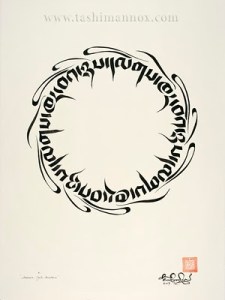
Clothing – an ultimate ekphrasis?

Costume as Metaphor
We dress ourselves in certain clothes, change our hair and faces in order to look some way we think to look. Appearance changes us and it need not be dissembling. Indeed, what are we? Are we anything? Sometimes, we become what we look to be which we have thought to be. And, on further thought, this may be nothing also though, for the time, it looked to be something. Other times, our dissembling seems wrong in its particular, as a contradiction of another identity as though we had that identity and an assumed one could contradict it. We want to be something: whatever we really are, whatever we could hope to be. But, ‘What we really are is a mystery, and what we could hope to be has only such value as our hope assigned it. Our aspirations are blind and arbitrary and their success is only their own.
Children dress in scraps of costume and play at being what the scraps suggest. They try it and let it go. Later, our commitments are sometimes fuller and the letting go isn’t so easy when our interest wanes as it may. We hedge it with other interests on the side, secret selves or contradictory clothes which protest the real me, so that anyone’s person may well be multiple and all the multiples tentative and exploratory as children’s are. The space remaining for definition – so wide for children, or so it seems – becomes narrow and limited and definition farther and farther off and we accept what we were as if it were what we are or even what we had meant to be. But it isn’t. We know so.
When we ask who someone is we get places and ages for answers, occupations and antecedents, what times and places someone has occupied or what other external has occupied them, as though we were all blanks and had no shape or nature except by possession. Our need to possess and our need to be possessed proclaims this. If we really were something in ourselves, could we need anything? Could anything possess us? Possessions hardly satisfy us. They must have been not our need.
But, whatever our need, they must in some sense have been wrong and we sense the wrong not by contrast with some other possession though it must often seem so: the apparent greenness of other pastures or even this same pasture in the approach of some spring. We have hopes for projected futures, for what may someday be in spite of all. In spite of all. In the light of all. How impressive the all is: the endless possibilities whose indefinite endlessness makes absurd any one. How hopeless it is to pose in any particular costume when all we are is limitless and costume denies that, limits us in a role.
What can we ever be if the limitlessness of the all is truly our quality? We can as little be anything as we could if we were nothing as also it seems we are. It is hard to decide; and the decision whether we are all or nothing, based as it is on the same premise, produces the same result; we cannot ever be anything. Though we dress however forcefully or fancifully we will, it is always pretension though the pretense may have its successes, even for a long time.
What of the world? Though there may seem to be nothing outside ourselves, there is a sense in which we observe and the object, as though it were, of our observation we call the world. This is absurd because the world is as little as we are.
And yet the language has its declensions and its conjugations. If we speak at all we speak in the structure of the language and what we say, whatever it is, may matter far less than our accession to the way the structure of the language divides experience in terms of person and tense so as to say we are (or were, will be), so as to say what was or could, what is, who is the first or second or third person, what is singular or plural, that there are or could have been, that there still might be, certain actions, certain reactions. We speak in tongues however prosaic our speech may be. The boldness of language supervenes our actual experience. It means to say what we don’t know. It creates the world as if the world were. Its whole necessity is metaphor.
And language need not be verbal; that is to say our postures and houses, our laws and landscapes, our science and public buildings, share the character of language. They are metaphor also: creations of desire.
Forgive the world, however terrible it is. We dream of horror, impelled by what we don’t know, and the world seems to contain it; but it is not a real world and nothing requires our belief.
That we believe in nothing is a hard requirement because we want to believe in something: some political theorem, say, or religious creed or, sparing these, some unevaluated strength of our own as though in our person we might prevail and that prevalence had the salience of some proof. For what? For our dying? Because we do. Unable to think of ourselves this way, think instead of someone ten thousand years from us one way or another who will have or had a name, a place and costume no more and as much as we have. And who is he? Even so far as we know, it is a pretense of knowing. Abandon that.
Belief in nothing is a positive belief apart from relieving us of partialities; and, even in that respect, it is a liberation. The world is not partial. Nothing is all and the world is nothing as we are. What should we say? Nothing to say of ourselves and the world tells us nothing. The world is a silence. But we talk of it and to it.
We know nothing of the world and will never know. All we say is metaphor which asserts at once our unknowing and our need to state in some language what we don’t know. How we love clothes; plain clothing or even our nakedness, speaking the silence of the world, or fanciful costume in which we praise some aspect of the world we mean to praise. Clothing as metaphor, not to dress ourselves nor to say what the world is if we knew but to praise that world however it might be. Rich fabrics and fine leathers, ruffles and satin, silver and lace, glorious colors and the fragile purities of clean whites: none of these is the world nor are they all together the world. Songs only that sing its praise, the earnest entreaties and importunities of our desire.
William Bronk
from Vectors and Smoothable Curves

A different kind of personal (2)
secondly,
a fresh stack from the library yesterday…to soak into…
The Essential Peirce (vol. 1) – my hero
How to Live, or, A Life of Montaigne: In One Question and Twenty Attempts at an Answer by Sarah Blakewell
The Shallows: What the Internet is Doing to Our Brains by Nicholas Carr
Of Learned Ignorance by Nicolas Cusanus
The Book of Dead Philosophers by Simon Critchley
The Temptation to Exist by E.M. Cioran
great philosophers who failed at love by andrew shaffer
Signeponge by Jacques Derrida
Drawing from the Glyptothek by Jim Dine
joy!
Stopping to think, or, “not finding my own words,” or, “something to uncommunicate” (Blanchot)
My Own Words
Stopping to think, and using my tongue, a silent and plural speech, writing, how thinking does not stop.
There are clouds, many-layered in many motions, colluding, in sky.
I would see them, were I to face the outside.
Inside, no difference.
Letting speech beyond. No beyond, in part.
I had written, earlier, “so not finding my own words…”
A song was playing (is playing, NOW) in which a deep-voiced singer repeats “all thoughts are prey to some beast.” He repeats the phrase enough times (so that it seems like more than enough) that I hear it: the phrase, his voice, drums and strings.
Earlier it was about trees and soil, beach and sea, which have no language. I had thought perhaps I did. “Not finding my own words,” alas.
It makes for quiet. A banner fastened over the mouth: blood-red, pitch-black.
Begun before, though, the plural.
Taken outside by the hand. Inside, outside – no difference. “Not finding my own words,” as earlier.
B called it “weariness” and “infinite conversation,” requiring interruption. Causing a silence (stubborn, sullen) and a listening (unavoidable, imposed). Plurality. “Not finding my own words,” I pilfer.
Dissemination.
The launch – erasing – opposite of launch.
Why I like the word “thrum” (“not finding my own words”) and “inscribe.”
Bent, crooked, stooped over a desk with a lamp of single bulb, I imagine “scribe” as “scholar.” Inscription going both ways, like tying a knot requires both ends. Binding.
Such physicality to the immaterial.
As easy as lying (also snatched from a spine).
Stopping to think on how thinking never ceases.
“Not finding my own words” I turn, reverting to the silent plural speech of my mouth’s hand.
I call it “writing,” not finding my own words, even for that.
N Filbert, 2012
Writer Neurosis…inevitable…dose of reality…purely journaling
This morning my horrorscope advised me not to begin new projects but to complete the ones underway. We don’t put a lot of stock in the stars in my household, but I reflected on this one for awhile…jotting the following in my journal:
Projects piling up
pages and pages in manuscript
– all of them –
my work sustains
only immaterial parts of myself –
Nothing, else
so stacks
and stacks
and stacks
of papers filled by pens
notebooks, journals, folders full
a wife, seven children
a house, utilities
a car, a yard, fuel
food, shelter, clothing
activities
no way to insure
no bartering fodder
just thought
and effort
and art
and thousands of books read, to read
what are these values?
what is my “system”?
beliefs?
I see a photograph
– it becomes words
I view a painting
– becomes words
hear music and speech
– becomes text
feel emotions, bodies
– become language
taste food or drink
– and write
hope, dream, surmise
– and write
read, learn, look & listen
– for words
“as if the language itself could take us where it will never go”
-Ron Loewinsohn-
p.s. unfortunately, I seem inherently averse to “submission” in any form… L alas
Circular Ekphrasis


Dueling Jim Dine
“My mind was going and so was my hand,” he said, and so did I. There seemed to be some sort of automatic conduit, almost an unthinking or unconscious mechanics between what occurred in my brain and body and the gestures of my hand fisting a tool. He called his “drawing,” I, “writing”; “scribbling,” both.
He sketched a line.
I doodled a word.
We compared combinations of marks. I thought his propitious, he considered mine apropos. We continued. He smudged and scraped, texturing and smearing a darkened patch of his paper. I scrawled smudge, erasing the ink as I wrote, leaving a bleary term, as well as “melancholy knot.” He raised an eyebrow, squirting water on lines of ink, causing them to run and wriggle down the surface. I likewise thought “crow’s blood,” and wrote “mood of lightless cavern,” in carefully dropped water stains.
He squinted as if he’d been challenged. I, the I writing, watched, expectantly. The draftsman sat down.
I roped out over my page “the knife sliced deep through parchment, carrying fire.” He leapt to and slashed his surface staining the tear’s edges black with brilliant red and orange pastels rising off the seam. We chuckled, he winked.
Picking up a squat bottle of indigo blue, he dashed it against an open field on his paper, creating a blotch slowly swelling in miniscule fronds.
I reacted. Grabbing pens in both hands I charged my page and inscribed, as if in fury, fat-felt-tipped and intimately paralleled in circular lines (by turning the paper as I scrawled) “maniacal laughter sobs from grievous wound seeping rabidly throughout his grocery list, voicemail and every phrase and memo taken in, given out, as if he could not escape the inky squid-cloud, the night’s obsessed vortex, unable to feign or dart his pollution.”
Scenting blood, inveigled in duel, he savaged his canvas with cadmium shrieks, scratching and scabbing the pulp, then clouding it with sponges of charcoal and chalk, dementing the work to a state.
Scowling, he read the above.
We rested with coffee and smokes.
At this point, he challenged me to a mark-for-mark, side-by-side, making in tandem. He moved and struck; “drak” I jotted. He followed with a long downward arc of blue chalk while I scrivened a loosened cursive “loop of sky in gravity’d tears” also in chalk. Jagging yellow up and across, all caps I shouted “WITH THE HEAT OF THE WIND’S BLAZE THROUGH DESERT!”
He spiraled while I “circled round the mayhem of the mill, her lilting light goes out.” We darken and begin to fill the ground…as he shades and scumbles
I “in the apparatus of time the world dims and pops. Stumbling gesturally through policy and poem the language drains its line. Discovering its feeble feet it finds a lure and breaths crackle in plentiful song. The patching powers perhaps the frame, caressing its fitful desire, soon it swoons and whispers. The vapor twists its noise and cogitates in action worrying, tendering, arousing limpid lisps. We vibrate and hold, tendrilling thread to conjoin. Fastening now on swoop and dive, a sistered surround, a remoteness drawn near. We are woven, our minds are going and so are our hands….”


for instants!

 The Scribbled Line Portraits of illustrator Ayaka Ito and programmer Randy Church began as a class assignment before the stunning digital photography innovation came to public attention at a Toronto FITC workshop.

The series showing shredded human bodies integrated 3D and programming for a project with a three-day deadline while the two were at the College of Imaging Arts & Sciences at Rochester Institute of Technology.
 Ito and Church “put their models through the shredder” using a custom Flash drawing tool, HDR lighting, Cinema4D and Photoshop.

 The project began as a class assignment and grew into a fully realized series which won an Adobe Design Achievement Award and has been featured in 3D World Magazine and Communication Arts Magazine.


A post from DesignBoom with more technical detail on the process, here.
NOTE: This is from the Art Junkie archives, 2012.
 All my Words are Silent