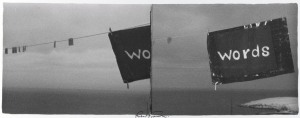


Unbeknownst to me – the next Blackboard discussion assignment for one of my summer classes turned out to be :
The following was my response – realizing by the end that this had become an impassioned sort of soap box sermon rather (perhaps) than a reasoned response. Judge for yourselves and please offer replies and conversation!
Is digitization the answer to preserving printed materials? Discuss the advantages and disadvantages
In my opinion the answer is NO. I believe digitization is an aspect of access, not preservation. Digitization – the process, format and type of “storage” are all inexact and uncertain dependencies – on energy sources, tools, network connections, licensing, access, programs, softwares, interfaces, and so on down the line. With no real concept of the reliability, consistency or longevity of data in “cloud storage” – digital documents still need physical copies to ensure longevity. The only companies I really hear belaboring the issues of continuity, reliability, and potential of accurate digital preservation besides the Library of Congress and Pew are Tim Berners-Lee and the WorldWideWeb Consortium, ITC and other digital business/tech aggregates – which continually discuss the problems, scramblings and deterioration of digital data bits in ethereal storage. We all understand that we have books 100s even 1000s of years old, from which we can verify online copies, files, etc. Otherwise many “scanned” documents lose clarity, miss pages, notations, editions, etc. This is becoming an enormous problem when companies and institutions begin thinking that by digitizing something they are preserving it. They’re not. They’re making it available in another format and medium, not preserving it. Our computers, platforms, servers, programs, hardware and software are continually being altered and updated – formats are insecure, data continuity is insecure, e-book packages automatically deliver updates and editions without preserving previous editions/authors/etc. Digital access is precarious – a solar flare or atmospheric storm could wipe out or scramble data at any time (as a wise man once said).
Digitization is an answer to access not preservation. Berners-Lee et. al. have always been clear that the purposes and hopes of WWW and Semantic Web work was to make the world’s culture more readily communicable and sharable – not to preserve it. To democratize it. Technology progresses too quickly and outdates too quickly to be a reliable form of preservation. And with open access and collaborative semantic web – no digital document can be considered “authoritative” or be ensured to represent original writings or creation. All digital data is open to revision, alteration, damage – it passes through too many hands, servers, connections to be utilized as an authoritative source. (Perhaps all web citations, whether scholarly or not should be appended with some mark indicating it was retrieved from digital storage, rather than confirmed by printed document).
As access solution – digitization is wonderful. For “just-in-time” retrieval and sharability, open publications and global learning and information – digitization is an incredible advance in communicating globally. But reading a text over the phone, or broadcasting pages on TV, etc., are all notated if used in research. Digitization also seems to mitigate against deep reading or comprehensive research, as digital texts tend to be scanned rather than read through in their entirety, and there seems to be a tendency to retrieve “good enough” or topical articles rather than searching for the best research available to the research at hand. (side note, sorry).
So, in my opinion, digitization should be used for that which is was developed – a communicative medium – unstable, unreliable and ever-developing – but not an authoritative or preservational archive. A books average life is between 100-300 years and utilizes much less energy in being used or shared than all the electricity and energy required for digitization and access. Most ereaders, PCs, and other digital tools last at the outset 5-10 years and then add to the world’s waste, far less recyclable than pulped paper.
Digitization = access – global and unstable. Physical copies = preservation – relatively stable and verifiable (as long as enough copies are preserved to compare and contrast). We never considered this problem until now with the enormous weeding and disposal being done by the very places that existed to preserve these artifacts!
A providential addendum!
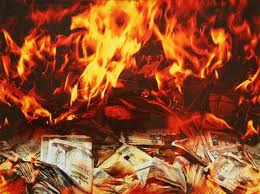
(click for full article)
The surge towards a print-less e-library recasts academic librarians as “rare book engineers”
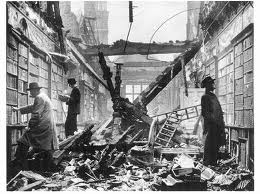
Is “just in time” preserving what will be needed for a (hopefully) long future?
How preservable and verifiable are digital bits?
Who ensures there are physical, tangible copies of information that may come in handy one day…
even if it seems passe or unnecessary in current socio-cultural perceptions?
What if cloud data gets scrambled, wears away, ebook vendors aggregate totalitarian-ly,
Where are our contingency plans for the preservation of knowledge and culture?
How will we verify digital content?
and so on….
Lispector…
The journey one takes toward Clarice Lispector has a great deal to do with the way she is read. I came to her through Helene Cixous, and therefore she (CL) has become inseparable from me, as I experiment with my reading of her, paying almost as much attention to my internal carry-on-chorus that wobbles along side my conscious movement from word to word in the linear structure. Clarice Lispector exists for me outside the text, using the context defined “inner world” to stretch out and beyond into the borderless “outer world”. It is her ability to create this (anti)structure that separates her work from “stream of consciousness” or circular topic based narratives. I read a lot of experimental fiction that tires to appear deliberate when marrying avant-garde techniques such as experiments with grammar, reflexive thinking/acting and searching for the space between the words, but hers is the only writing I…
View original post 1,005 more words
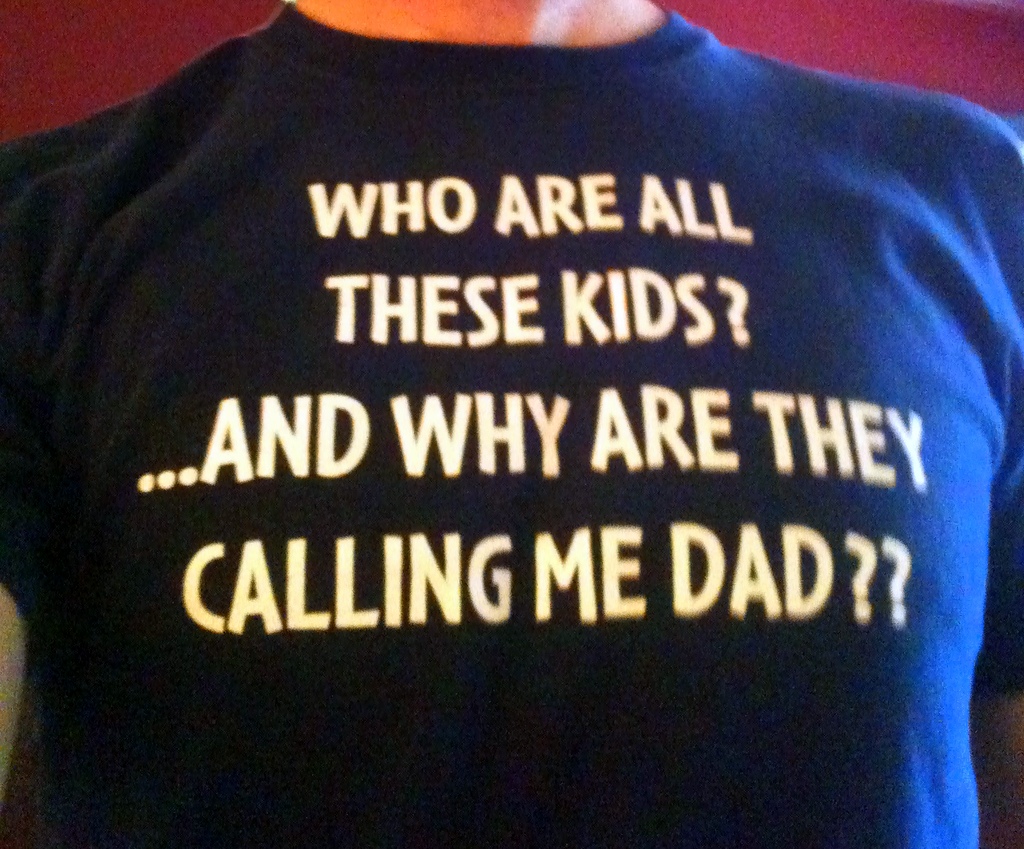 To all of you out there loving, protecting, nurturing, listening, comforting, engaging and delighting in your children:
which, as my wife’s card to me pointed out, cannot be incoincidentally unjumbled into:

oh the gifts and joys a good father offers!
and the unmeasurable joy and delight brought a man by fathering.
Greetings readers. I have spent the past few days to-and-froing from my son in the hospital undergoing a corrective surgery related to pectus carinatum, and full-family summer and researching the pros and cons of PDA (patron- or demand-driven acquisitions). I am very happy to say that after a nearly 5-hour surgery, in which we allowed “experts” to cut our son’s chest nipple to nipple, lay back the muscle, chip-scrape “excise” the cartilage out of his ribcage, crack his sternum, reshape him and insert a flexible metal bar…he is recovering smashingly, already walking about, playing card-games, and humorously retorting. This is the first “major” operation, injury, break, accident or otherwise that has occurred to my genetic offspring, and, although I’ve endured much trauma with the injuries and surgeries of my spouse, I was unsure what to anticipate going through in allowing invasive slicings and breakings to my precious son’s body.
Needless to say, it is affective.
At night I slept as if in a dark void.
I felt shamefully unattentive to my other children, lacking energy and focus.
I let deadline stressors and ongoing responsibilities take their places in my tissues and veins, deep recesses of my cortex, and let my eyes drift repeatedly into mid-point aether.
I don’t know.
Something like this went on in my son.
it was pretty foggy in me.
So now we enter “recovery.” Realignment. Exercise. Recall. Precision. Strengthening. Focus. Effort. Rest.
and facing the stack of avoidances.
Recall looks like this (for me):
My Medicine(s):
– regaining presence of mind –
“You could try to express what bliss it was in those days to be alive. Of course there were bothersome things here or there. Terrible things, if you looked too closely. There was the dreadful burden of everything that’s too much alive, all that mingles with air, earth and water in an attempt to destroy you. There was the malice of men, the voracity of beasts, and the indifference of objects. There were all the sounds and sights and smells like continual dagger-thrusts in the flesh. It wasn’t easy to live with all those things; no, no one could have said it was easy. But all the same it was funny in a way, touching and funny, a splendid adventure complete with emotion, language, consciousness, and perhaps, in some recess of the memory, a kind of nostalgia for silence and peace…Yes, what was happening to you was an unforgettable and unique adventure…”
-J.M.G. Le Clezio, Terra Amata–
HERE’S TO YOU SON
a pretty obvious take, but in the midst of a nearly impossible week,
it’s what i could do…Friday Fictioneers 6-14-2013

The obvious one. Anyone could tell. The way he bobbed his head in traffic or nodded slowly in the wind, syncopating steps with the train rails’ click-clack, fingers never still at the table – proverbially whistling as he worked. Even his breath had a cadence – nary emitting verbal lines without their shaping tones. Foot bevel harmonizing crossed-legged knee bounce – friends said “he always had it in him.” Phrasing his rises and his falls. Ears ever plugged wide open – he tasted and he touched, he heard, saw and smelled the world as sound. He really was into music.
I personally attempt to read every writing I am able to obtain by my favorites. Some of my blog entries may therefore be redundant, as redundancy is a way that I am able to sense patterns and make connections and thereby forge what I experience as meaning. The following is one of the summary writings (nah, that’s not quite right – even with redundancies and retellings I rarely find a summary-type writing by my favorites – there’s always difference – and that is what snags me!)… Okay, for your interaction, pleasure, and engagement, without further ado…
by Jay Lemke (1995)
Student Magazine of IISER Mohali
Music, Musicology, and related Matters
a photographic pilgrimage to Orthodox Christian monasteries across the continent
Meandering Through a Literary Life
Orthodox Christianity, Culture and Religion, Making the Journey of Faith
Erik Kwakkel blogging about medieval manuscripts
"That's the big what happened."
Networking the complexity community since 1999


 All my Words are Silent