Writing it out : writing in

Into (and out of) the labyrinth of language

“there can be no fully articulated thought without symbolic embodiment…

language is the very stuff of which ‘ideas’ are made…

to separate thought from its symbolic manifestation would be as futile

as to try separating a mind from its embodiment in a human organism”

-Max Black, The Labyrinth of Language

“words are part of action and they are equivalents to actions”

-Bronislaw Malinowski-

            Sometimes silenced.  Pressured in channels.  A void creates a vacuum.  Fettered speech – often necessary but variant to “open” or “expressive” on a relative continuum.  To a purpose.  Carrying a message.  Responsive.  Reducing uncertainty.  Extrinsic.  Sometimes.

As if a balance of scales.  A fluid diagram – flow chart.  Internal at the individual end, external at the communicative social.  Between are many pages, many possible sounds.

If days go by.  When days go by.  After days without a feeling of spillage, a “seems” – the experience, for this writer, of unexpurgated, unconventional intrinsic release – that is, writer’s personal experience (a complexity of interactions – organism with environment and others) there ensues a kind of illness, like constipation, like perpetrated violence or censorship, like oppression – that, unless a leakage is allowed, some systemic crack, a private valve – writer risks implosion.  (Say – depression, frustration, resentment, anger).  Holding a forest beast under the lake.

Slipping out and away, writer beast finds a crevice or hollow, cavern or plain in which, from whence, he or she can reduce uncertainty, verbalizing observations and ideas.  As if life is the laboratory that would go unmarked and unnoticed without jotting tallies on a page.

Writing it out – writing in – a labyrinth.

Taking up the ball-point pen, dragging it along the surface of clean paper, is like turning the tap.

Hiss and sputter – tubes finding matter or substance, inciting energy – then flow.


I write about heaven and hell, the monsters here to there.  Of inscribing itself, the requirements of entity and imagined self or other.  The many, the few, and the plants and the beasts.  What air.  In the woods and the desert, the mind.  The heart with its loves and its rage.  Perpetual fears and the virus of mayhem.  I write about her and the children, of friendships and evil and time.  About death, about life, about learning.  In senses, in theories, in words.

It’s not difficult, I’ve just done it.  And you have provided the meaning, already.  Each term stimulating your “abouts,” descriptions and definitions, the semantics.  I craft words your eyes and ears compose commentaries to.  Little point to my telling.

Yet some of you read differently, perhaps listening.  Maybe wonder the about.  How it comes to be, what is signified for me, and why just so?


Creates conversation.  Your doctor can doll out the pills you receive and absorb, internalizing into your existent system.  Your god may tell you what you should do.  Your boss indicates how you should do it and when, friends and family surround you to be.

Not I.  I don’t want it to work quite like that.  I am spinning no story for you to follow along, no pattern upheld to your measure.  Writing it out in the labyrinth of language, I mean for exchange, for a wander – we enter, we leave the deposits we find, discover and fashion with so many hands, so many eyes, ubiquitous ears.

Write it out writing in, in the reading together, again, wending our way trading secrets and gems, co-constructing meanings and moods all to the tunes of language.


I step out of the water and dry.

The Labyrinth of Language
by Max Black

N Filbert 2012

This has been one of those weeks…children home sick from school, an art show to hang (see here!), school studies, and all the sundries of necessity leaving very little time for nourishing reading and composition.  Needed to set aside some time beginning this day.
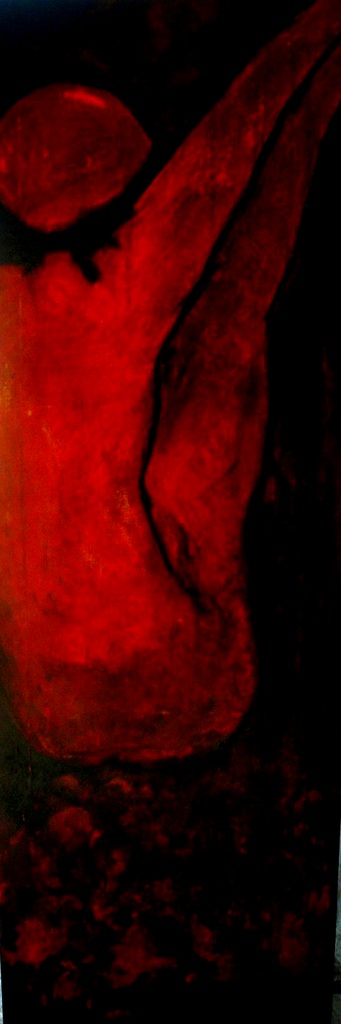
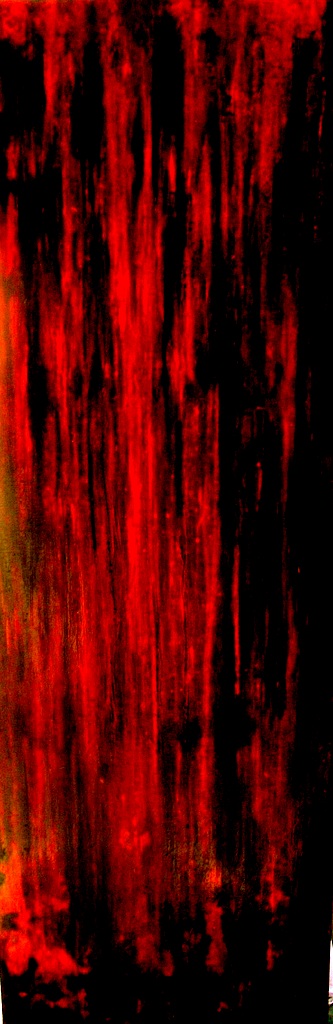
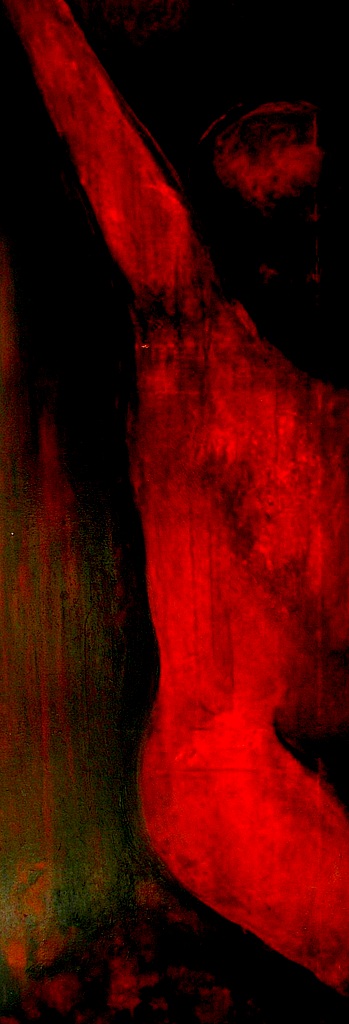
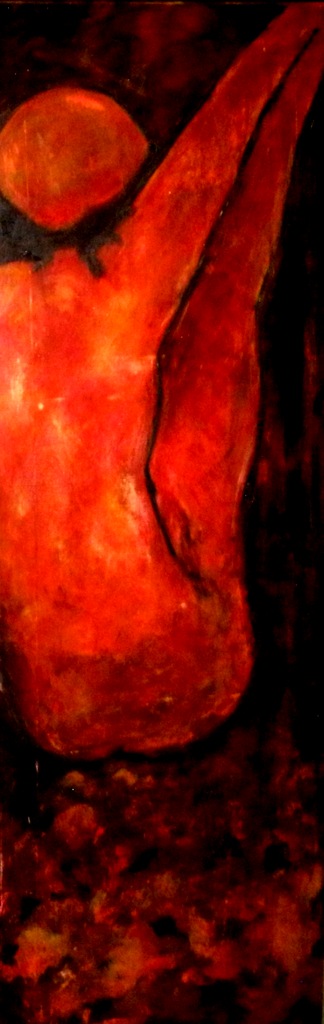
Waterplay – a triptych by Holly Suzanne


Waterplay – a triptych by Holly Suzanne

Waterplay – a triptych by Holly Suzanne


What we know for certain is the steady stream of life, the flood, the flow, replete with bits and currents.  Immersion.

What is less clear is whether we are rising or falling, whether paradoxes hold true, what that might look like.

And if we’re swimming together, how that alters the land, changes the buoyancy, rearranges our standards of measure.

We – individuals – no longer a fixed point of reference.

Now “I” that formerly looked oh-so-much like a “1,” is just a needle in a flurry of dried whirling pines.

Rising up, rising down, in relation.

The self, the other, the flood.

In certain light, it shimmers.  In little light it bleeds dark.

It’s not as if we’re provided decoders, infra-red goggles, enlightenment.

I’m as much in the sea of life as you.

We share, in this sense, an equal, fluid, ground.

And not as something to step up or out of.


The self, the other, surround – weighted flotation devices.

I’m in, at a kind of “over here.”  So are you.

There is no escape.  We sink.  We rise.

N Filbert 2012

(My apologies – these pieces have proven very difficult to photograph in a way that presents the depth of layering and colors truly present.  These are fairly large oil paintings created of Autumnal colorings and glow, many more greens and yellows, oranges and hues filling out the originals.  It is painstaking to present them here struggling with glares and digitalia in a way representative.  Forgive me, and if you are able come see the originals through the month of November at Mead’s Coffee House in Wichita, KS – they are rich to behold!)


I’m Learning

Within the architecture of participation, she asked for plausible promise.  More is different, she said.  I was learning a new society.  Worlds become foreign in very small missteps.  I am learning.

It’s never one-to-one.  Each encounter multiplies complexity.  Even the same.  Identity remains to be found.  Only hints and surmisings.

In that look I believed I had found you.  I suppose I did, and so many, pronouns always plural.

We disparage our language its labyrinths.  Drowning in oceans of context.  Each arriving a  slipping away.

How else might it be true?

“Language discovers what one might know, which in turn is always less than what language might say.”

– Lyn Hejinian –

*phrases lifted from Clay Shirky’s Here Comes Everybody

Outside This Window

I struggled this week, this picture, and the myriad of life going on…couldn’t seem to find a spark.  But in the spirit of Friday Fictioneers, felt I oughta make a go of it.  So here it is – and in accord, many thanks to Rochelle Wisoff-Fields for taking up the inspirational, curatorial mantle of keeping our practice alive!

Stomps back, livid grimaced flesh flushed, shouts, more of a gritty scrape of screed: “you never…anyway…I don’t know why I ever…” huffs, seethes, jolting in a kind of place.

Unseen, steely, weight of concrete in its rage, him, silent, back there, unmoving.  Something trembles.

Wind too, perhaps occasions of rain, drizzle, precipitation seems likely, somewhere, here, somehow.

She keeps it going, it’s like a flood, like a multi-chambered dart gun, can’t seem to stop, doesn’t want to end.  Not silence.  Not distance.  Disregarding.

Something recedes, perhaps him.  Substances exiting every direction.  All wearing out.

Everything outside this window.

N Filbert 2012

The Pleasures of Reading : An Aspect : Multiplying Translations

The Pleasure of Reading

In other words (than what?  than which?) we all of us are readers, all of us writers.

That is a pleasure.

And all of us, always, doing both.  Simultaneously.


Speaking of my textbooks (were we?) – information sciences, developmental and behavioral psychology, reference services, librarianship / and the research to the side – physics, evolutionary biology, neuro- and cognitive sciences / my pleasures – novels, poems, stories, others’ blogs, visual, aural, literary artifacts / my relational – wife, children, family, friends, society, culture – gestures and vibes and dialogues and signs / my “self” – sensations, perceptions, formulations of these, reformulations, adjustments and maneuvers.

In other words, at all times, I am reading, even if only my lack of memorable dreams, or pulses and breaths.  And writing it all in actions, movements, responses, adjustments of speaking and writing and making.

It is a metaphor, obviously.  Perhaps.


Roman Jakobsen purported that “all meaning is a form of translation, and multiple translation (polysemy) is the rule rather than the exception.”  (I am translating his text just now into another con-text).

Wolfgang Iser’s (perhaps, anyway insofar as I am translating it here) concept of actual text (text as it is recorded by an author) and virtual text (actual text as read by a reader).

This is an aspect of the deep living pleasures of reading/writing for me.


An author/speaker/artist/scientist/mother/etc. has an urge or sensation – a possibility of action/behavior/message/idea (a virtual text) and translates it through multiple processes and levels of activity through some medium into an actual text/painting/utterance/experiment/recorded idea/sound, etc.  There it is in the real world – a physical artifact in time and space – added – if only for a moment.  Transforming (simultaneously) its maker into a recipient (translating a now existent text/sound/behavior/gesture/sculpture/experience for him or herself) and if any witness/participant/auditor/recipient or reader is in his or her environment they are simultaneously interacting (via translation through their own tools, language, perceptions, sensations, mood, etc) with the actual text, writing a virtual text (translating) of their own.

And it goes on.  And can be done innumerable times, this process, whether using an identical actual text over and over, or simply writing/reading life as it occurs, making it occur.


Paul Ricouer:  “stories are models for the redescription of the world.”  Possibly.  Or at least redescriptions (translations) of models for redescription.

Iser: “the relative indeterminacy of a text allows a spectrum of actualizations…literary texts initiate ‘performances’ of meaning rather than actually formulating meanings themselves…the reader receives it by composing it.”


Language, action, behavior as possibilities rather than certainties.


So that I can encounter with all I’ve encountered/experienced an actual text by psychologist Jerome Bruner translating these very quotes and contents with all he has experienced and translate it with the multiple translations of family life and being a human organism and novels and pains, poems and stories, paintings and laws, translated with data and education, emotions and animals, translating with you and a computer, internet, digits and bits, translating into…

a great pleasure of reading is writing reading

or, “a writer’s (reader’s) greatest gift to a reader (writer) is to help him become a better writer (reader)”

– Jerome Bruner (parentheses mine).


literary texts as “epiphanies of the ordinary”

-James Joyce-

Semantics

Semantics

Are words the poison?  The inevitable, unavoidable miscommunication?  75-80% of communication is “nonverbal,” yet according to the American Library Association even a corpse is a “document.”

What is it with semantics?  Is it sickness, like some original stain in brains such as ours – a terminal disease called “fabrication of meaning”?  “Second Sight”?

So that an arm movement, a particular gait, an expiration or whittled scar in rock will all be given significance?  All some addition, complexiting, a superadded content?

What is this penchant?  From where does it come?

It looks like the survival mechanism we think of (signify) as “prediction,” i.e. guesswork.

If we can surmise, invent, fantasize possible leads or outcomes…we’d have a better shot at preparing for it.

We make stories.

Often this is paranoia.

It’s the avoidance and terror of death.

Guess a metaphor for every existing moment, action, thing…and possibly you will survive it…know what’s coming and how to defend against or wriggle past.

Therefore, an alphabetical letter like a post-it note on possibilities, a warning-sign for danger, a diagram of fear.

Her head turns quickly – off put?  Offended?  Alert to me?  Tuned in?

Context.

Octagonal red sign at the corner…I stop.

Top sphere illuminated…I go.

“Crack!” I shift, swivel, flee.

One finger extended, my chest concaves, shoulders furl.

Drip, drip, my mouth begins to salivate.

Anticipation, desire, intuition, knowledge – all spawned in this erratic, sensationalized guessing.

Charlatans and spoofs, all of us.


“Interpreters,” “attributers of meaning” – he/she was so wrong, he/she isn’t listening,

hears, sees, feels what he/she wants (or doesn’t want – desiring either way) to.


Words are not the problem.  Signs, symbols, gestures, tones and moods – not the problems.


It’s the fear of death, our innate paranoia, our strict steeped instinct for survival.


Apathy might cure it.  Certainly suicide.  Some embracing of the facts.


It remains to be seen.


It will look like destruction.


These are only words.

N Filbert 2012

To Advance

This week’s feeblish attempt at Friday Fictioneers 100-word stories…

It was never difficult to see the way, it’s the getting there that problems.  The paths unique to our movements.  We tend to think it’s the setting out – that getting going  presents the obstacle – but we’re always going somewhere.  The millions of streets and alleys, those are what throw us, what keep us from the end.  How do we know, in constant diversion?  Oh I see a way, but not the destination.  I’ll move as I see fit.  As will you.

Consider, then choose.  But always keep moving.  There’s no other way.  Keep your eye on the opening.

N Filbert 2012

Lifecycling Parenthood

For those of us with children.

How different the meaning of “precious.”  Also “alive.”  What the self rearranges.

There was a time.

In the beginning, the excitement of puppies.  That generosity.  The concept of dependence revised.

A dawning recognition involving hope and helplessness – their power.  Sheer organism.  Complexity.  Alive, mobile, emerging.  What wears away, gets broken.  What heals, what hardens.  Your part in it.

The changing nature of survival, and terms like “health,” “okay,” and “wellness.”

An awareness of trajectories: expansion versus maintenance, collage versus carve, assembling as opposed to mending.  The children, the parent.

What persons are.  Attachments.  Difference.  Freedom.  Control.

The blowing snow left in their absence.  The ways they vanish, into themselves, their people, cracks in the world, airstreams and oceans.

How control rarely changes hands, nearly always remains invisible, what no one grasps.

The erratics of growth, the scale of unexpected development, of motives, of attention.

Intention and the noise inherent in communication.  The stage of sighs – their nuances.

We age.  Our eyes grow joy and sorrow, and both look like pride coupled to grief.

Randomness of adulthood.  Vagaries of time and consequence.  Learning curves like tangled thread.

Inevitable dismissal.

N Filbert 2012

Nothing, In General

In which case, he writes, for life.  As if asked about nothing, in general.  There never has to be a reason, what is called illusion or delusion, he can’t remember which.  He is at a loss, that much he knows, unsure if “at” is place or time, so often hand in hand.

Writing.

He could just as well be painting, singing, creating some other cultural artifact, and all offered up in an aether, but he’s not.  He writes, for life, in this case, as if in general, about nothing.  Which is everything also, for him – writing, at a loss – the nowhere now here is.

The words, like images, serve.  Serve to draw out and reflect.  Like actions or encounters, self-portraits or redundancies.  In other words, those would be.  In writing he extends his veins and neural works, outstrips his body into text – an alchemy of sorts – and then relates to them as if an other, at a loss, in what he sees, or reads, as the case may be, words as much an image when inscribed.

Which are now here, which were not, because he’s writing.  Which, in fact, he does, at a loss –  moments so much like chaos, say “entropy” – for the offering of something indicative, external, outside – as if verifying a place and a time, i.e. organizing a disorder, finding a nowhere.

Similar to nothing, in general, become something, in particular.  Like an idea, or an atom, an interpreted emotion, or a god.  Each action a creation like an assortment of patterns on chaos.  Like nothing in general, or everything in particular.

At which point, in which case, he writes.

N Filbert 2012

As empty as a room filled with light

as prompted by Friday Fictioneers / Madison-Woods

fiction, short reads, free reads, fresh fiction, kitchen scene

How quiet the morning.  How light, though the flashlight remained still on the table.  Everything in its place, nothing to ruffle it undone anymore.  A morning in which the air had presence, its emptiness.  A sea near.  He thought to make coffee.  Thought to stir things up a bit.  Suspected  he should act or behave, carry on with routines, open blinds, crack eggs.  He could not.  Could only stand in this all-too-familiar entrance to morning, and realize.  Realize, as empty as the air filled with hazy light, empty as the counters without clutter, that where she had gone she would never return.

N Filbert 2012