Great writing, in my opinion…
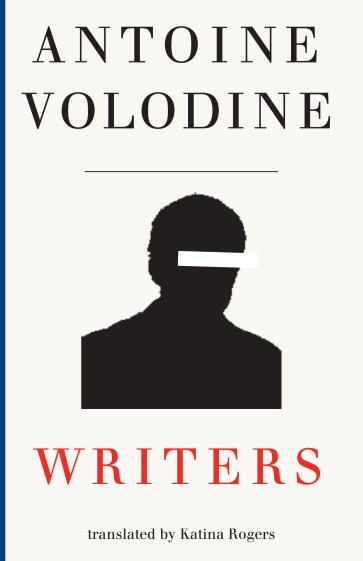
BEGIN-ING, a story by Antoine Volodine

I realized I have neglected this ever-changing list…for any who might be interested. So I updated it today…
“I decided to continue drinking and living in just this way.
My whole life long”
– Georges Bataille
Chin-deep in labor, family, relationship & studies…
Maurice Blanchot, The Space of Literature

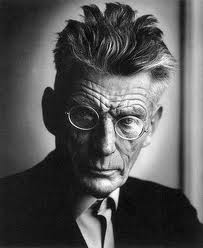
Samuel Beckett, The Grove Centenary Editions
Franz Kafka, I Am a Memory Come Alive
Enrique Vila-Matas, Bartleby & Co.
Gilles Deleuze & Felix Guattari, A Thousand Plateaus
William James, The Writings of William James
Edmond Jabes, The Book of Questions
Friedrich Kittler, Discourse Networks, 1800/1900
William Franke, A Philosophy of the Unsayable
Ian Hodder, Studies in Human-Thing Entanglement
Paolo Virno, When the Word Becomes Flesh
Werner Hamacher, Minima Philologica

The placing of propositions or clauses one after another, without indicating by connecting words the relation (of coordination or subordination) between them, as in Tell me, how are you?.
Parataxis is a literary technique, in writing or speaking, that favors short, simple sentences, with the use of coordinating rather than subordinating conjunctions (from Greek for ‘act of placing side by side’; from para, ‘beside’ and tassein, ‘to arrange’; contrasted to syntaxis or hypotaxis).
It is also used to describe a technique in poetry in which two images or fragments, usually starkly dissimilar images or fragments, are juxtaposed without a clear connection. Readers are then left to make their own connections implied by the paratactic syntax.

Difference or change in the apparent position or direction of an object as seen from two different points; (Astron.) such a difference or change in the position of a celestial object as seen from different points on the earth’s surface or from opposite points in the earth’s orbit around the sun. Also: (half of) the angular amount of such a difference or change; (Astron.) the angle subtended at a celestial object by the radius of the earth’s orbit, giving a measure of its distance from the earth; any of various similar measures of distance calculated by methods incorporating the motion of the sun relative to the local region of the galaxy, the proper motion of the observed body, the motions of a cluster of bodies having similar distances and speeds, etc.
Parallax is a displacement or difference in the apparent position of an object viewed along two different lines of sight, and is measured by the angle or semi-angle of inclination between those two lines. The term is derived from the Greek word παράλλαξις (parallaxis), meaning “alteration”. A parallax is the difference in the angular position of two stationary points relative to each other from different viewing positions.

You think twice. You plan. I do these things.
Finally incapable of mind over matter. The capacity of drunkenness. Full experience.
The body. The lust and wanting. The work to let it alone. To surpass or supersede.
Supplant desire with will.
Language works with, on and in the body. Larynx, lung, tongue and movement. Gut, brain and blood.
Without satiating muscle. Without exhausting the possibilities. Without terminating lust.
I think twice. I plan. You do these things.
Intention. Commitment. Decision.
“I will transcend the body. I will overcome desire. I will compensate and supplant urges with verbs. Consonants will become my flesh’s contact and content. Interoperation with world will equate to traversing its languages. To write will be my sexuality. Language my intimate other.”
I will compose my satiation. I will think my end. I will language my undoing and completion. I will create what I need.
Still the body rises. Erects itself. Rushes and longs. Aches.
I rub language all over it. Stroke it with breath and sounds. Caress every part with a term. Toy and pleasure each hollow and tense with tongued noise.
It wants. It desires. I want. I desire. I long for what it says without diction.
Be Drunk
Charles Baudelaire, 1821 – 1867
You have to be always drunk. That’s all there is to it—it’s the only way. So as not to feel the horrible burden of time that breaks your back and bends you to the earth, you have to be continually drunk.
But on what? Wine, poetry or virtue, as you wish. But be drunk.
And if sometimes, on the steps of a palace or the green grass of a ditch, in the mournful solitude of your room, you wake again, drunkenness already diminishing or gone, ask the wind, the wave, the star, the bird, the clock, everything that is flying, everything that is groaning, everything that is rolling, everything that is singing, everything that is speaking. . .ask what time it is and wind, wave, star, bird, clock will answer you: “It is time to be drunk! So as not to be the martyred slaves of time, be drunk, be continually drunk! On wine, on poetry or on virtue as you wish.”
Language. Alcohol. Language. Alcohol. To void and satiate the body. To provide full experience. Pair satiating self. Ache and desire. Want and sensation. As a whole – the desire to be drunk – to fulfill – saturation of pleasure and knowledge – perception/sensation and abstraction/thought – TO RESPOND. Shower the body, challenge the mind. Work the muscles. Lingua the self. Tickle with letters and edges; heat, fill, temper and calm salve and sensitize the skin and organs – flood the whole: language and alcohol. Avoid depending on kind, species, occasion. Avoiding dependency.
How might an human organism satiate itself?
I dreamt language. I imagined correspondence, intelligence, sexuality, the wide-openness of commerce between one human and another. Particularity, difference, biology, culture, knowledge, capacity undoes this. Incapacitates convergence. Ruins union.
Intimacy with other = impossible.
Intimacy with self-system = ?
Language. Alcohol. Immaterial / Matter. Body-mind. Embodied mind. Enminded body. How solve desire? Lust, want, biology, sociology, anthropology (and so on) – the logoi of BEING HUMAN.
Be wild and crazy and drunk with Love,
if you are too careful, Love will not find you.
~Rumi
Love depends on Other. Love depends on converging, connection, call / response / return. Love is impossible. Cohesive mingling.
To say the unsayable. The reach beyond. The experiment, invention, imagine. Commerce with species and kind, taking it in (language), absorbing and transforming seeds, spewing it out (language). Giving / Giving Back. Receiving / Offering. Language – perfect intimacy seed. Perfect contact and context differentiating and responding each to each, body to body, mind to mind… sans orgasm, sans drunkenness, sans satiety… regardless of ecstatic fullness.
This is the disaster.
Unfillable.
Insatiable (body)
Satisfied mind.
This is the disaster.
“poetic language directs us not towards what gathers together but rather towards what disperses, not towards what connects but rather towards what disjoins, not towards work but rather towards the absence of work […], so that the central point towards which we seem to be pulled as we write is nothing but the absence of center, the lack of origin…”
-Francoise Collin on Blanchot
Click to access Peter%20Pal%20Perbart.pdf
Click to access Peter%20Pal%20Perbart.pdf
“I am affected not just by this one other or a set of others, but by a world in which humans, institutions, and organic and inorganic processes all impress themselves upon this me who is, at the outset, susceptible in ways that are radically involuntary. The condition of the possibility of my exploitation presupposes that I am a being in need of support, dependent, given over to an infrastructural world in order to act, requiring an emotional infrastructure to survive. I am not only already in the hands of someone else before I start to work with my own hands, but I am also, as it were, in the ‘hands’ of institutions, discourses, environments, including technologies and life processes, handled by an organic and inorganic object field that exceeds the human”
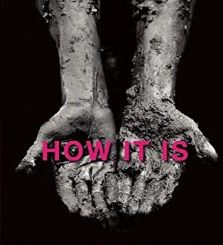
“Help!?”
He cried, it cried, I cried. But help, it will not come, for me. And why should it? Who could owe me assistance, and why? And what would it benefit another? Even how might the crying become? Often silent, unheard; a gesture or tone; a constant “I am unable to do this alone.” There’s no reason. No reason that someone might help me.
Help has come. Many times, and that greatly. Otherwise I would not be alive. Irrational, inconceivable, as ‘last measure,’ – the cry’s been expressed, even shouted or posted: “I need help or we will not survive!” And it’s come. Never “I.” The yelp always weighted with “we.” In deep over my head as a man, as a father, a worker and thinker as well – always “help!?” Needing contact or touch or attention. Needing hearing or care or advice. Needing teaching, protection, support. Needing money or sitters or transport. Needing food. Needing shelter. Such needs.
I need help. “I.”
Whatever effects or affects, I believe that I do try to help. To have food for my children, and beds. To respond to emotional traumas, disturbs – to hear and attend and comply. To love others embodied and minded. Within (my) reason, I do what I can to assist, especially those gathered about me. I experience my’self’ as RESPONSE-able – once engaged there’s a sense that I must. Some say that we choose to do good – but I question. Many insist we always have choice, yet I seem unable to abandon or neglect, unless, perhaps, my “self” or theoretically. I am prone to the “people are people” – shaped by time and engagements – to behave in the world as they are, and continue the way that they be (in small measure). The issues of scale and of time. We do what we can to survive. Some prone to survival of others, some not. Depends on the value of “self,” so it seems. I help, which develops that value (I hope). To think I might matter, be dependable/depended on, be important – to someone, somewhere, at some time. Survive.
And I notice myself ever howling for help. Help!? As I age, I distinguish the needs. Need for contact and talk – to think and to feel; needing help with evolving demands. “Man,” “parent,” “student,” “professional,” – all extensions of what I once was – just a “human.” I can’t even survive being that, let alone all these complex designations. Artificial “helps” like alcohol or nicotine, religious belief or “self-help” seem to do as much harm as relief. As babies and aged we are weakened…our “primes” occasioned by a nexus of supports. In our weakness, we comprehend need(s).
I need. “Help!?”
Without knowing what it is or might look like. I know that I’m drowning. I age. I know no one owes it, the benefits would have to be rationalized. I fail. I can’t go on. I must go on. I go on.
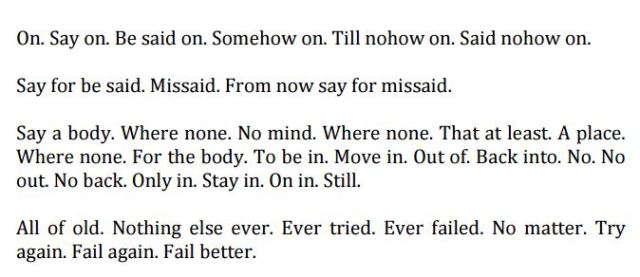
You must go on, that’s all I know.
They’re going to stop, I know that well: I can feel it. They’re going to abandon me. It will be the silence, for a moment (a good few moments). Or it will be mine? The lasting one, that didn’t last, that still lasts? It will be I?
You must go on.
I can’t go on.
You must go on.
I’ll go on. You must say words, as long as there are any – until they find me, until they say me. (Strange pain, strange sin!) You must go on. Perhaps it’s done already. Perhaps they have said me already. Perhaps they have carried me to the threshold of my story, before the door that opens on my story. (That would surprise me, if it opens.)
It will be I? It will be the silence, where I am? I don’t know, I’ll never know: in the silence you don’t know.
You must go on.
I can’t go on.
I’ll go on.
Philippe Lacoue-Labarthe – Ending & Unending Agony: On Maurice Blanchot



“Man does not live by bread alone, but also by the comedies with which he willingly deceives himself.
In Man it is the animal, it is the natural being, which eats. But Man takes part in rites and performances.
Georges Bataille – Hegel, Death & Sacrifice
for lispector
“and it came, with its long passageways without end”
-Clarice Lispector, Soulstorm –
and then again, the words, the words they came, presently, fluently, astonishingly as miracles, your body, the languid haunches – temptations, always – your breasts – these letters, formed in the hands…you, you, you, all of you, and I want/ed, I want, I am wanting to grapple, devour and subsume, consume (no, never!) you, but utterly – to the end – to everything – a swallow and fire and drowning and drought – to eviscerate, desiccate, absorb – to thorough you. I want to thorough. I want to you, thoroughly. Yes, that is what. That is the who what am I? The always when and every how – I want you thoroughly, but not you as realized by or digested in or taken or given or experienced thoroughly (without remainder) but rather
What I am saying (without remainder) What I mean is, what I am saying, shouting, quite silently shrieving, shrieking, screeing, WHAT I CRAVE REVEALING ENTIRELY BY RAVAGING TO END…
I WANT TO YOU.
And I want you to want to me, as mad, as madly, as terribly and
I am ravenous now, each instant and you for starving for me (I’d like that – have me)
but yes and I am having taking giving receiving AND YOU.
I do not understand.
It maddens, controls,
frees.
And this is what I mean.
In hopes that I was born for this…
for Hallie
Student Magazine of IISER Mohali
Music, Musicology, and related Matters
a photographic pilgrimage to Orthodox Christian monasteries across the continent
Meandering Through a Literary Life
Orthodox Christianity, Culture and Religion, Making the Journey of Faith
Erik Kwakkel blogging about medieval manuscripts
"That's the big what happened."
Networking the complexity community since 1999


 All my Words are Silent