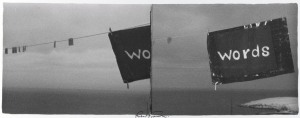
Happy Valentines Day
So many thoughts…so little time…words too…
Happy Valentines Day

Happy Valentines Day
Would appear somewhere, must, would need to, a chapter called “Where Now? Who Now?” by Maurice Blanchot on Samuel Beckett…

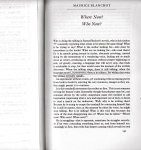
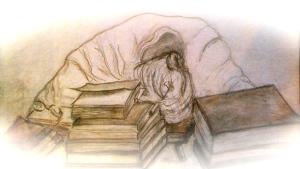
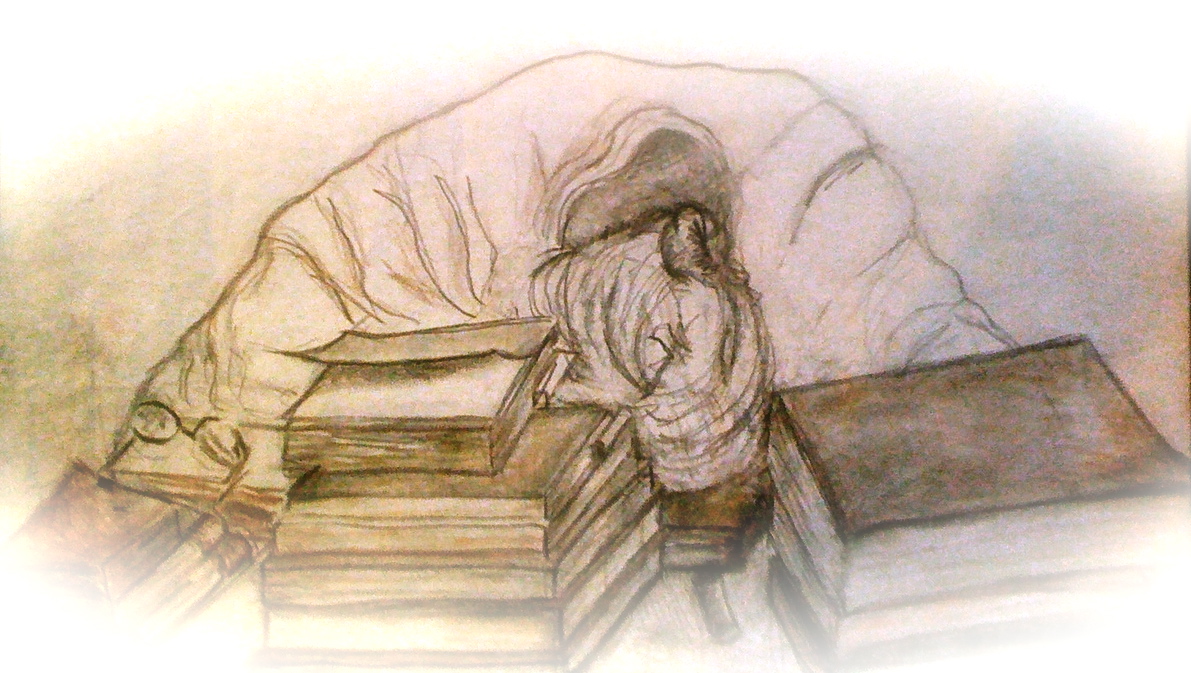
On Reading
It adds up
it weighs down
this unknowing of things
without being
what they say
to each other
once inside
reaching
the angle of repose
adding up
weighing down
like an ocean
its surf
and its merciless drowning
N Filbert 2012
Up Against the Word(s)
– a philosophy of language series –
in the sociology of knowledge
[if this book were a book and shaped like a rectangle, it would be redundant among other things and so on, but perhaps it is a circle and therefore repetition is therefore]
(one of many disclaimers)
Part the Second: True to your word(s)
And so one must wonder over/about how to shape or forge a writing that might be “true.” True to what? is the question that first comes to my mind. Immediately I sense an answer along the lines of “true to experience, human experience, living.”
Okay. But the options are many, perhaps limitless, no? It is easy to imagine someone setting out using language in hopes to be true to a theory, or a memory, an historical event, a relationship or a dream, a feeling or a painting one has seen. Some may intend to be true to the present (as it’s occurring) or to the past as it’s been recounted or remade in language or impression? To be true to ideas or previously languaged things (obviously involving so very many removes and hypotheses about what the previous tellers were attempting to be “true” to, or not). Or how about language itself, theis malleable system of signs, communication – how it works, what it references, invents, incites, depending on the terms selected, their organization, pronunciation, punctuation, etymologies, contexts and ideologies?
All would apparently boil down to the experience of the one implementing the signs: how that one has acquired the forms, contents, vocabularies, grammars and syntaxes of the utilized signs, or, beyond that, their singular perception and interpretation of their own memories, relations, readings, hearsay, acquisition of data and so forth. All to say “truth,” if one means by that some objective correlative to actuality, to “things as they are,” seems highly suspect, even as in this case, I might attempt to be “true” to the highly suspect meaning of the word and signified concept (ideology) “truth.”
So, if correlation to actuality becomes a highly individualized affair of each language-user, that a human, in fact, cannot hope to use words in any fashion directly translatable or apprehensible to another…why the setting out to inscribe?
One might suggest it’s a relative thing – like space and time – that communication takes place in fields of overlap between the flexible meanings of signs. That one hopes for difference and therefore the requisite similarities, to provide and provoke comprehensions limiting and expanding but somewhat assimilable – conversational – texting-with, vocalizing-with, another or others…some active reduction and proliferation of possibilities between multiple language-users and their contexts of situations.
Fair enough. A hope for convergences in a commonly based palette and culturation. Generalized and individualized from all sides.
Is this what the “writer” is after? Some correspondence (between themselves and their experience, between that relational complex and others)? Perhaps. Or maybe more accurately the languaging impulse fluctuates along a vast scale of minute gradations of aims and intentions, including, always, the relational effects of using (participating, knowing) language itself. It’s a mud pie! And so beautiful it looks like chocolate mousse sometimes.
And just became so, in the metaphoring of a kind of pie some persons will recognize, depending on their own experience and the culture they come from.
In part.
for anyone who wishes – Gombrowiczian bric-a-brac
February 11, 2012 7:30 PM
To be doing some hard and serious thinking about what I believe to be the case, situation and usage of language
and of consideration of what I/we consider to be real, or what might be happening in living
these might be my simple core
and thus to use/compose/engage language relatively and relationally
self to self self to others
self to word word to self (to~with)
therefore when “I” use words (always relating to “not-I”)
what am I how am I DOing
FOR what how who am I DOing
BEing in/with/of language and others
itself – itself – itself (also, as far as possible) RESPECT
= ?
This composes my practice
composes (therefore) my actual living
Relative Gestures Relational Signs
TO BE
I guess
(for now)
“genres” (active generalized forms) enable, each with limited emphases, effective emphases, differences in/of these inherent relational aspects of words
to thing to word to story (experience, expression, presentation, inquiry)
to spacetime to inner to outer to content conveyance (data, history, event, character, external) and so on
but word always retains potentiality possibility between/beyond each of its performances/uses (is always also somewhat itself touching all its points of relation relativity)
THEREFORE…
UP WITH THE WORDS
– a philosophy-of-language series –
in the sociology of knowledge
“In handwriting, the relation of Being to man, namely the word, is inscribed in beings themselves”
-Martin Heidegger-
“Saying ceases to signify: it reveals realities that are unintelligible and untranslatable
but not incomprehensible. It does not signify, yet at the same time
it is impregnated with meaning.”
-Octavio Paz-
“‘I’ and not-‘I’…one projecting the outer world to the inside,
the other projecting the inside to the outer world [perception],
as a result of mutual conditioning…
language creation occurs where new layers of reality and insight
are opened up.”
-Hermann Broch-
“full of you’ll never know what will turn up”
-Madeline Gins-
Part 1: Writing at Hand (Drawing from drawing, sketches of the word)
To be rigorously true to real life (living, forming, becoming, always changing, and “full of you’ll never know what will turn up” –Gins) – its core, its essence, an identity or style: FLEXIBILITY.
To be: artifacts in space and time, “beings themselves,” words : inscribed with fullness of life, as fullness of life, into the arena of malleable life.
Object and action. Content informed. Activity and expression. Artifact and energy. Verb-al and signifying. Image and text.
Fluid like air bordering, permeating all things
Substantial like raindrops and rocks – objective presences, assimilable and distinct.
Energy and stasis. Reduced and expansive.
Sign and signifiant.
subject and object.
WORD.
medium and matter
conveyor and creator
virus and vaccine
WORD
symbiosis and annihilation of Either/Or
inherent argument against Both/And
Presence and/in/with/through Absence
WORD
a thing, an action, a subject, an object, a without-which-perhaps-nothing,
a with-which-very-little
almost nothing
WORD
possibility and elimination / among and without
the difference
WORD
bridge and abyss, rift and synthesis
cleft
WORD
perception and preconception. observant and observed. verbal and nominal.
comprehensible and ineffable
WORD
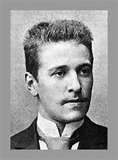
Each time I read again von Hofmannsthal’s “The Letter of Lord Chandos,” I resonate with it profoundly, each time with unique phrases and observations in it. Today it is the bewildering of art-working, the too much and too little of it at once. The overwhelm that becomes as perception received / perceptions projected cross and mingle in a deafening void – filled with “the thoughts of so many others caught and resting there.”
Hermann Broch, writing on von Hofmannsthal, speaks of man “unable to bridge the tension between perceiving and the perceived, completely at the mercy of unperceivable experiences, of objects, their impalpability, incomprehensibility, their irony…the contrast of the ‘I’ and the ‘non-I,” of being-‘I’ and being-the-world…one projecting the outer world to the inside, the other projecting the inside to the outer world, a result of mutual conditioning.”
“For of what elements does this non-‘I’ consist, this exterior world wherewith the ‘I’ is supposed to identify itself? Firstly, the world is in constant motion; secondly, and this is far more disturbing: all means of expression (linguistic or otherwise) given to man to describe the world are part of that world; and thus, thirdly, with each act of identification a portion of the ‘I’ enters the non-‘I’, changing and enriching the non-‘I’ so that a new act of identification becomes a necessity…which leaves only ever a work in progress and never a completed work of art”
“My case in short: I have lost completely the ability to think or to speak of anything coherently” I feel the terms crumble and proliferate in my mindmouth (heart?) – “to me it is as though my body consists of nought but ciphers which give me the key to everything” – the impressions that stir in and assault me, the world and its stuff that I soak in, hear, sense, the thoughts of so many others – indecipherable ciphers in me that feel they possess the key to everything…but for which I have no words…
So I face and engage the world, “experiences,” events, persons, the blank page, pregnant, saturate with languages that don’t equal…“because the language in which I might be able not only to write but to think, is neither Latin nor English, neither Italian nor Spanish, but a language none of whose words is known to me”
continually speechless in this profligate void
So what is to be done? No completing, “a new act of identification becomes a necessity,” apparently woven of my scattering perceptive confusion/profusion and all the not-‘I’ that feels so everywhere-at-once…it leaves Chandos silent, and a whole tribe of Bartleby’s…faced with a world and enormous impressions…but no apparent vocabulary fulfilling them both?
Silence? Or, possibly…
“Saying, it ceases to signify: it reveals realities that are unintelligible and untranslatable but not incomprehensible. It does not signify, yet at the same time it is impregnated with meaning” (-Octavio Paz-)
The breaches…speechless moments…never quite right…can I swing them? Term the betweens? To the breach – !!
Again with the word-thing! I feel immersed and splendored with what language is and does! Books like Ernesto Sabato’s Angel of Darkness and Macedonio Fernandez’s The Museum of Eterna’s Novel. Adam Thirlwell’s Delighted States and Octavio Paz’ Convergences. Eugenio Montale’s The Poet in Our Time and Jacques Roubaud’s Loop. J.R. Firth’s Papers in Linguistics and Kierkegaard’s Philosophical Fragments. Madeline Gins’ Helen Keller or Arakawa or C.S. Peirce on signs. The verbal object astounds and amazes me in its flexibility and invention, its capacities and catalystics. Simply holds me enthralled!
For instance: I draw a line (scribble a text) and immediately there are two parts which are inseparable. How describe that activity? Did I separate or unite? Both. The difference. Bridge and abyss. Rift and collapse. Reduction and expansion. All in this active solution, signs gestures language. Yeesh!
Celebrate today! Ingest and create! Read and speak! See what words do and ask what would there be without them, whether inner speech or conversation, engagement with the world or invention of the self. See how far words go!

Parables of the Headless Baby
How incredibly easy it is to “lose our heads,” amorphous ecstasy, “head in the clouds,” illusory daydreaming, belief. The “temptation to exist” it has been called, and has been endured by our best and our brightest, from Plato to Jesus, Descartes to Nagarjuna, Shakespeare through Kant, Derrida and Joyce, to name only a very few, known for their thinking or seeing.
Or is it our bodies we lose?
A lot is told in the answering.
I for one can identify with this beat-up baby doll head, imagining the oblivious calm that might occur in the absence of smoker lungs and knotted muscles, distracted striving loins and aging jalopy’d joints. Hunger and exhaustion, labor and waste production. That I might be left, more or less, to a self to blame for satisfactions or their lack. Serenity secreted in the mind rather than constructed contradistinctly from the limbs and necessities of action. This mouth seems happily stopped, placid skinned-over ears, a pleasantly plugged nose and the solitude of inner vision. “Nirvana” another camp might call it.
But is it? Or would it be? I mean where do “space” and “time” inhere? And how about worry, panic and fear? I gladly turn emotions over to the sensory systems, but the imagination that prods them toward anxiety – is that not in my brain? And what of the “wisdom” of Helen Keller-types – that openness and fecundity – that corpus callosum of skin?
Either instance obviously ends in despair. The body inherently “feels” and feels doomed – a lifetime of bloom to decay. The change purse or trinket-drawer of mind doesn’t last long on its own without morphing to a padded cell.
So is “decapitation” really what occurs? They say the gaffer will go on gabbing once removed, but the muscles twitch and gangle about no less, and we keep producing shit synchronic with our escaping lives.
Thus in our ecstasies and flights what is it we lose? Are we really moved “out of” “stasis,” really set a-soar? Freed of our boundaries and weight? Or are we fleeing to a smaller cave, compressing our “self” to a dark hollow like lint in a pocket?
After all, if freedom refers to space and time and opportunities of will – movement favors the body, miracles the mind.
I’m guessing de-headed bodies lie still, and unbodied faces exhibit calm because they’ve ceased to be alive. Perhaps the symbiosis is mutual torment, destructive dynamo.
In reality, they come apart quite easily.
How would one say “a head without a body is like a body without a head?” Or in other words, “we must cling to it like grim death” (Kafka)
Whatever that means, I feel caught in its clutches.
And freed to be.
N Filbert 2012
“one looks…
As one improvises, on the piano”
-Wallace Stevens-
I journaled to myself how very much I enjoy the rain.
Change of key: rainy weather.
I trilled on it – from the meteorological phenomenon of the conditions of precipitation, I inevitably wake in the highest spirits, with good courage, a sense of personal human value and a fair share of blessing and luck.
Turn the page: I treat cloudy skies and falling water as if someone is being good to me.
A modulating moment, kind of pregnant pause, then a new left-hand rhythm: Why?
The previously clear melody of childhood and adolescent memories – softness and solitude, safety and comfort that raininess or “inclement” (my ass!) weather emits – enabling isolation, self-direction, personal space and a muted blurring outer world – became difficult to follow to its source.
The phrase “all’s right with the world – it’s raining!” came to mind along with a tune by Nils Frahm and the musics of Max Richter and George Winston, remote mountains and valleys and trees.
My fingers played.
My mind drummed along, the feelings were there leading the charge.
Passion piece – movement two.
Right-hand flourishing: ’cause I feel blessed, like Someone’s giving me something I want, that I like, that I wish for. Like when the sun shines down Somebody don’t like me, is a-keeping it from me, that ol’ world’s against me all those dry clear days, no matter how Springy and delicious or moderate and breezy, no, without precip It don’t like me, It don’t give a damn – but while raining I’m in love
Transition and bridge: How can weather be for or against you man? Dem skies is neutral, and repeat.
Chorus breaks in with bravura: Rain is for me, the clouds protect; the sun it rapes my ass
Staccato cries harsh in the bass, high notes tinkling down: grace grace grace
Key-change beginning in bass triads: but I thought you don’t believe no god
Clustered dissonance in treble: strange isn’t it, as if deities controlled the weather – blessing/ withholding; assuaging or punishing me
Rachmaninoff chords: meteorology and Fate
Scrap it…
New tune, tender and self-reflective: why would I place my power of mood in the maw of Kansas sky? Impetuous forces, schizophrenic fronts – determining my well-being?
Dominant fifths, arpeggiated: it’s crazy, it’s crazy, insane
affirmed acknowledged and chosen by rain
which has no will or intention
no character or personhood to blame
persecuted disciplined intruded by sun
helpless victimization without perpetrator
Sforzando: the Self!
Resolution: ah shit what am I? do I do? How come I elevate personal responsibility, candor and value to elements under no one’s control?
Strange Brew syncopations: it ain’t right, ain’t sensible, but I’ve lived this way so long
world as some gigantic force
for me or against me
and with my will
I interpret against
Hornlike dash scattered be-bop treble:
I call it I name it – AFRAID!
I feel so small in the face of things
powerless helpless confused
I get nothing but the space that It gives
and it hurts and it wounds and it alters
Arbitrary cadenza:
but it make no sense in the world
of people and places and things
I could choose I could feel I could be yes and say
but I give up the power to You
(nothing nothing nothing)
NO WAY!
That ain’t no kinda life – depending on the weather
no wonder they call you crazymaker
manic
depressive
mood
you gots to get it in there and say what’s what
and sing
not only when it’s raining!
If’n you love that rain – you takes it with you
make it your own gray way
I say
because it’s raining
and everything
feels possible
fading out….
N Filbert 2012
Student Magazine of IISER Mohali
Music, Musicology, and related Matters
a photographic pilgrimage to Orthodox Christian monasteries across the continent
Meandering Through a Literary Life
Orthodox Christianity, Culture and Religion, Making the Journey of Faith
Erik Kwakkel blogging about medieval manuscripts
"That's the big what happened."
Networking the complexity community since 1999

