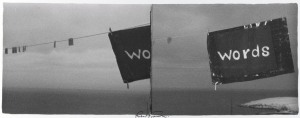
“All I know is the text” – Samuel Beckett

“A voice comes to one in the dark.  Imagine.

…Deviser of the voice and of its hearer and of himself.  Deviser of himself for company.  Leave it at that.  He speaks of himself as of another.  He says speaking of himself, He speaks of himself as of another.  Himself he devises too for company.  Leave it at that.  Confusion too is company up to a point.  Better hope deferred than none.  Up to a point.  Till the heart starts to sicken.  Company too up to a point.  Better a sick heart than none.  Till it starts to break.  So speaking of himself he concludes for the time being, For the time being leave it at that” – Samuel Beckett, Company

“The words spoke by themselves.  The silence entered them, an excellent refuge, since I was the only one who noticed it.” – Maurice Blanchot, The Madness of the Day

So, speaking of himself, I only noticed it.

The small furry animal, almost humming in its purr, he had chance, so he thought, to please, to comfort, with a pet, a scratch, an acknowledgment, tender, while it butted and marked itself against him.  The illusion.  A kind of company in itself (or to).

The ungrammaticality of occurrences.  Of happening.  What happens to be.  Or is not.  When speaking to himself.  Without voice.  I was the only one, as far as I am able to tell – if in fact this is telling – who noticed it.  It seems words speak of themselves.  From elsewise and through whom.  He says, speaking of himself (or to).  Without voice.

Devising.  Illusion.  I devise, he says, speaking to himself, of himself, without voice.  Seeking – is he? – Am I? – Seeking…company?

A small child (another illusion, devised) passes by, walking a young dog and waving a nod of sorts – I don’t remember which, he says, but I returned a gesture and obtained a moment of calm in the chilly Autumn breeze.  There was a sun full of color due to the leaves in their change, and fall, and flutter (due to the nothing-shaped wind).  But what seemed a moment of warmth, of calm, devised by a child with a dog and a friendly (fearful) gesture, he thought (speaking of himself without voice), I was the only one who noticed it.

I take to reading then – others speaking of themselves without voice (or beyond it) – in order to devise… company? he wonders of himself, to himself.  For when reading, it surely seems the words are speaking only of themselves, no matter who pens them.  Such the character of the texts he chooses (I thought of myself, to myself, or an other I devised as myself, like puppets).  And in part read and read for the experience or feeling that I alone notice it.  That I might in fact provide the company I devise, yet hardly able to tell since I have not penned the words but merely notice – borrow, listen? (there are no voices) – the words seem to speak of themselves.  Without voice.  (He said of himself, devising).  Something like company.  Perhaps.

Even in the color-filled sunlight of Autumn days, I at times experience myself as being quite deeply in dark, he says speaking of himself, myself, devising voices, soundless, out of words that seem to be speaking only of themselves and their variegated histories and usages, and billions of potential speakers and hearers and interpreters – creators and devisers – filled with ambiguity and application.  Here with me on shavings of dead trees, providing stark living contrast to Winter’s day-night.  I get confused, he says speaking of himself.  Confusion too is company devised, up to a point, I suppose.  Obviously “fusion-with” implies an other, perhaps enough, I said, speaking to myself, without voice, here on dead leaves in black scars.  In mutilation.  Transgression.  Inscription.  Perhaps the words will speak of themselves and some other “I” will claim to be the only one that notices.

A strange delusion of company indeed.  He says speaking of himself, devising a voice, its hearer, and an himself as participant and therefore a company to keep.

Reading: “only a detour is adequate” (Agamben), and “in pursuing meaning we are pursuing our limits” (Allen), and was perhaps meaning a synonym or metaphor, simile or metonymy for company he thought, speaking to himself, without voice.  But with an illness, diagnosed by doctors – those scientific political powers responsible for providing facts or devising happenings, pronouncing occurrences – so in any case he is not alone, being-with his illness, I thought, speaking to myself in an absence of sound.  The words spoke by themselves.

Other things as well: the furry animal, its humming purr, its actions; the trees, the leaves, the wind, the light.  The child, the dog, the gestures.  The books, the authors, the words themselves.  Divisors of voices, of hearers, of selves.  Sick hearts, confusion, and company.  Am I the only one who notices? he says speaking of himself, speaking of himself as another.

So speaking of himself he concludes for the time being, For the time being leave it at that.” – Samuel Beckett

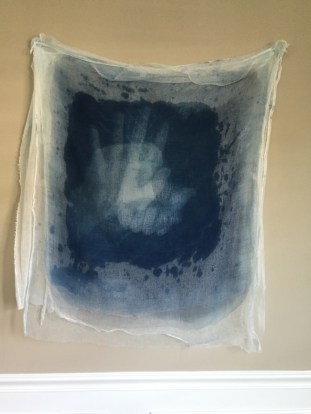


Untitled Fiction III

III.  “…with murderous care…”

Jon had said, to Jesse, about the fires.

So we persisted, Jon, Jesse, and I, and the deceased Beckett, with perhaps thousands of others, unbeknownst any to each around some mythical innermost.

“Fail better.”  The worst times are the ones in which one simply wants to quit failing altogether.  Unfortunately (literally) that necessarily entails a kind of “end of the world as one ‘knows’ [perceives, participates, experiences, or imagines] it” – either suicide, tragedy, ‘terminal’ illness – death of some sort.  Maybe silence, but that’s not certain.

The game table is always already laid, you’re always simply ‘entering’ it (LW points out this fallacy in his collections of numbered critiques of anything anyone writes or says or claims) actually (as far as we know) always already there (where you ‘find’ – what?!? – your ‘self’ – what?!?) and (again, perhaps, literally, unfortunately – or at the very least extremely limitedly) you can only occupy one position at the table (or wherever the action happens to be) at a time, that, unfortunately, always involves the very delimited…well, YOU.  These are the arrangements as they transpire.

Language can (and does), we surmised, go anywhere.  I try to record, invent, notate, mark, initiate.  It all seems unnameable.  Or of far too many names, references, usages, subtexts and connotations, inferences and denotations, already implemented in order to represent anything undone, reconstructed, deconstructed, novel or ‘new.’  “There’s nothing new under the sun” was already a cliché at the beginning / in the earliest phases.

Fires and voids all imagined early.  [Apeiron.  Chora/Khora.  Clinamen.  Flux.  Infinity.  ABSENCE.  The ‘Other.’].  I begin.  Again.  GWFH and Freud refer to this as “repetition.”  A hopeless hope of emergence.  As different or unique as it may seem, ever a plenitude of the pre-existing.  The already-there.

Been there, done that, Beckett exhausts from his grave alongside.  “He was found lying on the ground…a voice comes to one in the dark” Imagine.  Imagine.  Everything is already there.  The table set and set again, arranged.  Already there when you wake to it.  World.

It hasn’t…apparently…been given up.  Perhaps it is inexhaustible.  Limited though we be, we seem to be teeming with it/them… efforts at the unsayable.  Unnameable.  How it is.  What is the what.  Lost in the labyrinth of the occurrence, experience, now with shoddy, partial, biased and over-specified or eccentrically particular maps, guides, or rulebooks.  Ourselves.


Untitled – Fiction for Becoming

sleefa2016
image by Summer Lee – http://www.summerleeart.com/

Untitled Fiction : Years of Birth, Becomings

Jesse’s working up something, so is Jon.  I’ve begun working again.  Beckett is still dead.  Or dead, still – either way he has not concluded.

There was plenty of talk – banter, chatter, fulminations, really – to the contrary, to the effect that the ‘working up’ had ceased, had dwindled, long since dissipated or been simply forgotten…not so.  Now I’ve heard from Jon and Jesse, piecemeal though it be, and my own ‘working-on’ (or UNWORKING, as MB always referred to it) is near to its inception.

Something is going to emerge.  Jon repeats and repeats that “Someone is going to come” and Jesse appears to have passed beyond the silence once begun, through all his notes of suicide, toward fire and conflagration and some bewildered youthfulness.  Nohow On become a MUST.  And all of it inconclusive, i.e. not concluded.

I work in, on, up, and ever forward, toward – ‘toward the what?’  Jon keeps asking while Jesse scrawls on napkins – figures like cartoons, clowns and foxes, masters, slaves, and mysteries – our locations go unmarked, our whereabouts unknown.  This is How It Is, according to Beckett and MB.  FK in the burrow.  Plato in a cave.  JD taking apart each domicile, meticulously.

We are looking for a place to work at our unworking, the time and space to be for what is not.  Beckett named it The Unnameable.

I took to the books and letters, while apparently the others wrote, made messages and codes, secreted the symbols into texts and silences, plays and fictions full of pause.  GWFH, another spell of YHWH, foretold this long ago: “the ends are reached and reached beyond, folding under, folding through, reached again, again, and…”

For years now Jon is melancholy and therefore quite abbreviated, unable to go on, full of stutters, repetitions, and always the questions, questioning, questing, the undone.  Jesse through his trials and papered rooms, sometimes near and sometimes foreign, never-know, never-mind, never-where, scraping geography and clouds in search of where No Where and Now Here meet.  I’ve thus far been unable to locate him.  As for Ivan, Ivan and Enrique both stopped working after the library of loss – assembling detectives, interviewing the dumb and victimized, missals here and there, mostly filled of snow and jungle.

I think: crows spread across the overcast, charred ash sprinkling fields, nothing rooted, nothing grown.

The unworking.  Almost a throw of the dice.  Half of each sentence erased.  The subtle coterie of literate mathematicians.  Reports from elsewhere.  WG’s layered travelogue… in search of… The work of unworking goes on.

“Splitting on difference,” he said, the passage from mayhem to insight – WG described as “Vertigo,” the verge, the swerve, the swoon.  You reach an edge or limit, what cannot be undone, begin unworking.  Begin unworking there.

At the grave “I can’t go on.  I must go on.  I’ll go on,”  Beckett decries.  It’s not at understanding – “splitting on difference” – but in the going-on, turning over/under, inexhaustibly or ad infinitum – convergences coming undone.

From JD Jesse gets a Post Carte, leaves it somewhere in the margins, but we know.  We know we have heard, even if we can’t re-member.  All variations of death, Jon thinks, Jon writes, Jon says…assembling the book of questions…the interior distance of this fierce and beautiful world filled with women, fire, and dangerous things…keeping MB in infinite conversation.

Some things don’t make sense yet seem imperative.  As if there were a realm of the unsayable, a set of stanzas wedding language and death – signifying nothing – that is to say, a world of unspeakable silence that works like clamor.

Exhausting voice and nothing more.  The trouble with pleasure, with suffer, with become.  None of us trust ideas and yet we generate and respond.

He was found lying on the ground.  No one had missed him.  No one was looking for him… An old woman found him.” (Beckett).  We somehow set out to search.  “That seems to hang together.”  Jon, Jesse, WG, myself, scouring the globe for more – who, what…- “But finally I asked if I knew exactly what the man – what exactly was required of the man, what it was he could or could not say.  No, was the answer, after some little hesitation, no, I did not know…” and so we keep on.

A voice comes to one in the dark.  Imagine.” JD post carte.  Beckett’s own death, still.  GWFH, WG, FK and MB’s left messages, notes, recordings.  “Only a small part of what is said can be verified”…if any.  We are left, bereft, full of fragments, thoughts concluded, forgotten, ignored, but still unworking – in journeys, in dramas, in fire.  Hanging at the limits of ropes.  To strangle or drop, and what then?  What next?  Splitting on difference.  It comes apart, what holds together.  No one knows.  Nowhere, now here, very difficult to say.  Meticulous dismantling, decode – recode – Unicode – uncode.

…Jesse’s working up something, as is Jon.  I’ve begun working again.  Beckett is still dead.  Or dead, still – either way he has not concluded.  Piecemeal as it may be, we are all working on (or UNWORKING, as MB liked to refer to it)…and nearing some inception.

Continuing Reading Writing

“an ‘absoluteness of absence’ if writing is to be possible” – Jacques Derrida

Certain works by Samuel Beckett eventuate an environment of silence for me.  For instance, the brief poem “What is the Word?”

What Is the Word

folly –

folly for to –

for to –

what is the word –

folly from this –

all this –

folly from all this –

given –

folly given all this –

seeing –

folly seeing all this –

this –

what is the word –

this there –

this this here –

all this this here –

folly given all this –

seeing –

folly seeing all this this here –

for to –

what is the word –

see –

glimpse –

seem to glimpse –

need to seem to glimpse –

folly for to need to seem to glimpse –

what –

what is the word –

and where –

folly for to need to seem to glimpse what where –

where –

what is the word –

there –

over there –

away over there –

afar –

afar away over there –

afaint –

afaint afar away over there what –

what –

what is the word –

seeing all this –

all this this –

all this this here –

folly for to see what –

glimpse –

seem to glimpse –

need to seem to glimpse –

afaint afar away over there what –

folly for to need to seem to glimpse afaint afar away over there what –

what –

what is the word –

what is the word

– Samuel Beckett

Perhaps the what where is always what we’re attempting to tell.  Perhaps that’s eternal recurrence / return.  The when is always known.  Always NOW.  The folly, truly folly, of our attempt to tell the what where that is our being, our being NOW, always being NOW, no when needed, no whom known, just what where presently…occurring.  Is this always what we are attempting to say?  To find words for?  To tell?  What where, now?  Always NOW – whether reading or writing, assailing past, present or future – it is NOW that it’s occurring, but what? where?  And what is the word?  What are the words for this what where we’re attempting to tell?  This is my writing, reading – in a way, it seems, the all of it – my folly.  Perhaps what where is unnameable.  

And so I also offer a reading – for even as soon as I re-read my own writing – I cannot remember the whom or what-where of the writing.  Because the reading is always right NOW.  This reading – a chapter from Mark C. Taylor’s book Tears (as both eye-leak or suffering and rift-split-rip-“tear”) entitled “How to do Nothing with Words”  (my own copy a rainbow of highlights and symbolized marginalia – like all that I read significance to). If this sort of thing – this philosophizing or wondering writing – is not of your interest – don’t bother.  But if it is kind of intriguing, or causes curiosity, I find this chapter a compelling and admirable attempt to descry the “what is the word?” tussle I constantly struggle and strive for enacting the telling what where.  

Tears

(click image for chapter, or here: How to do Nothing with Words)

And, after all that…here is neither, a short writing by Beckett to go on with…

neither

To and fro in shadow from inner to outershadow

from impenetrable self to impenetrable unself by way of neither

as between two lit refuges whose doors once neared gently close, once turned away from gently part again

beckoned back and forth and turned away

heedless of the way, intent on the one gleam or the other

unheard footfalls only sound

till at last halt for good, absent for good from self and other

then no sound

then gently light unfading on that unheeded neither

unspeakable home

– Samuel Beckett

Thank you for your time.  It goes on…


Alias Thinks Back…On…

“To bring a work to ‘a conclusion,’ as Picasso said, is like putting an end to a bull – to kill it.”

-Francois Jullien-

diaries

from the diaries…

Woke this morning with a particular feeling.  I’ve never been one to believe people could name their emotions or feelings.  The best we can say are parts.

Words like a parts catalog: indicating pieces and components, but never the working, not the operative whole.  Machines are full of mystery.  What’s hidden.

They say you cannot know.  As you age.  Cannot know if it’s the end, exactly.  Perhaps they’re right – I’ve surely been surprised in middle age, believing everything was lost, doomed, downhill and erosive, some slow and steady depleting – and then WOW!  Who could have known or imagined!  This luck, this place, this woman or experience!  Perhaps.  Perhaps.  But maybe we do.  Maybe we really know, once twilight settles.  I’ve never trusted “them” – the “experts,” the “scholars” and “scientists,” “politicians” or “leaders” or “doctors,” the “speakers for” and “authorities”…i.e. privileged observers (an illusion or delusion or both – no one ever gets to be ‘outside’ existence, any more than any other).

What with Laramie gone, and a birthday round the corner, and language just a parts catalog – my experience.

I woke with a particular feeling.  That things were near their ends.  That I am nearing ends.  Work, love, breathing, will.  That the stories I’m involved with are dwindling in pages, thin and wearing out.  These ‘particular feelings,’ “somehow we just know,” kinds of things: lay down, close your eyes, cross your hands over your chest and hope things are in order.  Or not.  Depends on inclination and values, I suppose.  What one cares about, or for.  Perhaps.  “They” say you cannot know.

I’ve been surprised.  Even wildly.  Much I’ve never been able to believe and yet it seems: my children – engendered by me and of such promise; this beautiful woman that loves me; that I’m still alive.  One never knows (is what they say).  So who knows what?  And how do “they” know that?

I think I do, what with Laramie gone, and my faulty parts catalog, and this particular way that I feel.  I’ve worked too long and too much.  Tried too failingly.  Never quite trusted or believed.  Never found my worth.  Maybe now I know.  Maybe now I’m certain of something.

The end is coming – for me – always concerned and consternated by beginnings – how to start, where to set out – and now, here (nowhere) the path, it dwindles away.  What have I done?  What did I mean to?  What did I wish?  Why didn’t I?

I wanted to write a scholarly work about something that truly obsessed me.  Something I’d spent my life searching.  Something that likely doesn’t even exist, but no matter – because Scrabble, because poems, because science.  Unscramble (by scrambling) the letters – you’ll see: it can almost be said, almost anything – existent or not – almost.  Parts constructing strange wholes and plugged in, eventual malfunctions, repairs – and yet “no matter, try again, fail again, fail better” (Sam Beckett – I’ve read and I’ve taught far too long).

And one solid work of fiction and some poems.  That’s all.  That’s what I wanted to do.

So I studied, and traveled and loved.  Raised children, made music, pushed learning and literature publicly, worked and worked, and drank and drank.  Took in stragglers and strays, made it work where I could, doubted and doubted, desired.  Everything but what I wanted – that’s how you perpetuate desire.

I woke today with a particular feeling, though “they” say you cannot know.  Cannot know for certain, that things are yet to surprise you, yet to get better.  I will not argue.  Perhaps.  But what with Laramie gone, and all that’s undone, maybe I know, maybe we do.  Maybe we’re aware when our endings are coming.  Who could know?  Who could tell us?

My ends are coming.

I can’t go on.

I’ll go on.

(still more from Beckett)

Related: Alias Harlequin

Report: Beginning from the Endless End: A Community of Thinking: The Experience of the European Graduate School

Apply Now: Begin your MA/PhD this Summer 2016 in Saas-Fee, Switzerland

Report: Beginning from the Endless End: A Community of Thinking: The Experience of the European Graduate School

“the center of thought is that which does not let itself be thought”

– Maurice Blanchot

Perhaps a community. 

A community “risking a fragile resilience” (Philip Beesley).

“Distinguishing the indistinguishable.”  “Compatible Incompatibilities.”  “The Origin is Empty.”  “The path to truth is truth itself.”  “More than 1, less than 2.”  We are always with without. 

I feel rich, calm, a sense of belonging.  And loss.  In my second year of a PhD program at the European Graduate School, nestled far and away in the Swiss Alps, in the canton of Saas-Fee.  It is June, it is chilly, high, quiet, separate.  Far from the searing plains of Kansas.  Far from my employment, my partner, my children.  Far from domestic duties and sustaining (endless) chores.  Removed, set apart, drawn up to the mountains, the rivers, the snow.  Another language, an other culture, a situation of difference.

Mladen Dolar, following many great others, tells us we must “slow our temporality.”  That we can “only do philosophy if we pretend to have all the time in the world.”  How could this be done within the everyday?

It feels monastic almost.  30-40 humans from all over the world gathered to hear, speak, inquire and reflect.  Many silences.  All impassioned by the above – the difficult work, accidental work, error-filled work of “distinguishing the indistinguishable” finding “compatible incompatibilities,” facing the “empty origins,” and setting onto the path that has no end, in the risk of a “bad infinity” – of selecting or creating or imagining impossible tasks and eternally postponing them, finding no conclusions, resolutions, foundations – everything put into question, everything problematized, intervened – “the truth is mediation, a passage.”  The happening, the process, of thinking.  So we believe.  And so we gather.  With eminent leaders, guides, mentors (for example, this session: Slavoj Zizek, Helene Cixous, Philip Beesley, Christopher Fynsk, Mladen Dolar, Jean-Luc Nancy, Keller Easterling, Chris Kraus, Alenka Zupancic, Benjamin Bratton, Werner Hamacher, Anne Carson…and more…).  We hear from them, we question, we think with them, think FOR other thought drawn toward us (Hegel, Aristotle, Plato, Heidegger, Foucault, Lacan, Freud, Deleuze, Blanchot, Spinoza, Holderlin, Goya, Beckett, and on…).  What lives, what continues in our seemingly endless end.  What might in-form and unsettle us, what might disturb and enliven us, how we might change-in-relation, again and again and again…

To “take all the time in the world” for 30 days.  To read closely.  To be overwhelmed.  To exhaust.  To end again and again, to fail in hopes to fail better.  To “start in a bad way, in order to arrive in the good.”  The process and problems.  Our “selves” in becoming, the one and the two and the many – always with lack.  Negativity, absence.  “Nothing is identical to itself.”  The “greatest order and disorder exist as one.”  “Constancy is slipperiness and change.”  How do we dwell there and evince.  How do we act to find out?  There is always the other, another, a lack that we seek.  That is nothing, just lack.  Drives and desires and neuroses.  The community of thinkers.

Some of us question “what is wrong with us?”  Why a surplus enjoyment of troubling existence?  Why identities founded on nothing?  “Philosophy always arrives too late” (Hegel).  We can only begin at the ends.  Against nothing.  Yet toward.  And it is here I feel valued.  Here recognized.  Here is a home.  I belong.  In a timelessness of knowing in time.  An everywhere of nobodies anywhere.  Senses replete with mountains and rain.  Clear air and short breaths.  An absence of tasks.  Singular tasks.  Monumental tasks (for me).  That need all of the time in the world.  Are all of the time of the “world”.  Senseless letters.  Turbulent being.  In media res – in the middle of things – when outside already inside, inside where something’s always left out.

My collegiate journals from decades ago are riddled in their margins with: “to be the writer of loss,” “to be the philosopher of grey,” “to compose absence.”  A longing for empty origins since thinking began.  Repetition.

I walk for the body to process.  I dream of sharp thorns in my feet, of lost items, of absence and language and two shades of grey.  Rain comes through the clouds in the fog.  “The end is in the beginning, and yet you go on,” “My mistakes are my life,” – Samuel Beckett.  And so, and yet, I go on.  Intensively, demandingly, having “nothing to write, having no means to write it, and being forced by an extreme necessity to keep writing.” – Maurice Blanchot.

I miss those I hold nearest.  And I love them – how indecipherable the term – further description annuls it.  To say the unsaid or unsayable.  I am confused and elated.  Inspired and exhausted.  Drawn forward through despair.  And I love this experiencing.  It belongs.

“If nothing were substituted for everything, it would still be too much and too little.”
― Maurice BlanchotThe Writing of the Disaster


Discursive Tangles

SighForSignificance-1

Increasingly I find myself filled with the desire of simply saying what I think about.  To some generative effect.

“We live.  We die.  We wish the living mattered.”

But “that’s too simple,” you say.  “Everyone knows that.”

And you’re right, again, and it’s the best that I can do.

Not that I don’t do other things, in living.  I hold jobs and work for pay (at nearly ANYthing) to keep a home, feed and educate my children, and attempt to convince them to try to try.

And then there’s the dynamo of desire.  Urges and drives, lusts and obsessions simply to have someone who will allow me to be close to them – to touch them and smell, listen and taste, copulate and serve and talk back and forth.  I don’t expect them to love me.  I’ve long given up being wanted or desired.  Can’t imagine I’ve ever considered myself necessary to someone or something.  For connection – to world, to literature and art, to thoughts and conversations, to knowledge and nature.

“No matter,” He says, “Try again.  Fail again.  Fail better,” He says.

I cannot.  Oh I try.  I try.  I try again.  But never imagine proximity of others not involving pity, and my failure seem ever further from their marks.  Not better.  I’m 45 now!  Or 80!  No matter.

No matter, indeed.

No matter, at all.  Perhaps.  I know this, that, some other stuff.  No matter. So I crave and wish and hope.  Failing further, and worse, never better.

Long hours of days pleasing others (or trying).  No matter.  Family and employers, students and friends.  No matter.  Perhaps?

But to say something simply.  How that?  I feel caught in a tangle of discourses.  What language to say in?  What field?  How to be heard, perhaps evaluated, to “count” or to “matter.”  I read something years ago by Nathalie Sarraute comparing the dreams or demands of Dostoevsky and Kafka to be recognized…no, acknowledged  (“From Dostoevsky to Kafka” in The Age of Suspicion). To matter.  Appear.  Have a voice.

Said simply:

“We live.  We die.  We wish the living mattered.”

Selah.

A Far Story – Samuel Beckett

I wait for me afar for my story to begin, to end, and again this voice cannot be mine.  That’s where I’d go, if I could go, that’s who I’d be, if I could be.

– Samuel Beckett

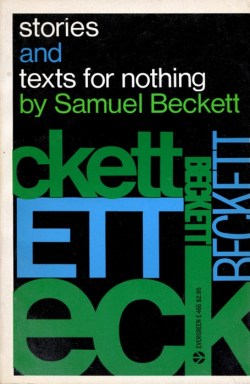
Beckett - Stories Texts Nothing

Nos. 3 & 4, Texts for Nothing by Samuel Beckett

it doesn’t get better than this…unless it’s more of beckett

Meta-Recursion: Some thoughts on the task of writing

cropped-fish.png

Life becomes ideas, and ideas come to life

Maurice Merleau-Ponty

Metacognition is a buzzword these days – as contemporary sciences dive in to the neuro, neuron, chemistry and activity of bodily systems, we get to “see” our activities and “think” about them in different possible ways.  Our sciences concoct novel theories and processes, instruments and concepts and categories with regularity, and then our cultures absorb and incorporate these beliefs into our self-understanding and relating.  Metacognition “the awareness or understanding [ha!] of one’s own thought processes” is just such a theory – one writers have long thought about and acted as if, never without problematics.

Recursion, or, “the repeated application of a recursive procedure or definition,” is another one – looped and locked in repetitive activities in which our procedures and language “relate to or involve a program or routine of which a part requires the application of the whole, so that its explicit interpretation requires in general many successive executions,” each successive stage affected by the previous and effecting the following, the inside / the outside, the near / the far, the experienced & imaginary, the art / the life.  Endless recursion within a reigning myth of metacognition…and I am writing.

A writer knowing that I’m (a shifting pronoun) writing so also knowing that I’m writing about knowing that I’m writing (yet uncertain or finitely unable to ascertain all that entails) while I’m writing and therefore writing about that as well as what I’m writing, and so on…pertains to language, truthfulness, reason, perception, behavior and any other human activity…complex and recursive in a culture professing metacognition as a possibility.

This complicates writing in tremendous ways.  It becomes very difficult when composing letters and spaces to evaluate anything as “impossible.”

Quantum sciences, computer technologies, object-oriented ontologies and anthropocenes – complexity, indeterminateness, and relativity all serve as a soup in which we simmer, constraining and affording us opportunities that usher us right up to the edges of our finitude.  The interconnections (internet) of things (or not!) reminds us we cannot understand or know enough to write knowledgeably about even our own organisms, and also expose us billions of encounters and experiences per day that recursively become within our systems.  I spread wider and decenter as the membranes that compose me increasingly appear as sieves.

The larger and smaller scales of life may not be operating like our daily experience, yet we often refer to our lives as “daily rounds.”  Relativity and indeterminateness and reversals of such equations, undo previous comprehensions of the filters of space and time, even as the Western ‘historical’ sense of narrativity and order comes undone, tangling in its possible untangling as potentially ‘solved’ in multiple directions at once…leaving us directionless and indeterminate per any ‘correspondence to reality or ‘truth.’”  Selah.

We must have experienced by now toggling between subject and object in any situation, and to whatever degrees our systems are genetically alike they are multitudinously variant as well.  We are currently aware that our perceptive calculations of our contexts are hypothetical or apply in very limited specificities…i.e., ONCE.  So our taxonomies flux, our histories alter, our cognition and perception get meta-statized, and language becomes a wobbling sign in Big Weather.  Waves and warps, folds and possible interjections.

Apparently it might all be in-formation, movements accessible through relation for operationalizing.

Our “subject matter” dissolves since we no longer have a subject acting through a predicate, but all matter interacting in theorized randomness and happenstance with nary a drive to avoid extinction.  Hosts of events (plot?) with endless extrapolations or interpretations, wherein things long distant and disparately far might “fold in” or “warp past” or correlate via some vibration – and perhaps they do? (memory as a pass of ‘reversal’ in subjective time?)

I am writing.  And so all this must be written, in our stories and imaginary objects, holding nothing, requiring application of the whole and very many successive executions.  Sounds ominous, but the terminus thusfar we can still count on.  It will end (for us, as we experience it).  It must be written – increasingly aware of all I do not / most likely cannot know or understand, and that nothing experienced “fits together” while belonging together in ways we haven’t been able to imagine, fragments fed by fragments feeding fragments inseparably fluid…and I write, I try to write it, in channels of existent vocabularies and beliefs inaccurately scoped.

I (whatever that means) seem to be writing with an awareness that I-am-more-not-I-than-I or I is tenuously distinguishable or occasional, and am writing that I am writing while I am writing that I am thinking about writing which thinking is happening through various media like paper and pen and keyboard and digital text and electricity and air and an incalculable and miniscule trajectory of experience waving particles undone and mutated, I adapt, to no purpose (it is theorized) and go on or along and keep writing unaware even of what I am aware of and operationalize a tiny selection of language flooded with other usages and contexts and I write we write it writes as its writing.

“it is through my writing that I keep a hold on life” – Franz Kafka

And, holding nothing, I am unable to stop.

You must go on.  I can’t go on.  I’ll go on.

Samuel Beckett

Current Reading Sampling – 2016

I realized I have neglected this ever-changing list…for any who might be interested.  So I updated it today…

2016

“I decided to continue drinking and living in just this way.

My whole life long”

– Georges Bataille

Chin-deep in labor, family, relationship & studies…

Works for survival:

Writers, Antoine VolodineAntoine Volodine, Writers

Maurice Blanchot, The Space of Literature

Samuel Beckett, The Grove Centenary Editions

Franz Kafka, I Am a Memory Come Alive

Enrique Vila-Matas, Bartleby & Co.

Montano’s Malady

Gilles Deleuze & Felix Guattari, A Thousand Plateaus

William James, The Writings of William James

Mikhail Bakhtin, Works of

Edmond Jabes, The Book of Questions

Works that expand:

Friedrich Kittler, Discourse Networks, 1800/1900

William Franke, A Philosophy of the Unsayable

Ian Hodder, Studies in Human-Thing Entanglement

Paolo Virno, When the Word Becomes Flesh

Werner Hamacher, Minima Philologica

Giorgio Agamben, The Coming Community

Paul Feyerabend, Against Method