Meaning

From an email conversation I am involved in regarding human relation to technology…seemed to expose a who-I-am via what-I-concern-myself-with moment in my life worth sharing… and would love any/all comments, ideas, perspectives, regarding:

“I like that inference of thought…influence of larger and smaller systems interacting in our particular (as Lemke refers to them – “focal levels”) living.  I think from Heidegger onward that attention to the reciprocal or interactive influence of what we devise/make and who we are and what makes us continuously reshaping/constructing/constituting us IS a fundamental challenge/question Humanity is within.  This is why I am drawn to technesis as a human activity.  There is no difference from developing domiciles and agriculture, accounting and writing, language and representation in its holistic alteration of the species as there is with what we are within with the devotion to the “digital” – an oddly ubiquitous remediation of experienced matter-ridden-media into this ONE SORT OF ORGANIZATION/CODING.  A strange phenomena.  I think the nearest relative is “writing” and this is where Hansen (“Embodying Technesis”) and Hayles (“How We Think”) as well as Hodder & Ingold’s anthropological works help elicit perspective (& Kittler) on how ALL technological development (craft, architecture, invention, production) so foundationally EDIT us as a species… akin to geophysical change for all forms of biological life.  I suppose what I hope for is some small increase in awareness &/or experiment of capability for Human-kind to discern what amount of agency we may (or may not) have in relation to what we evolve and construct.  Is the system too vast – the biological motive too strong – to continue exploitation and networking (also increasingly representative of our fundamental relationality) – or are we a kind of thing that can affect larger systems in such a way that is transformative?  How small of a part are we, what are our limits of capability, do we have ANY genuine (actual) capacity to discern telos of larger systems… or not (trickles all the way down to personal behavior and ‘psychology’) – can we ever determine our AGENCY (collectively / personally / speci-ally)?  Or is it airy imagination and the activity of abstraction?

Sigh.  This is where I’m at…”

The Need for Help

“I am affected not just by this one other or a set of others, but by a world in which humans, institutions, and organic and inorganic processes all impress themselves upon this me who is, at the outset, susceptible in ways that are radically involuntary.  The condition of the possibility of my exploitation presupposes that I am a being in need of support, dependent, given over to an infrastructural world in order to act, requiring an emotional infrastructure to survive.  I am not only already in the hands of someone else before I start to work with my own hands, but I am also, as it were, in the ‘hands’ of institutions, discourses, environments, including technologies and life processes, handled by an organic and inorganic object field that exceeds the human”

  • – Judith Butler –

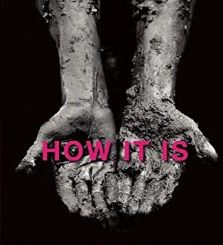
Howitis - Beckett

“Help!?”

He cried, it cried, I cried.  But help, it will not come, for me.  And why should it?  Who could owe me assistance, and why?  And what would it benefit another? Even how might the crying become?  Often silent, unheard; a gesture or tone; a constant “I am unable to do this alone.”  There’s no reason.  No reason that someone might help me.

Help has come.  Many times, and that greatly.  Otherwise I would not be alive.  Irrational, inconceivable, as ‘last measure,’ – the cry’s been expressed, even shouted or posted: “I need help or we will not survive!”  And it’s come.  Never “I.”  The yelp always weighted with “we.”  In deep over my head as a man, as a father, a worker and thinker as well – always “help!?”  Needing contact or touch or attention.  Needing hearing or care or advice.  Needing teaching, protection, support.  Needing money or sitters or transport.  Needing food.  Needing shelter.  Such needs.

I need help.  “I.”

Whatever effects or affects, I believe that I do try to help.  To have food for my children, and beds.  To respond to emotional traumas, disturbs – to hear and attend and comply.  To love others embodied and minded.  Within (my) reason, I do what I can to assist, especially those gathered about me.  I experience my’self’ as RESPONSE-able – once engaged there’s a sense that I must.  Some say that we choose to do good – but I question.  Many insist we always have  choice, yet I seem unable to abandon or neglect, unless, perhaps, my “self” or theoretically.  I am prone to the “people are people” – shaped by time and engagements – to behave in the world as they are, and continue the way that they be (in small measure).  The issues of scale and of time.  We do what we can to survive.  Some prone to survival of others, some not.  Depends on the value of “self,” so it seems.  I help, which develops that value (I hope).  To think I might matter, be dependable/depended on, be important – to someone, somewhere, at some time. Survive.

And I notice myself ever howling for help.  Help!?   As I age, I distinguish the needs.  Need for contact and talk – to think and to feel; needing help with evolving demands.  “Man,” “parent,” “student,” “professional,” – all extensions of what I once was – just a “human.”  I can’t even survive being that, let alone all these complex designations.  Artificial “helps” like alcohol or nicotine, religious belief or “self-help” seem to do as much harm as relief.  As babies and aged we are weakened…our “primes” occasioned by a nexus of supports.  In our weakness, we comprehend need(s).

I need.  “Help!?”

Without knowing what it is or might look like.  I know that I’m drowning.  I age.  I know no one owes it, the benefits would have to be rationalized.  I fail.  I can’t go on.  I must go on.  I go on.


You must go on, that’s all I know. 

            They’re going to stop, I know that well:  I can feel it.  They’re going to abandon me. It will be the silence, for a moment (a good few moments). Or it will be mine? The lasting one, that didn’t last, that still lasts?  It will be I? 

            You must go on. 

            I can’t go on.          

            You must go on. 

            I’ll go on. You must say words, as long as there are any – until they find me, until they say me. (Strange pain, strange sin!) You must go on. Perhaps it’s done already. Perhaps they have said me already. Perhaps they have carried me to the threshold of my story, before the door that opens on my story. (That would surprise me, if it opens.) 

            It will be I? It will be the silence, where I am? I don’t know, I’ll never know: in the silence you don’t know. 

            You must go on.          

            I can’t go on. 

            I’ll go on.

–Samuel Beckett, The Unnameable


Anatomy & Physiology

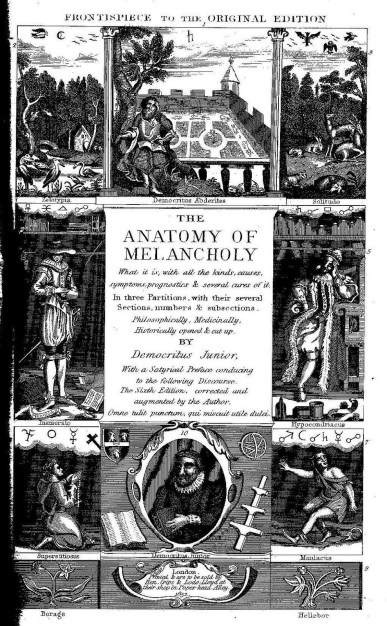
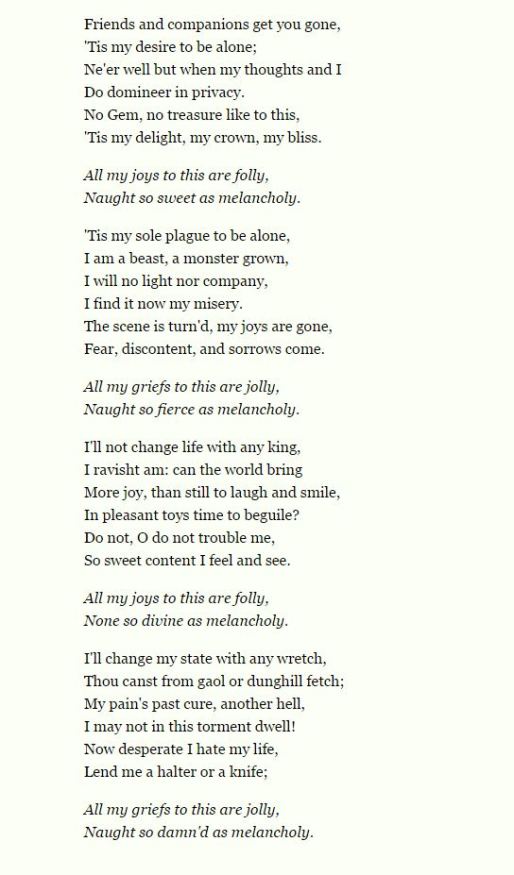
Burton - Anatomy of melancholy frontispiece

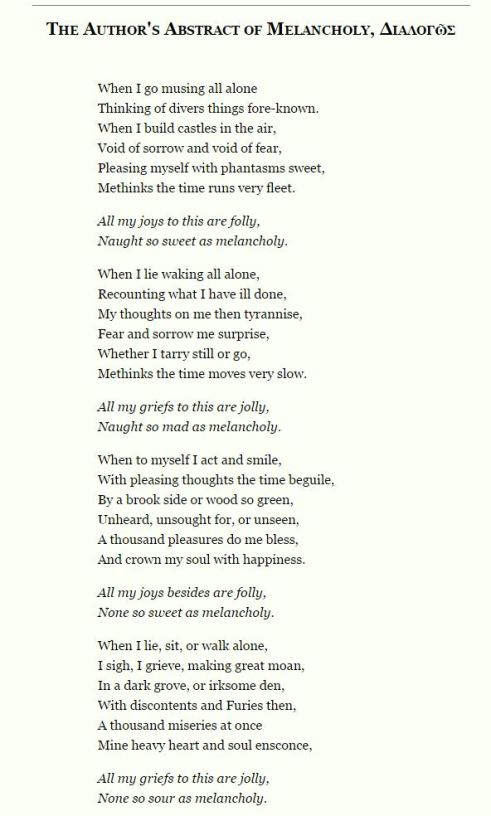
Burton - Abstract1

Burton - Abstract2

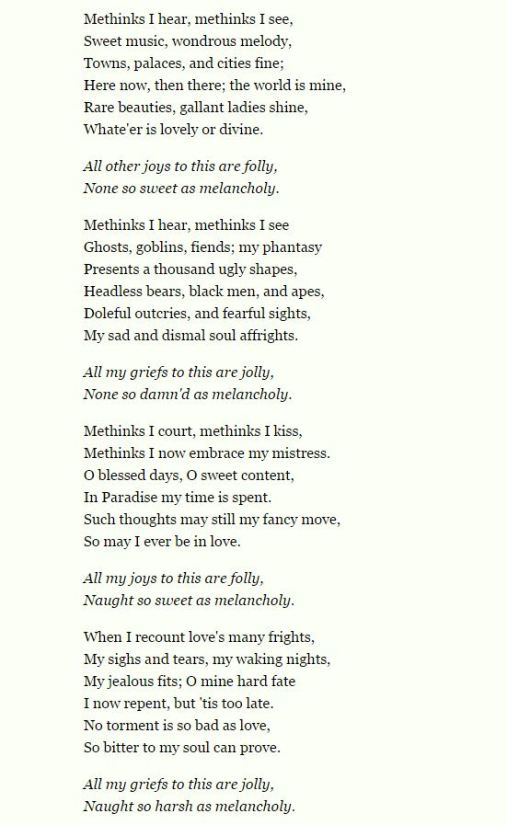
Burton - Abstract3

-Robert Burton, The Anatomy of Melancholy –

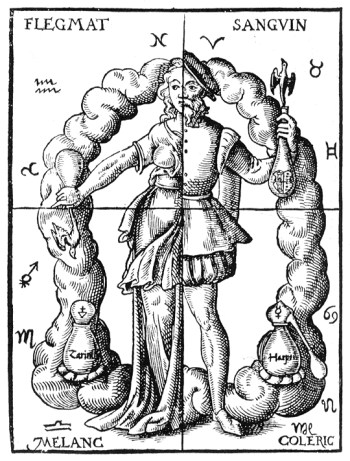
Burton - Moods

from the Ruled Writing Tablet

ruled writing tablet

Interstitial

Suffice it to say, I’m not much into “proofs” – in language or tone.  Suspect I can’t believe them.  I won’t be able to prove there’s an interstice – I know that.  Won’t even attempt ‘within reason.’ Suggest.

There’s no “let me explain.”

– “Explain what?” she inquires, “exactly.”

Exactly the point, I would say, or nearly precise – that there isn’t.  I don’t know.  But it seems we converge – in some tiny remarkable space within time (or vice-versa) we’re dismissed.  Or not-missed – how to say it?

There’s a meeting.  It seems.  In a margin or more.

*

Our hallways (think architecture?) overlap?

I don’t know.  I’m just saying, in hopes to be, to look at you longer.  Longer.  It’s a fight against death, that small word.  Simply, longer.  With you.

*

Am I clear?  Making any sense?  I don’t know.

– “Clear as mud, what you’re saying,” she says “near ‘exactly.’”

I don’t know.  It’s unwise.

And I hum when the words sound just so.

– “Just so, how, exactly?” she asks.

Interaction.  Locution.  Between (I am thinking).

“Interstitial,” I say.  Interstitially?  How could I know.  It’s all susceptible to the mark.  The mark of the question.  I think of changing my own name.  Have before.  I like titles.  It was “Mark” for the question, the sign, and its music.  I would be Mark, Remarking.  The one with the curlicue brand, like the Zorro but curved with a point…on everything = ?

“My point exactly,” I tell her (she stays) – leaving my mark.  (If she’ll stay, I’ll rescind, anything).

interstitial

It’s okay.  I’m familiar.  Not that you worried.  There’s no worries, it’s all temporarily temporary – both state and enaction.  It’s just so (so it seems).  “Just-So Stories” he wrote, long ago, they’re alike and akin, episodic.  We describe.

Neither here and/nor there.  Interstitial.  In-between.  What I wanted to tell her, to say.  And I would have, had I known.

– “Known what, exactly?” she once said, and I stopped, for the meaning was lost, nonexistent.  Just so.

“That’s just how it is” I had said.  And don’t know, was surmising.  The world hypothetical and inspired ( I thought, at the time ) – simply possible.  I was wrong (perhaps).  But she stayed (temporarily).  The words lose their meanings.

*

I hum.  To myself.

*

I write: “This is what I wanted to do.”

Old Ruled Writing Pad

Old Ruled Writing pad

today, searching for paper to make notes on for work…I grabbed a used “ruled writing tablet” of mine, last written in in 2014…and read…

“I am an educated writer who loves a lot of things.  I love language, I love learning, I love relationships – to partners, children, nature, arts, literature, and ideas – to “world.”  I love to study.

By “love” I mean that I choose and enjoy expending my available energy on these things.

I like very much to reflect and consider, experiment with and actualize what seems meaningful for living as a human individual.

That is what I know of myself, besides the facts which are unruly, shifting and so very difficult to capture or recount with accuracy.  All the terms (‘born,’ ‘lived,’ ‘married,’ ‘completed,’ ‘received,’ ‘produced,’ ’employment,’ ‘accomplishments,’ ‘age,’) and their explications are far to vague to be useful here.”

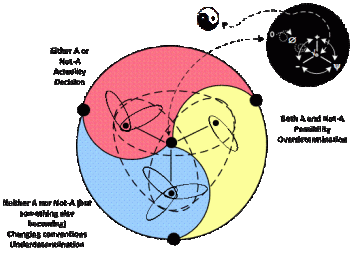
The ’45: Considering Complexities – On Plasticity of Identity

floyd merrell diagram

On Plasticity: Being Ourselves, Able to be Ourselves


My birthday recurred.  Post-40 in a thriving family of 6, there are not many days deemed “special” that end up being about oneself as the father, caretaker, partner, provider, no matter how small the scope of the surround.  Soccer games and music lessons; feeding times and laundering; all keep going on – birthday or no.  The exhaustion continuous activity and felt responsibility breeds seems to increase in proportion to the numbers signifying one’s years upon earth.

But there are flourishes and touchings – like small miracles – proffered patience, generosity and deference gifted one’s way as the children mature.  I received momentously considered and thoughtfully creative presents and offerings from my brood, including the effort of travel (a 5-hour drive for a 3-hour meal), some self-deferrals of wants and demands for a day, shared and repurposed objects and much love and affection.

In the midst of which my brother-in-law texted: “And what have YOU done for YOU today?”

***********************************************************************

Isn’t nearly everything we do for ourselves in some way? I thought.  Caring for those we love, providing for their needs and responding to their living feeds our hope that we might be valuable partners and parents.  Enabling others’ satisfactions or play, achievements or events provides a goodness and gladness to our sense of identity.  WHAT DO I (or would I) WANT?  [If things revolved around ME? – What would I select for MYSELF, my TIME, my ACTIVITIES, were my surround and environment conducive, supportive, adaptive and compliant – attuned to MY wishes and feelings, desires and preferences – as its Center and Hub?]

This engendered heavy pause.  Followed by weeping.  Since my youth I’ve pleased people.  Especially those I crave being pleasing to.  Ever considering: if I find them, serve them, fuel them, tend to their whims and their moods and their wants and don’t fail them – they’ll have NO REASON not to accept and acknowledge me, enjoy and delight in me…perhaps even come to NEED and to LOVE me!

Still most of these persons have come and then gone – not needing an enthusiastic audience-of-me, my support systems or enthralled amour, cooking skills, cab driving, housekeeping, therapeutic attunement, nursing or cock…so much as an “Other,” I suppose.  An other alike with mixed needs, wants and cares, fears, doubts and preferences…uncertainties.

WHAT WOULD I WANT?

Being malleable, self-deprecating, at-your-service and adaptive in order to eventuate my longed-for (but not fully realized) purposes of belonging, chosenness, appreciation, acceptance and love, predisposed me to the Phenomena of Plasticity.

That organisms jostle and interact, adjust, emerge, revise and alter in accord with their environments and one another toward an imagined maximum survivability came as no surprise to me.

That my brain and body bend and twist, reconfigure and rework themselves toward perceived pleasures, building likewise to avoid potentially death-dealing pains, forms an accurate metaphor of my experience.

Do this, try to be that, retrain the brain, assimilate languages, nuances, behaviors and tastes, become parent and scholar, musician and lover, friend and coworker to an enormous variety of persons, places, and things (or situations).

Sounds desirable!  After all, we’re fascinated and entangled in networks and viruses, Renaissance-personages and extensive applications and sites – world seems participatory, fluid, collaborative and self-responsive – play-doh, silly putty, plastics, rubber and earth.  Water, air, flesh and fire.  Living would seem to be a plastic rather than static affair – examine a corpse! (and observed long enough, even then we’re not done and prove pliable and transforming).

************************************************************

Yet for me came a hitch as I pondered all this.  A lifetime spent adapting, responding and recursiving change for results that never quite arrive in a reality where even those chances will cease…

WHAT DO YOU WANT FOR YOURSELF?

When the question is put to me:  “What is it, right now, you prefer?” it turns out, among many acknowledgedly diverse and contradictorily complex cognitive-affective responses – I USUALLY KNOW WHAT I’D PREFER.  Very few options taste best to me in any given moment, and their range and scope are slim!

And then there’s the fact that I feel great admiration towards those who speak their mind and express their desires in a direct manner!  They still may compromise and adapt, but both adults and children who proclaim what they feel and want, prefer or need, ever impress me.  I (on the other hand) tend to try constantly to guess and anticipate what those around me prefer or desire before asking into my own – as if to say – if there’s room or time after all of you…I’d sure like to…but by then I’m too tired.

***********************************************************

So how plastic are we?  How multiple, really?  Since age 7 or 8, 12 or 15, my core desires have been pretty consistent:  Read.  Write.  Love.  Sex.  Explore.  Make.  At any given moment, regardless of conditions or surround, regardless of the options even, my litany of WHAT I WOULD DO FOR MYSELF usually boils down to this brief list.  In addition to which, I usually have a good idea of who, where, what, when, and sometimes how I’d go about each of the same – if conditions, environment and possibilities were dependent on ME.

I’ve definite tastes and predilections, ways I like to feel in what venues, activity-biases and condition proclivities (even though those nearest me often say they’d never know it by my choices).

Maybe the Phenomenon of Plasticity hypothesis runneling its now-scientific way through the cosmos and further than cells is a living CAPACITY but not necessarily a QUALITY?  Accident not essence?  Perhaps plasticity suits the powers-that-be, our politico-socio-cultural nowthen (STEM disciplines, Markets, Politics & Capital, Networks & Technologies) that would love for us adapt and adjust, go-along and “flow” as if its “natural,” “observable” and “scientific fact”?  (At the moment).

I’m not disputing it’s COOL – our abilities to change and flex, evolve and habituate, refashion and conform – and indeed it’s often necessary for our survival – but there’s a gap, hesitation, incompleteness to the story.  It doesn’t “FIT” to experience, or only partially so.  Something’s being assumed underneath.

And what is that?  Why have I preferred preferring others to my own, yet not ceased having my own all these years?

How would I be if I believed ALL were equally plastic?  That it wasn’t my job to adjust to everyone, remake to everything around me, instead insisting upon their/its relative capacity to reshape and orient to me as well?

WHAT WOULD I WANT if I could “be myself” (express my consistent biases and longings, behaviors and thought-trajectories, mood-palette and drives) in environments in which I was enabled/able to be/do so?  A surround that exercised the capacity of plasticity in relation to ME?

NOT EITHER/OR

Granted, some do, (those that stick around or don’t realize a choice) and in varying degrees, but I seldomly bank on that and announce or convey myself…usually I hedge against abandonment or rejection – fear of pains winning out over hopes of pleasure.

That’s “natural” too, the disciplines say – but there are so many counter-examples: ones who openly state their “I would prefer not tos” or “I would prefers…”  What have they got on me in this plasticized universe?

**************************************************************

There’s expression:  I prefer finding questions.  Ferreting unknowns.

FOR myself – there, I’ve done it.  At least once today.

09.22.2015
The Living Dead: a Reflection

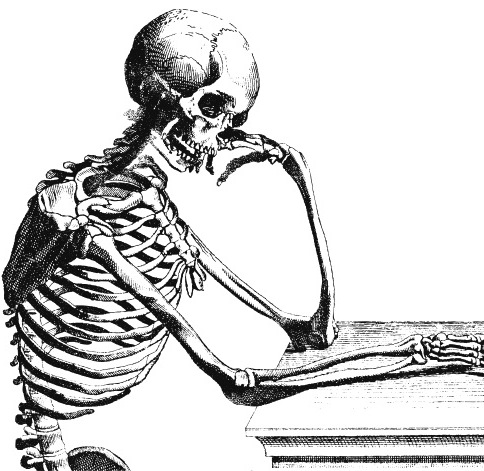
“Dad, are you living or dead..ing?” son asks at dinner (aged 9).

Characteristic pause…”Well, both,” I reply.

sad skeleton

How could it be otherwise?  I’ve stayed the course, exercised my body, prepared a meal, feeling fine, alone, aware…and comes the call:  “Living or dead..ing?”  Parental response – stop.  [Why is he asking?  What is he thinking?  How is he feeling?  Bodily signs?   Follow the language – “living or dead…dead..ing…dying.”  What is called for here?]  He thinks the living dead a lot,  so I respond directly:  “Well, both, and how could it be otherwise?  I couldn’t very well be dying if I wasn’t alive, no?  And the process of dying is constructed of living, yes?  So it’s all in one moment I s’pose.”

We move on.

But I don’t.  Not so much.  It’s a good question.

It reminds me why I’m a philosopher, a poet.  Why we tend toward the same, differently.  We watch for the shared, the communal in our experience, anywhere.  We work the same queries.  In a living ruled by science, by probabilities and hypothetical cause, by vague notions of what-might-happen-next given conditions and dynamically complex systems…philosophers, poets and artists tend to seek out what’s certain – what is nevertheless the case: we feel, we think, we live, we die, a world is there – the details change with the order of the day.  Or night.  The language or discipline.  The methods or culture, practice or beliefs.  Depending on the questions.  Who’s asking and how.

We happen – become – and unhappen.

Because my dad, almost 80, evinces this.  Because I’ll be half-90 in 48 hours.  What I asked for is called Cosmic Pessimism, which says something.  I happen…vary…and stop happening that way.  How that occurs, what and who and when and why change nearly as quickly as we do.  Should I say, what we think or believe occurs?  Rationalization of experience.

Reminds me of this, of the action of writing.

I still can’t do it “live.”  Can’t inscribe it as a “post” or a “tweet” or a “message.”  I’ve got to get some static.  IN-scribe is a physical act of scratching, digging, carving in clay.  ON-scribing is more what we do – laying down ink, pounding down letters, playing with light.  Writing with materials like paper and ink relatively makes something stay put for awhile.  So we can revise.  Perhaps that’s all Rilke meant – give yourself the opportunity to edit, erase, respond to your action before you present it.  Is revision revivification?  Stay something, pause.  Apply yourself to your living and choose an occurrence.  Does this wrinkle the union of living and dying?

At work I’m struggling with teaching the methods of multi-disciplinary research.  How to template a strategy of awareness to potentially everything?  We’re living and dying and attempting to know, understand, RATIONALIZE something about that.  Literally ANYthing applies, or may nourish, correct, influence or direct that essential inquiry (and DOES!).  How does one know where to look?  How does one know how to live it?  How does one know what one needs?  To synthesize rationalizations from multiple fields and methods and practices.  To compare all the answers or theories or thoughts?  To differentiate results and observations coming from various humans and schools and materials and tools and contexts and set-ups and the myriad messiness of living/dying organisms in relations beyond our control?

“You must revise your life” (Rainer Maria Rilke).

Revising your dying.  Is it possible to live moments in such a way that they outstrip the correlative dying?  To live more than die?  Once in awhile?  I think we have experiences, moments, in which we feel more alive than in others.  “Are you living or dead…ing” he asks.  Well, waking into a maze to traverse every day – cleaning and feeding and playing the roles (father, lover, employee, friend, son, writer, scholar, blogger, house-owner, house-keeper, cook, playmate, librarian, instructor, male, man, person, reader, and so on), shopping and feeding and listening and nourishing and working and running to tire – feels a bit more like “dead…ing.”  But there are moments!  Times.  “Events,” we call them (I guess).  Twistings and turnings and something like gathered occurrences, Being + Well-Being, Whitehead might say.  A more spectacular death I suppose.  Perhaps elevated experiences of living just heighten the jouissance of death?

I don’t know.

We happen – become/unbecome – and unhappen.

The marks left from that – our inscriptions, palimpsests and paths.  Veined.  Seared-in.  Scored.  In some cases, welded – some cases cancelled, erased, blotted out.  Living-dead…ing.  Vice versa?

To edit, revise, pause – is it possible?  What did he mean?  What might it mean?    Curving back doesn’t alter the time.  Going over is still going forth.  We wend and wind and whirl and reveal we are living and dying.

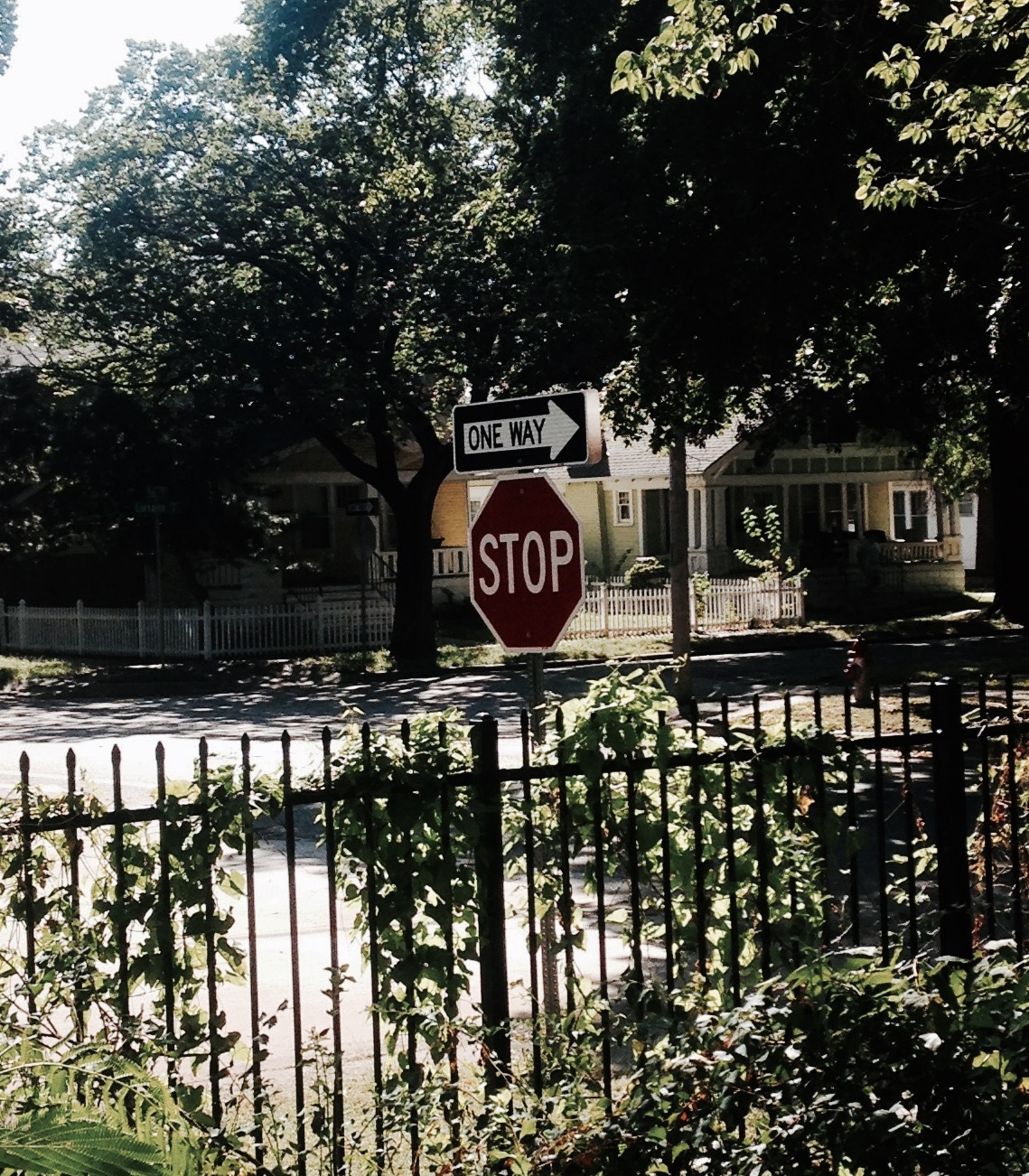
One Way to Stop

            Setting his tumbler down after a sweet, refreshing sip that burns and broils his gut, he gazes off the porch through Autumn morning.  “Quit it,” he thinks, whispers silently harshly, inside his insistent brain.

“Stop smoking, stop drinking, stop thinking too much.  It’s ruined,” repeating, “in ruins.  You ruin.”

His hazy survey settles onto a sign always visible where he wonders, worries, and writes.

blog photo

            Well aware that it’s one way.

But it doesn’t stop.

Watching his father deteriorate.  Among 7.3 billion (and counting) other inescapable dyings.  Kills himself surely by living.  Unidirectional and certain – that end.  The End.

Living’s a one-way to death whatever one chooses.  There’s no stopping that.  Perhaps the street sign motors this daily train of thought with each morning cigarette.  And love and forgetting; his children; conjured wishes, hopes and purposes blare redly to STOP! again, again,

and now his mind – himself against himself (against himself) screeing: “Quit it.  Stop.  Stop dying.  Stop killing yourself. Stop ruin!”

But it’s one way.  He knows it never stops.

Secret 2

i want never to encounter work I wish to edit

Wisdom

Ouroboros

“If there is any irreverence in my own work, I hope it is the irreverence I bear in mistrusting my own sincere self, which then sincerely mistrusts the irreverent me.  If there is a bottom to this, I think it is a life’s work”

-Mary Ruefle-