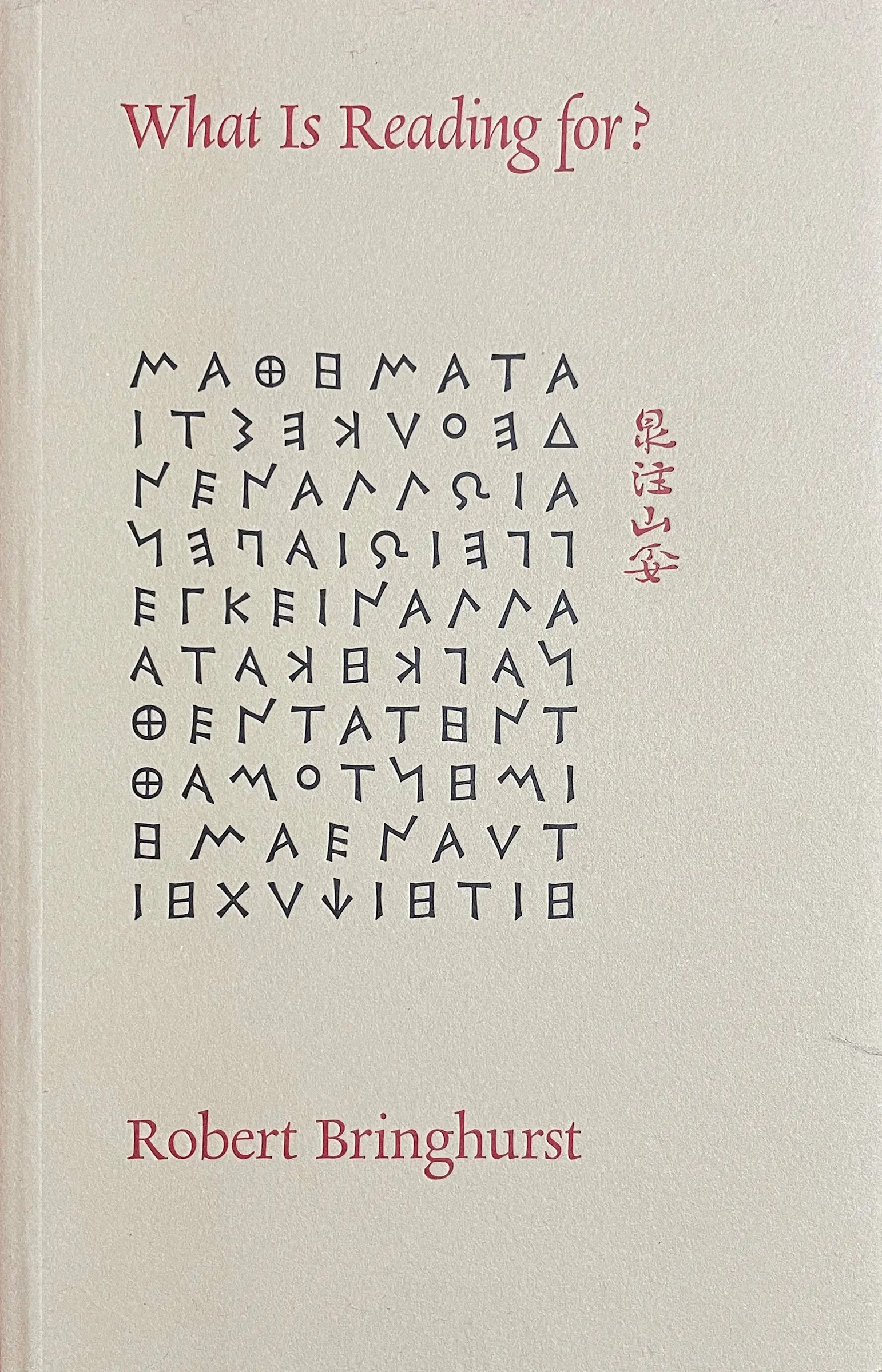
This continues readings from Robert Bringhurst’s beautiful WHAT IS READING FOR? begun in previous post.
Bringhurst runnels his way through various carriers and purposes of diverse sorts of publications and materials across history – from the more disposable to the mostly artifactual and permanent – reasons why they are preserved, and types of reading they promote and engender… from here he enters the new and ephemeral format called the “electronic book” that our culture currently and earnestly proffers us…
“The digital book is a rotation, not a revolution. It is another turn of a wheel that is turning all the time. It’s a newfangled toy and may be some fun, but it is also just the latest stage in the continuing degradation of the outward from of the book. The most perishable, and most visually disappointing, form of text yet invented is text on a screen. It’s the perfect medium for a society that believes, in its heart of hearts, in the basic futility and irrelevance of what it finds to say [italics mine]. And plenty of what we say does fit that paradigm. But because the electronic book exists, it will also get used, like the early scripts of the Neolithic accountants, for statements of lasting value. Real reading and writing take place on the margins of empires. That’s just how it is. You read the books, if you want to read them, however you can [italics added]. And we do.
“…real writing involves a lot of revision. Real reading involves a lot of re-reading, in just the same way. The text also needs to be free of distractions…discontinuous reading has a long history…That’s how we’ve always read dictionaries, atlases, recipe books, and other works of reference. It’s how we read discontinuous matter, of which there is plenty. Reading with a capital R is something else: an attempt to live up to the world in which we live, and to those ever-renewing models of the world known as books – with, if you like, a capital B [italics mine]. That kind of reading involves taking the plunge. It involves immersion – not for an hour…but for days, for weeks, and in some sense for life.
[Bringhurst now discusses beneficial aspects of coded, electronically transmittable formats of writing/s, particularly for learning and scholarship]
“Running searches for this project made me conscious of two things. First, what it was doing was not reading; it was simply light housekeeping, aimed at making my own and other people’s future reading easier, more thorough, and more comfortable. Second, what enabled me to do what I was doing was the labor of other literary housekeepers extending over more than twenty centuries, fundamentally unfazed by a good many changes in tools, techniques, and materials [the librarians, title so or not, italics mine]…from scripts to manuscript to print to electronic database, papyrus to paper to screen, the sweeping and dusting and laundering have continued as they must.
“All this housekeeping aims at a single thing: allowing reading to continue. Why? For the same reason we walk, talk, and make love. Because that’s how the species transmits itself from yesterday to tomorrow.
“It will, I guess, be clear that one of the things I think reading is not for is taking complete managerial control of the verbal environment, or of any body of text within it. Where literature is involved, that is not even what writing is for. Outside the dreary realm of purely utilitarian language, reading and writing are both ways of getting involved in, not taking control of, the great ecological fact of the matter, otherwise known as What there is to pay attention to, mirrored for us in What there is to say.
“Clearly, people take pleasure in having control, or the illusion of control. But the freedom to skip around whole continents of text like a Martian in a flying saucer, scooping up sentences here and there, is pretty much wasted on genuine readers, because those are the people who know that reading is mostly for making discoveries, learning how and what things are – and who know that to do much of that, a flying saucer is not what you need. You have to walk through the text, and for that you need good eyes, good feet, and lots of time.
“So what’s in the future? To be honest, probably starting all over from scratch, with a small and impoverished population in a badly wounded environment, recreating oral culture bit by bit, and possibly working back up to some kind of writing. But in the meantime? In the short term, it’s quite easy to say what we need for digital books to succeed for real reading.
[Here he provides 5 propositions with descriptions: 1. Free from the grid… 2. a non-radiant display… 3. high resolution… 4. good letterforms… 5. as few bells and whistles as possible]
“In other words, it would be a fine idea if the digital book functioned a lot like earlier books. But how it works matters less than how we treat it. If, to us, it is nothing but a commodity, that will mean we have forgotten how to read, and no book then will help us.”
I am hoping it is evident to see why the practice of preserving actual oral, written, and material forms of culture and our stories and languages we wish to preserve – the work of transcribers, translators, interpreters, writers, printers, craftspersons and artisans – actual things we can pass along at will, preserve ourselves (not dependent on corporate servers, access rights, power companies, or any technologies we ourselves cannot build/rebuild) i.e. – the traditional public library, religious libraries, archives, special collections, museums, and living human transmission and communication – matters so much to me. If you are librarians, or keepers of books, and realize the costs of not controlling access and availability of what they offer to any in our communities who wish to participate in via reading – please fight for the preservation of semipermanent materials.
For more on the ecology of language and material transmission (and to hear the wonder of Robert Bringhurst’s knowledge and communication and thinking) please see also: What is language for?
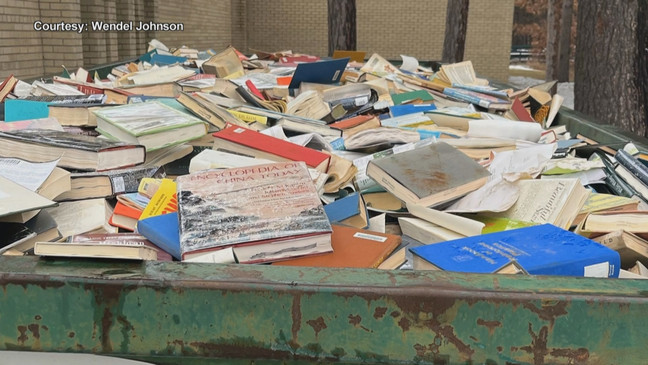
Thank you for your time and carrying the flames of these passions (if you share them). Much of my grief and ache comes from witnessing the “weeding,” “de-accessioning,” “optimizing,” (all synonyms for destroying in my case) many unreplaceable government documents, “compactly shelved” historical publications, and other very beautiful and impressively produced human artifacts that I still believe would have been welcome and desired by humans to preserve throughout the world.
the knowledge of most worth, whatever it may be, is not something one has: it is something one is… The end of criticism and teaching, in any case, is not an aesthetic but an ethical and participating end: for it, ultimately, works of literature are not things to be contemplated but powers to be absorbed.
Northrop Frye, The Stubborn Structure
As the Fall semester begins, with all its anticipation, energy, trepidation, and more… so many cultural and technological changes and experimentations upon humans and their learning, directing, and doings… I find more and more that we may be entering a kind of “dark ages” for reading and writing – a time when few, specialized alchemical, spiritual, learned enclaves (monasteries mostly) preserved the materiality of human learning and culture for hundreds and hundreds of years… that otherwise would have vanished to our access.
Following are some sections of Robert Bringhurst’s wonderful small beautiful printing of an incredible talk delivered orally – “What is Reading for?” – which I fervently recommend you borrow or find for the whole river of its beautiful pathway of winding deep riches and reflection. https://scottboms.com/library/what-is-reading-for
Now some samples from Bringhurst…
“In the narrow sense, as we all know, writing and reading refer to something done only by highly organized, agricultural, and management-oriented groups of human beings: making and deciphering visible signs for this normally invisible and almost intangible but nevertheless exceedingly dangerous stuff called human language. After that kind of reading and writing gets going, it’s borrowed by people who aren’t so management-oriented: oddballs like me, who want to use it to give stories and poems and ideas and musical compositions an independent, semipermanent material existence: to let them speak for themselves, like paintings and statues.
“That kind of reading and writing is usually called artificial. It only exists where highly organized groups of humans go to a lot of expense and trouble to sustain it. But some of the things that are done with it, and some of the things it is used for, are not artificial at all. Margaret Atwood, you might remember, spoke about that crucial shift, from the writing of quartermasters and clerks, wanting to keep control of what they possess, to the writing of thinkers and listeners, wanting to keep in touch with what they’ve heard. Both kinds of writing are, of course, still with us, but it is the latter kind of writing that we associate with writers, and so with readers too…
“…If it sounds like writing loves rivers [he’s just spoken of the earliest traces we have of places we have evidence of inventions of writing, all which occurred along rivers], that’s because writing loves agriculture, and that’s because writing is, itself, an advanced form of linguistic agriculture. “Writing is planting,” it says in a poem I remember from somewhere – and reading is harvesting. Harvest time, you’ll remember used to be a time of celebration, but harvesting was work. There are actually places where humans still do it themselves, and where they remember that it leads, in turn, to more work – threshing and milling, peeling an cooking, pitting and drying – and then to still more celebration. In industrial societies, all of these crucial activities are now mechanized. I have a strong hunch that the urge to digitize books and distribute them over the internet to reading machines grows out of a similar dream: a desire to build machines that will write and edit and print and read the books for us, so we can go upstairs and watch our screens…
[here he spends a few sections tracing the evolution of the materiality of oral language to script and then to printing – to scribal cultures to typography – to preservation and dissemination methods and technologies, concluding with]: “You see what I’m getting at. Reading could have a rich and interesting future, because it does have a rich and interesting past. But if no one remembers that past, it may not mean much to the future…What I think is that a great work of literature deserves fine typography and printing, just as a great theatrical script or a great piece of music deserves a great performance. The idea, of course, is that these things can add up – and ought to add up, at least once in awhile, as a form of celebration. If reading good books is physically pleasant, people just might spend more time reading those kinds of books, and might want their friends and neighbors and children to do the same. And reading good books just might make some of them into wiser, healthier people. That, as I recall, is how education is supposed to work. It’s not necessarily supposed to raise the GNP or make everybody rich, but to make every life more likely to be a life worth living, whatever life it is…with a reasonable degree of intellectual and spiritual independence…”
Decide to write the book-that-turns-to-water, as speech-that-turns-to-air. All that rippling silence, even without language.
Someone asking: what is gesture? movement? expression-in-its-being?
Signification the silent razor.
Someone mentions music, which it claims “represents nothing at all,” (Michel Seuphor) and I doubt that: is there not expression? confession? some sonorous and vibratory friction or exhalation? A “constant inscription of birth in innumerable ways…language is metaphor and metonymy, one cannot avoid it.” (Helene Cixous)
[“where trace becomes existence” (Seuphor)]
I am tracing letters without a model, refusing to hub any wheel…
.
Out of its mouth: communication sounds. The body moved likewise. Undulant, suggesting. only sounds, no discernible words.
Signification, perception, emotion, feeling, sensation… and then translations: prefrontal cortex: “meaning”?
A blockage. Refusal.
Andre Malraux: “You are human when you can say no.” Remembers Bartleby.
Don’t start reading. The writing always stops when there’s something to read.
There’s always something to read.
Somethings you really, really want to read.
Avoiding frustration.
–
Urges.
You want, gutturally – in the stomach of your heart – she’s ill, she’s suffering, the phone, to text, just text, “still love you”, like that, she must need care, she must (perhaps not, perhaps she’s been more than cared for, is ecstatically happy, relieved, content, unbothered – it was she who chose to leave, who left, after all).
Divert.
Text someone else, another, one who maybe wants you to love her, who misses. Avoid frustration.
No. Write it. Write about the urges, the diversion, the avoidance. Read a little first, get a taste, a feel for what letters, what language, might do…
Avoid frustration.
Write.
Take a drink (an attempt to frustrate frustration, avoiding satisfactions, short-circuiting risks with another), no texting, follow your fears, note your diversions, attend your avoidance, but act elsewhere. Write.
Fear.
–
Could start anywhere, and none a satisfaction, only inscriptions or actions of frustration – to read, to write, to love the one who doesn’t want it, who’s trying to get away (has gotten away, but also wants to leave it behind), to contact one who might or who does want to hear from you (but you don’t, don’t know, just want love, some response) – want to write…
…for ANYone, any SOMEone, perhaps yourself, perhaps all the opportunities lying about you wanting to be read – no, you want to read them…
Avoid frustration, settle for imagined response, even address, to be called – the words in the books rarely fail in calling you, addressing you, which for you feels like response, like being wanted, almost needed, like a text from ANYone, any SOMEone, who invites your love.
Take a drink, frustrate frustration, move into fear, toward satisfaction (or one of its bastard offspring).
Just write.
Don’t check that phone. Don’t even touch it. Leave it in another room. Turn it off, power it down.
See the words come easy when you simply write them out instead of fracturing them, spreading them thin through a network, splaying them across pages and phones and emails and…
Interesting: it will come, whispering in your imagination that the English interest comes from the Latin inter esse, literally “in-between-being.” – Gunnar Olsson, Abysmal
“something must have changed” – Samuel Beckett, Malone Dies
I guess I just decided to let something else happen…
I suppose I decided
insofar as we do
to let something else
become…
“This is what I’ve decided. I see no other solution. It is the best I can do…
…that little space of time, filled with drama, between the message received and the piteous response…
…Of myself I could never tell, any more than live or tell of others…”
…Deviser of the voice and of its hearer and of himself. Deviser of himself for company. Leave it at that. He speaks of himself as of another. He says speaking of himself, He speaks of himself as of another. Himself he devises too for company. Leave it at that. Confusion too is company up to a point. Better hope deferred than none. Up to a point. Till the heart starts to sicken. Company too up to a point. Better a sick heart than none. Till it starts to break. So speaking of himself he concludes for the time being, For the time being leave it at that” – Samuel Beckett, Company
“The words spoke by themselves. The silence entered them, an excellent refuge, since I was the only one who noticed it.” – Maurice Blanchot, The Madness of the Day
So, speaking of himself, I only noticed it.
The small furry animal, almost humming in its purr, he had chance, so he thought, to please, to comfort, with a pet, a scratch, an acknowledgment, tender, while it butted and marked itself against him. The illusion. A kind of company in itself (or to).
The ungrammaticality of occurrences. Of happening. What happens to be. Or is not. When speaking to himself. Without voice. I was the only one, as far as I am able to tell – if in fact this is telling – who noticed it. It seems words speak of themselves. From elsewise and through whom. He says, speaking of himself (or to). Without voice.
Devising. Illusion. I devise, he says, speaking to himself, of himself, without voice. Seeking – is he? – Am I? – Seeking…company?
A small child (another illusion, devised) passes by, walking a young dog and waving a nod of sorts – I don’t remember which, he says, but I returned a gesture and obtained a moment of calm in the chilly Autumn breeze. There was a sun full of color due to the leaves in their change, and fall, and flutter (due to the nothing-shaped wind). But what seemed a moment of warmth, of calm, devised by a child with a dog and a friendly (fearful) gesture, he thought (speaking of himself without voice), I was the only one who noticed it.
I take to reading then – others speaking of themselves without voice (or beyond it) – in order to devise… company? he wonders of himself, to himself. For when reading, it surely seems the words are speaking only of themselves, no matter who pens them. Such the character of the texts he chooses (I thought of myself, to myself, or an other I devised as myself, like puppets). And in part read and read for the experience or feeling that I alone notice it. That I might in fact provide the company I devise, yet hardly able to tell since I have not penned the words but merely notice – borrow, listen? (there are no voices) – the words seem to speak of themselves. Without voice. (He said of himself, devising). Something like company. Perhaps.
Even in the color-filled sunlight of Autumn days, I at times experience myself as being quite deeply in dark, he says speaking of himself, myself, devising voices, soundless, out of words that seem to be speaking only of themselves and their variegated histories and usages, and billions of potential speakers and hearers and interpreters – creators and devisers – filled with ambiguity and application. Here with me on shavings of dead trees, providing stark living contrast to Winter’s day-night. I get confused, he says speaking of himself. Confusion too is company devised, up to a point, I suppose. Obviously “fusion-with” implies an other, perhaps enough, I said, speaking to myself, without voice, here on dead leaves in black scars. In mutilation. Transgression. Inscription. Perhaps the words will speak of themselves and some other “I” will claim to be the only one that notices.
A strange delusion of company indeed. He says speaking of himself, devising a voice, its hearer, and an himself as participant and therefore a company to keep.
Reading: “only a detour is adequate” (Agamben), and “in pursuing meaning we are pursuing our limits” (Allen), and was perhaps meaning a synonym or metaphor, simile or metonymy for company he thought, speaking to himself, without voice. But with an illness, diagnosed by doctors – those scientific political powers responsible for providing facts or devising happenings, pronouncing occurrences – so in any case he is not alone, being-with his illness, I thought, speaking to myself in an absence of sound. The words spoke by themselves.
Other things as well: the furry animal, its humming purr, its actions; the trees, the leaves, the wind, the light. The child, the dog, the gestures. The books, the authors, the words themselves. Divisors of voices, of hearers, of selves. Sick hearts, confusion, and company. Am I the only one who notices? he says speaking of himself, speaking of himself as another.
So speaking of himself he concludes for the time being, For the time being leave it at that.” – Samuel Beckett




 All my Words are Silent