a text from the archives…ready again, relevant, near…
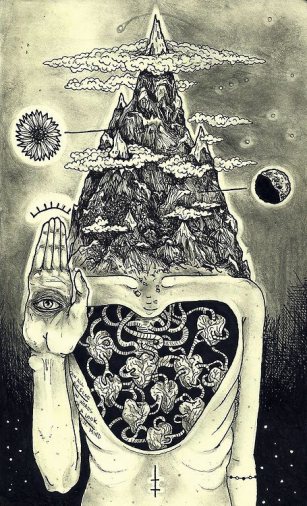
Homo Scribus Attonbitus
(2012?)


I drill. I devour.
Kafka, Blanchot, Derrida, Bartleby. Pessoa, Nietzsche, Jabes, Beckett.
Into the absence of hope.
Of language.
Of body.
I drill and I devour.
Myself.
Vitality.
Capacity.
I try to think my end(s).
I want to get there.
I would like to make it to the end.
I would like to make the end.
I think. I serve. I love. I ask.
I care. I touch. I say. I listen.
I am not fulfilling.
I am never quite what is wanted.
I have never been “right” for a situation.
I am a person who tries very hard to be what is wanted.
I am a person who tries very hard to offer what is “good”.
How would I know?
– what is wanted?
– what is good?
I do not.
I am incapable.
But I DO know:
I AM NOT THAT.
(do not) BE HERE NOW.
simply : do not.
“I would prefer not to.”
“I will not”
No reason.
No anwer.
We are just humans.
Animals.
Purposeless.
Pointless.
Without reason(s).
Without meaning(s).
Without.
Still we go on
(for now)
Still we keep on
Still
On
On
On
OFF
(he said, said Laramie to Alias. “OFF.” He said, said Laramie to Alias. And then he was gone. Really. Gone.)
Sometimes it happens this way.
Sometimes.
OFF
Simply, over.
[Often, in my case and experience. They come, they go. There is a rush of blood to the brain and the loins. There is something I assume the others refer to as “hope,” – some reason to live, to go on, to pertain. Then OFF. Binary. Digital. Technology. Culture. Beings-in-relation. ON/OFF. Lights. ON/OFF. Progress. ON/OFF. Will. ON/OFF. Love. ON/OFF. Value. ON/OFF. Need. ON/OFF. Mood. ON/OFF. Everything binary. Irrational. Abstract. Illogical. Happenings, events, occurrences. ON/OFF. ON/OFF. Life. ON/OFF. Life. ON/OFF. Life. ON/OFF.
Life.
ON/OFF.
We are coming to an end.
I am coming to end.
We each come, to end.
from Michel Serres’ Troubadour of Knowledge
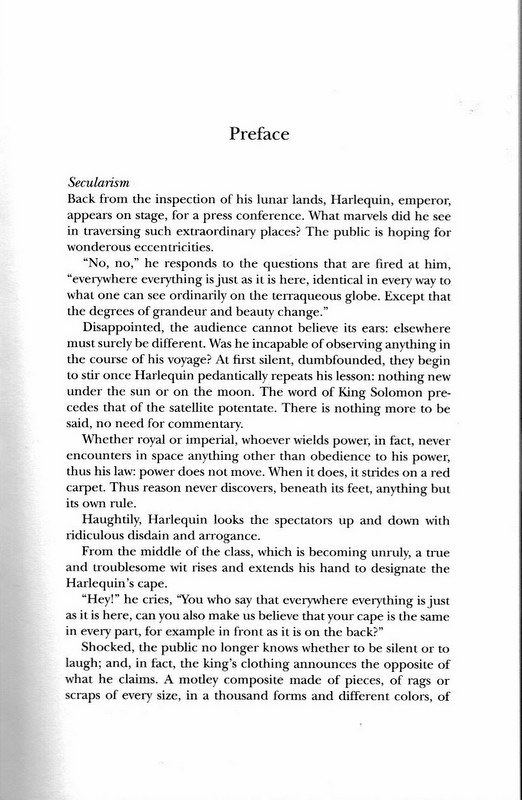
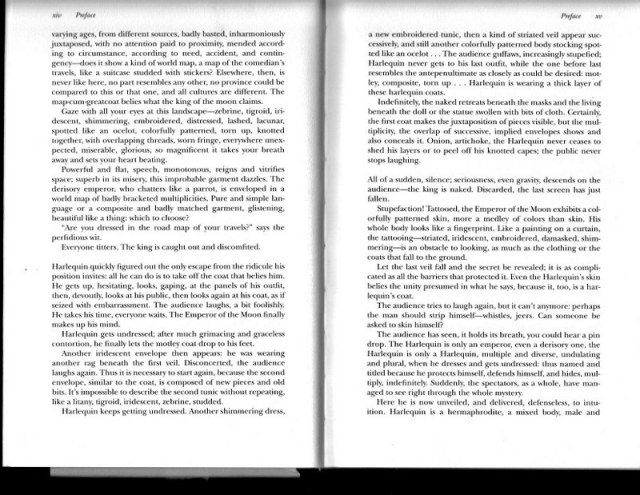
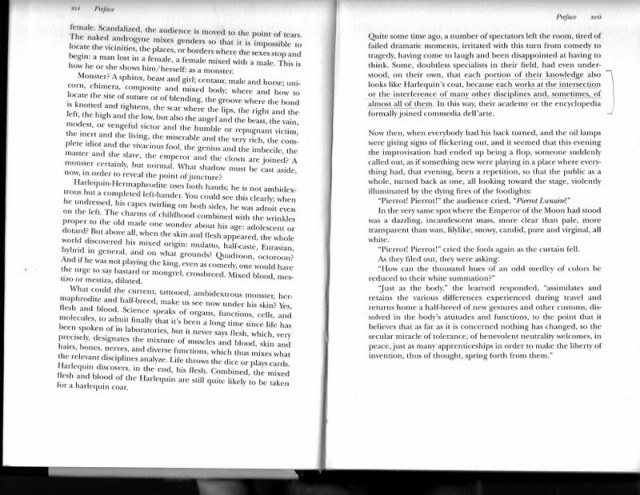

“To recognize yourself in… To multiply your likenesses”
-Edmond Jabes–
And what do you suppose it is to be a “Nathan Wayne Filbert” human? To be named? Alias Harlequin?
What do you suppose it might be like to be “Ida Sophia Lind Filbert”? “Jada Lynette Smith”? “Oliver Myshkin”?
“Hallie Noel Linnebur”?
“Tristan Rene Wells Filbert”? “Simon H. Lilly”? “Aidan Stafford”? “Herman Melville”? “Paul Feyerabend”? “Rachel S. Como”? “Paul O’Callahan”? “Meghan Miller”? “Jim H. Charles?” “Warren Charles Farha”? “Amanda Marie Lind”? “Fernando Pessoa”?
A cow. A particular cow – an Hereford – on a particular plot of land in Mitchell County, Kansas?
“Plato”? “Kathy Downes”? “Ortho Stice”? A Welsh Corgi “Tippy”? “Napoleon Bonaparte”? “Charles S. Peirce”? The clerk at the grocery store? “Christopher Fynsk”? That Forest Ranger? A pet hamster “Jacques”? “Claudius”?
WHY SHOULD ANY ONE HUMAN BE ANY MORE INTERESTING THAN ANOTHER?
WHY SHOULD ANY ONE ORGANISM BE ANY MORE INTERESTING THAN ANOTHER?
What means: “EFFECT”?
“William Shakespeare”? “Avital Ronell”? “God”? “John Wayne Gacy”? “Helena Bonham Carter”? “Microsoft”? A caterpillar (be specific)? “Mahatma Ghandi”? A sparrow? Molecules composing particular dust?
WHAT IS?
how are we able to ask that question?
WHAT ARE WE?
how might we be “WHOs”?
Starting local:
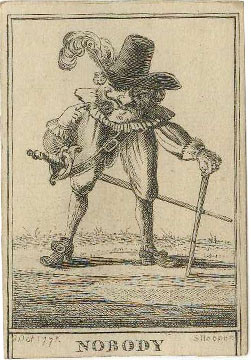
What might it be like – as a “Nathan Wayne Filbert” (Nobody) – to BE a “Nathan Wayne Filbert” (A body)?
I’m not sure HOW to answer that.
“Perhaps writing means overcoming all resemblances within the very heart
of resemblance, being finally like yourself, like nothing.”
i.e. How that can be answered.
– WHO or WHAT answers – ?
WHAT MIGHT IT BE LIKE…TO BE?
(qualified to ANSWER)
can ANYthing “answer”?
does “answering” imply “language”?
WHAT IS AN ANSWER?
(in relation to – ?)
What is(?) Nathan Wayne Filbert, Alias Harlequin?
IS “Nathan Wayne Filbert”?
WHAT IS?
WHAT IS IS?
(how?)
WHAT IS A QUESTION? And WHY/HOW can a question be asked?
WHAT IS IT – are our – ideas? – To “IMAGINE”?
what are ideas?
What might it be to “conceive”?
“to generate concepts” (D&G)
framings of our world-experience
[WHY? HOW?
WHAT FOR?]
WHAT is a “person”? HOW? WHY? WHO?
Always and ever – HOW & WHY can we / do we ASK?
WHO QUESTIONS?
(WHAT)?
(HOW)?
Something begins
(in/with all this)
it would seem
(it seems)
it seems that something begins in/with questioning
Alias Harlequin, i.e.
– the one whom this effects, the one on whom this has effect, the one (same? No!) affected by him or her, by whom and it. By this. This. That. By Other, others, and therefore, Alias again, patchworked and quilted, becoming, undoing, altering. Alias.
“Presumably most writers have many more ideas than they are able to act on”
– Ivan Vladislovic, The Loss Library –
Alias Harlequin – identities – is as is affected, effects, effected with/by.
Alias, i.e. as effected by “Hallie Noel Linnebur”; as effected (generated? Co-composed-with-) “Pauline Margaret Kresin Filbert”; the St Bernard “Zorro”; a specific train on a particular journey at a particular time; that mountain in that moment; Dec. 16, 1997 – a flu; and so on…
Alias – as situated in moments – e.g. “each one.” Harlequin – the human surname quilted with environment (micro-to-macro) in concourse. “Alias” as the “name in shreds” – the fragmentary and provisional, pragmatically specifiable address.
Ambiguous and fluid (like “river” itself – capable of designation but inconsistently contained) transient yet locatable, in form…perhaps. Yet no. “Alias” perhaps the medium (in-between) of morphing form and varying substance – what nothing also is (is not).
Name/term/signal/sign (“Alias”) as related to HNL, Dr. K, Dostoevsky, rustled grass, these sounds, this space-time and its company (surround) and then again, these again (but never “again”) – designating “NOWs”. Perhaps. It depends.
What or Who, How “Alias Harlequin” ALWAYS depends on a totality of other dependencies, as it were (or is?) “As such.”
Alias Harlequin, representative? Not that can of worms. AND the “thing” itself? (network of momentary dependencies-in-relation)?
What might we call (it/him/etc.) then? And what would “calling” be/do – how?
WHO questions?
This Alias Harlequin.
“I am already so much the inscription of a divergence…What I was, if that could be described, was a whirlwind of tensions…”
–Helene Cixous–
“A word is binding and at the same time breaks our bonds.
To which of them shall I, one day, owe my freedom?”
“To one only. Your name in shreds.”
-Edmond Jabes, Book of Resemblances–
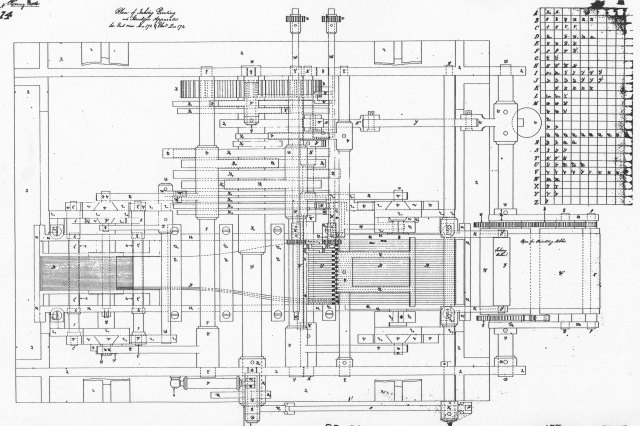
“machines alone have realized that sleep is no longer permitted”
– W. G. Sebald –
I haven’t slept.
Sometimes, in a dream, it feels like “it occurs to me.”
Trying to create a lesson plan for graduate students in the College of Education, I want to tell them why internet research / database searching / source evaluation seems so complex. I take a hammer, a wrench, a tomahawk. I bring a plow, a harness, a sewing machine. I show a steam engine, a telegraph. I think about them.
Hold them. Turn them about. Consider what you can do with them (if you know how). Surmise what you can do with them (if you don’t know how). Lots of things.
Humans devise stuff in concord with their environment. Stones to stumble on, to throw, to hunt with, to pound. Sticks to slap, clack, burn, poke. Maybe carve. Maybe paint. Maybe write.
What we devise have certain rules, operations, constraints. Remember the first time you wielded a hammer? Learned to turn a doorknob? Fitted a screwdriver to screw?
There’s a learning curve. Adaptation. Practice. Change.
Try archery. A piano. Knit something.
Simple tools. Fire. Rock. Wood.
Mud. Sand. Clay.
Try them.
So we figure out things that might be done with them. Things to do, make, say, or think. Certain things are more efficient. Certain ways. Certain hows.
We practice and experiment. Devise.
I am 45. Until I was in my teens, my fingers had not touched a lettered keyboard. In high school I had a class for typing (on manual typewriters). As a pianist I excelled. My homework depended on the legibility of my handwriting through graduate school. By 1993 there were computers in the “typing room.”
You don’t have to know how to write now.
I watch the pencil or pen move along lined paper. What do I have to know in order to do this? How can I make the marks turn out like this? Dexterity, control, care, effort.
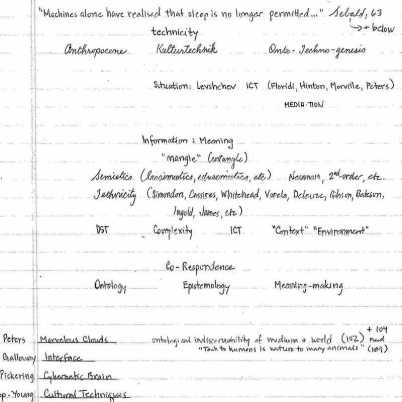
Alphabetic literacy, knowledge, craft, semantics, semiotics, grammar and so forth…
Turn the hammer in your hand. Tighten the wrench. Use a pushpin. Take up a fork. Operate a knife with steak. Raise the glass.
“Tools,” perhaps, technologies – technics and techniques – with their own sets of rules for our cognizant bodies.
Pull out your phone. A swipe, some taps, a certain way of holding. Understanding icons, visual literacies, kinetic craft, operational knowledge. Know-how. Complex. Astounding. Dexterous. Intelligent. Think of all the things you need to know to work that small device.
We devise.
And then adapt.
Diagram the innards of a personal computer, a Smartphone, a tablet, a scanner. Imagine the adaptation required to operate that machine.
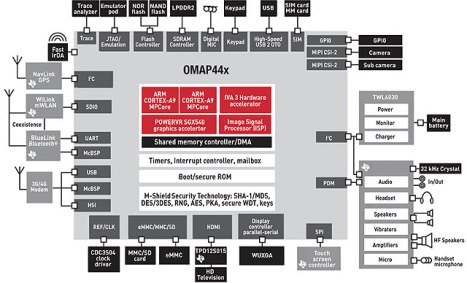
Think networked information. Big Data. If all our images, texts, conversations, correspondences, budgets, ledgers, laws, entertainments, plans, designs, models, experiments, applications, programs, art…(and so on) are DIGITAL / digitized… then algorithm’d and interfaced, softwared and connected… NONE OF US KNOW WHAT IS THERE.
The machines to which we dump, turn-over, DEVISE, inform, enTRUST – the artifacts of our living – because it is too much – no ONE (person or institution) catalogs, lists, calculates, organizes, arranges, assigns – THE MACHINES MUST DO IT BECAUSE OF THE SCALE and PACE…
NOBODY KNOWS WHAT IS THERE
Stacked algorithms and protocols select relevancy and value; similarity and related; significance and import; primacy and rank. We operate. And barely. How do we guess the coding of its imputing? How do we wrangle the keywords? Information coming from anywhere at anytime into any port…what are the techniques, dexterity, knowledge, grammars, semantics, decoding, crafts – analytics?? – (at least as complex as the machine we diagrammed – times powers of 10 for all the machines involved!!) in order to locate our NEED; QUALITY; ESSENTIAL…?
In other words – we turn over. We devise these concords of things – and revise ourselves according to them.
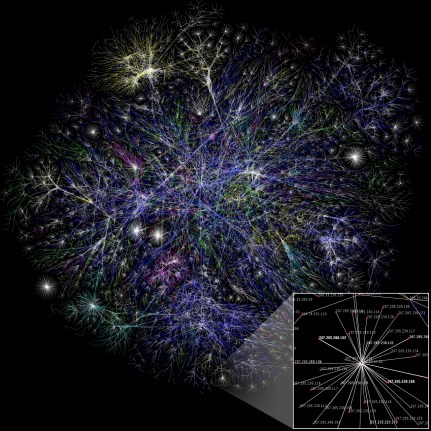
Internet map
You’re guess may be as good as mine. What is in there, where it is, and how to access it. We use a Smartphone for many more things (at once) than a hammer or pen – while we and it are being used by systems larger than any of us altogether.
Systems of devised systems – we have no hope of controlling. NONE of us. Nor all of us. We are entangled: mutually dependent – and subordinate. We DON’T KNOW. We DON’T KNOW. We don’t know. We’re IN the weather completely.
This is rough, when you also have a propensity, passion, or interest to know. Subordinating oneself to a system is hard with a developed desire for autonomy, freedom, liberty. As far as I know, at the mercy of was not a Sapient evolutionary goal. Yet here we are.
How shall we adapt to these devices?
How shall we then live?
From an email conversation I am involved in regarding human relation to technology…seemed to expose a who-I-am via what-I-concern-myself-with moment in my life worth sharing… and would love any/all comments, ideas, perspectives, regarding:
“I like that inference of thought…influence of larger and smaller systems interacting in our particular (as Lemke refers to them – “focal levels”) living. I think from Heidegger onward that attention to the reciprocal or interactive influence of what we devise/make and who we are and what makes us continuously reshaping/constructing/constituting us IS a fundamental challenge/question Humanity is within. This is why I am drawn to technesis as a human activity. There is no difference from developing domiciles and agriculture, accounting and writing, language and representation in its holistic alteration of the species as there is with what we are within with the devotion to the “digital” – an oddly ubiquitous remediation of experienced matter-ridden-media into this ONE SORT OF ORGANIZATION/CODING. A strange phenomena. I think the nearest relative is “writing” and this is where Hansen (“Embodying Technesis”) and Hayles (“How We Think”) as well as Hodder & Ingold’s anthropological works help elicit perspective (& Kittler) on how ALL technological development (craft, architecture, invention, production) so foundationally EDIT us as a species… akin to geophysical change for all forms of biological life. I suppose what I hope for is some small increase in awareness &/or experiment of capability for Human-kind to discern what amount of agency we may (or may not) have in relation to what we evolve and construct. Is the system too vast – the biological motive too strong – to continue exploitation and networking (also increasingly representative of our fundamental relationality) – or are we a kind of thing that can affect larger systems in such a way that is transformative? How small of a part are we, what are our limits of capability, do we have ANY genuine (actual) capacity to discern telos of larger systems… or not (trickles all the way down to personal behavior and ‘psychology’) – can we ever determine our AGENCY (collectively / personally / speci-ally)? Or is it airy imagination and the activity of abstraction?
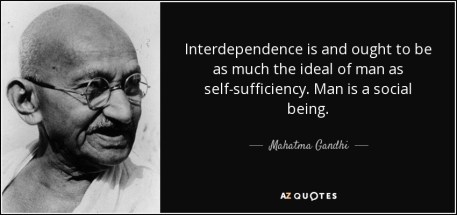
Sometimes we weep, “I need you so much.”
Do we grieve from the weight of the need?
Or the needing of differing things?
Do we weep that our need’s not provided?
We need.
And need differing things.
And need other than can be provided.
As long as the grief is not shame.
For what harm in need?
Like anything else,
we depend
-in truth-
on a world
made of so many
things –
to exist, to alive,
to continue.
And why not one another?
I am and you are
Without which we are not
That is need,
that is all,
that is fact.
Without air, food or water
the body declines.
Without commerce,
event,
the mind will not thrive.
Without you
what is I
will diminish.
That is nature.
There’s no shame in the needing.
No recall in the fail.
The “meeting” is all –
the approach and response,
the expression of need
and its answer.
Insufficient and varied,
incomplete and alloyed,
is never the fault of the need –
only moment.
“I need you,” I weep,
and I do, it is true,
and the you that is current
needs me.
That is all.
It is fact.
It’s the case.
We can change it, okay.
We can do.
But the need will remain,
because that’s how we are –
dependent by nature
on nature, on world,
on persons and places and things –
on each other.
We’re human, you see?
Altogether be–cause
We BE from the CAUSE
of each other.
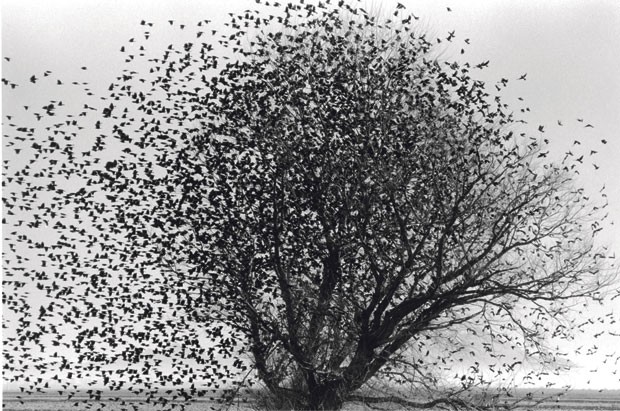
-William James-

“If there is any irreverence in my own work, I hope it is the irreverence I bear in mistrusting my own sincere self, which then sincerely mistrusts the irreverent me. If there is a bottom to this, I think it is a life’s work”
-Mary Ruefle-
Student Magazine of IISER Mohali
Music, Musicology, and related Matters
a photographic pilgrimage to Orthodox Christian monasteries across the continent
Meandering Through a Literary Life
Orthodox Christianity, Culture and Religion, Making the Journey of Faith
Erik Kwakkel blogging about medieval manuscripts
"That's the big what happened."
Networking the complexity community since 1999
 All my Words are Silent