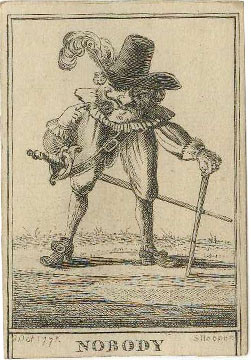

from Michel Serres’ Troubadour of Knowledge
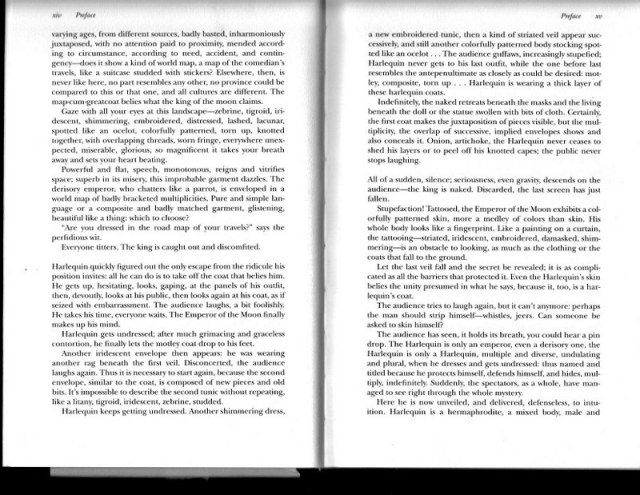
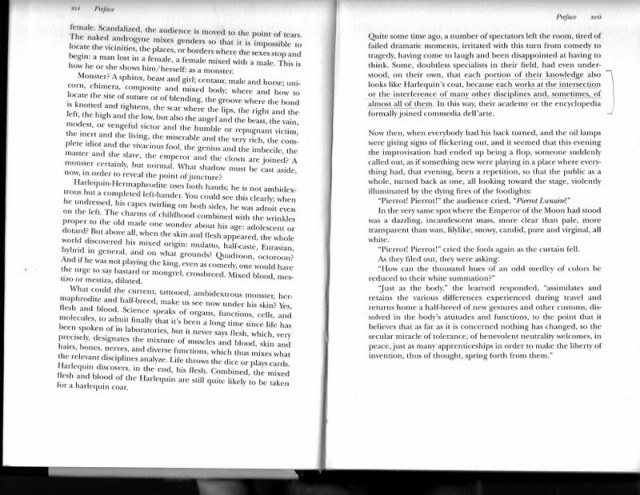

“To recognize yourself in… To multiply your likenesses”
-Edmond Jabes–
And what do you suppose it is to be a “Nathan Wayne Filbert” human? To be named? Alias Harlequin?
What do you suppose it might be like to be “Ida Sophia Lind Filbert”? “Jada Lynette Smith”? “Oliver Myshkin”?
“Hallie Noel Linnebur”?
“Tristan Rene Wells Filbert”? “Simon H. Lilly”? “Aidan Stafford”? “Herman Melville”? “Paul Feyerabend”? “Rachel S. Como”? “Paul O’Callahan”? “Meghan Miller”? “Jim H. Charles?” “Warren Charles Farha”? “Amanda Marie Lind”? “Fernando Pessoa”?
A cow. A particular cow – an Hereford – on a particular plot of land in Mitchell County, Kansas?
“Plato”? “Kathy Downes”? “Ortho Stice”? A Welsh Corgi “Tippy”? “Napoleon Bonaparte”? “Charles S. Peirce”? The clerk at the grocery store? “Christopher Fynsk”? That Forest Ranger? A pet hamster “Jacques”? “Claudius”?
WHY SHOULD ANY ONE HUMAN BE ANY MORE INTERESTING THAN ANOTHER?
WHY SHOULD ANY ONE ORGANISM BE ANY MORE INTERESTING THAN ANOTHER?
What means: “EFFECT”?
“William Shakespeare”? “Avital Ronell”? “God”? “John Wayne Gacy”? “Helena Bonham Carter”? “Microsoft”? A caterpillar (be specific)? “Mahatma Ghandi”? A sparrow? Molecules composing particular dust?
WHAT IS?
how are we able to ask that question?
WHAT ARE WE?
how might we be “WHOs”?
Starting local:
What might it be like – as a “Nathan Wayne Filbert” (Nobody) – to BE a “Nathan Wayne Filbert” (A body)?
I’m not sure HOW to answer that.
“Perhaps writing means overcoming all resemblances within the very heart
of resemblance, being finally like yourself, like nothing.”
i.e. How that can be answered.
– WHO or WHAT answers – ?
WHAT MIGHT IT BE LIKE…TO BE?
(qualified to ANSWER)
can ANYthing “answer”?
does “answering” imply “language”?
WHAT IS AN ANSWER?
(in relation to – ?)
What is(?) Nathan Wayne Filbert, Alias Harlequin?
IS “Nathan Wayne Filbert”?
WHAT IS?
WHAT IS IS?
(how?)
WHAT IS A QUESTION? And WHY/HOW can a question be asked?
WHAT IS IT – are our – ideas? – To “IMAGINE”?
what are ideas?
What might it be to “conceive”?
“to generate concepts” (D&G)
framings of our world-experience
[WHY? HOW?
WHAT FOR?]
WHAT is a “person”? HOW? WHY? WHO?
Always and ever – HOW & WHY can we / do we ASK?
WHO QUESTIONS?
(WHAT)?
(HOW)?
Something begins
(in/with all this)
it would seem
(it seems)
it seems that something begins in/with questioning
Alias Harlequin, i.e.
– the one whom this effects, the one on whom this has effect, the one (same? No!) affected by him or her, by whom and it. By this. This. That. By Other, others, and therefore, Alias again, patchworked and quilted, becoming, undoing, altering. Alias.
“Presumably most writers have many more ideas than they are able to act on”
– Ivan Vladislovic, The Loss Library –
Alias Harlequin – identities – is as is affected, effects, effected with/by.
Alias, i.e. as effected by “Hallie Noel Linnebur”; as effected (generated? Co-composed-with-) “Pauline Margaret Kresin Filbert”; the St Bernard “Zorro”; a specific train on a particular journey at a particular time; that mountain in that moment; Dec. 16, 1997 – a flu; and so on…
Alias – as situated in moments – e.g. “each one.” Harlequin – the human surname quilted with environment (micro-to-macro) in concourse. “Alias” as the “name in shreds” – the fragmentary and provisional, pragmatically specifiable address.
Ambiguous and fluid (like “river” itself – capable of designation but inconsistently contained) transient yet locatable, in form…perhaps. Yet no. “Alias” perhaps the medium (in-between) of morphing form and varying substance – what nothing also is (is not).
Name/term/signal/sign (“Alias”) as related to HNL, Dr. K, Dostoevsky, rustled grass, these sounds, this space-time and its company (surround) and then again, these again (but never “again”) – designating “NOWs”. Perhaps. It depends.
What or Who, How “Alias Harlequin” ALWAYS depends on a totality of other dependencies, as it were (or is?) “As such.”
Alias Harlequin, representative? Not that can of worms. AND the “thing” itself? (network of momentary dependencies-in-relation)?
What might we call (it/him/etc.) then? And what would “calling” be/do – how?
WHO questions?
This Alias Harlequin.
“I am already so much the inscription of a divergence…What I was, if that could be described, was a whirlwind of tensions…”
–Helene Cixous–
“A word is binding and at the same time breaks our bonds.
To which of them shall I, one day, owe my freedom?”
“To one only. Your name in shreds.”
-Edmond Jabes, Book of Resemblances–
From an email conversation I am involved in regarding human relation to technology…seemed to expose a who-I-am via what-I-concern-myself-with moment in my life worth sharing… and would love any/all comments, ideas, perspectives, regarding:
“I like that inference of thought…influence of larger and smaller systems interacting in our particular (as Lemke refers to them – “focal levels”) living. I think from Heidegger onward that attention to the reciprocal or interactive influence of what we devise/make and who we are and what makes us continuously reshaping/constructing/constituting us IS a fundamental challenge/question Humanity is within. This is why I am drawn to technesis as a human activity. There is no difference from developing domiciles and agriculture, accounting and writing, language and representation in its holistic alteration of the species as there is with what we are within with the devotion to the “digital” – an oddly ubiquitous remediation of experienced matter-ridden-media into this ONE SORT OF ORGANIZATION/CODING. A strange phenomena. I think the nearest relative is “writing” and this is where Hansen (“Embodying Technesis”) and Hayles (“How We Think”) as well as Hodder & Ingold’s anthropological works help elicit perspective (& Kittler) on how ALL technological development (craft, architecture, invention, production) so foundationally EDIT us as a species… akin to geophysical change for all forms of biological life. I suppose what I hope for is some small increase in awareness &/or experiment of capability for Human-kind to discern what amount of agency we may (or may not) have in relation to what we evolve and construct. Is the system too vast – the biological motive too strong – to continue exploitation and networking (also increasingly representative of our fundamental relationality) – or are we a kind of thing that can affect larger systems in such a way that is transformative? How small of a part are we, what are our limits of capability, do we have ANY genuine (actual) capacity to discern telos of larger systems… or not (trickles all the way down to personal behavior and ‘psychology’) – can we ever determine our AGENCY (collectively / personally / speci-ally)? Or is it airy imagination and the activity of abstraction?
“I am affected not just by this one other or a set of others, but by a world in which humans, institutions, and organic and inorganic processes all impress themselves upon this me who is, at the outset, susceptible in ways that are radically involuntary. The condition of the possibility of my exploitation presupposes that I am a being in need of support, dependent, given over to an infrastructural world in order to act, requiring an emotional infrastructure to survive. I am not only already in the hands of someone else before I start to work with my own hands, but I am also, as it were, in the ‘hands’ of institutions, discourses, environments, including technologies and life processes, handled by an organic and inorganic object field that exceeds the human”
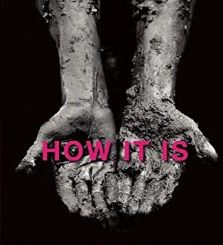
“Help!?”
He cried, it cried, I cried. But help, it will not come, for me. And why should it? Who could owe me assistance, and why? And what would it benefit another? Even how might the crying become? Often silent, unheard; a gesture or tone; a constant “I am unable to do this alone.” There’s no reason. No reason that someone might help me.
Help has come. Many times, and that greatly. Otherwise I would not be alive. Irrational, inconceivable, as ‘last measure,’ – the cry’s been expressed, even shouted or posted: “I need help or we will not survive!” And it’s come. Never “I.” The yelp always weighted with “we.” In deep over my head as a man, as a father, a worker and thinker as well – always “help!?” Needing contact or touch or attention. Needing hearing or care or advice. Needing teaching, protection, support. Needing money or sitters or transport. Needing food. Needing shelter. Such needs.
I need help. “I.”
Whatever effects or affects, I believe that I do try to help. To have food for my children, and beds. To respond to emotional traumas, disturbs – to hear and attend and comply. To love others embodied and minded. Within (my) reason, I do what I can to assist, especially those gathered about me. I experience my’self’ as RESPONSE-able – once engaged there’s a sense that I must. Some say that we choose to do good – but I question. Many insist we always have choice, yet I seem unable to abandon or neglect, unless, perhaps, my “self” or theoretically. I am prone to the “people are people” – shaped by time and engagements – to behave in the world as they are, and continue the way that they be (in small measure). The issues of scale and of time. We do what we can to survive. Some prone to survival of others, some not. Depends on the value of “self,” so it seems. I help, which develops that value (I hope). To think I might matter, be dependable/depended on, be important – to someone, somewhere, at some time. Survive.
And I notice myself ever howling for help. Help!? As I age, I distinguish the needs. Need for contact and talk – to think and to feel; needing help with evolving demands. “Man,” “parent,” “student,” “professional,” – all extensions of what I once was – just a “human.” I can’t even survive being that, let alone all these complex designations. Artificial “helps” like alcohol or nicotine, religious belief or “self-help” seem to do as much harm as relief. As babies and aged we are weakened…our “primes” occasioned by a nexus of supports. In our weakness, we comprehend need(s).
I need. “Help!?”
Without knowing what it is or might look like. I know that I’m drowning. I age. I know no one owes it, the benefits would have to be rationalized. I fail. I can’t go on. I must go on. I go on.
You must go on, that’s all I know.
They’re going to stop, I know that well: I can feel it. They’re going to abandon me. It will be the silence, for a moment (a good few moments). Or it will be mine? The lasting one, that didn’t last, that still lasts? It will be I?
You must go on.
I can’t go on.
You must go on.
I’ll go on. You must say words, as long as there are any – until they find me, until they say me. (Strange pain, strange sin!) You must go on. Perhaps it’s done already. Perhaps they have said me already. Perhaps they have carried me to the threshold of my story, before the door that opens on my story. (That would surprise me, if it opens.)
It will be I? It will be the silence, where I am? I don’t know, I’ll never know: in the silence you don’t know.
You must go on.
I can’t go on.
I’ll go on.
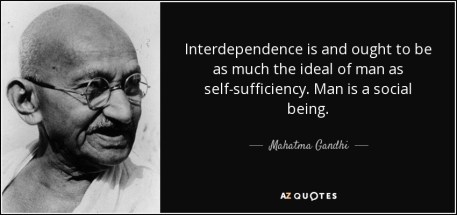
Sometimes we weep, “I need you so much.”
Do we grieve from the weight of the need?
Or the needing of differing things?
Do we weep that our need’s not provided?
We need.
And need differing things.
And need other than can be provided.
As long as the grief is not shame.
For what harm in need?
Like anything else,
we depend
-in truth-
on a world
made of so many
things –
to exist, to alive,
to continue.
And why not one another?
I am and you are
Without which we are not
That is need,
that is all,
that is fact.
Without air, food or water
the body declines.
Without commerce,
event,
the mind will not thrive.
Without you
what is I
will diminish.
That is nature.
There’s no shame in the needing.
No recall in the fail.
The “meeting” is all –
the approach and response,
the expression of need
and its answer.
Insufficient and varied,
incomplete and alloyed,
is never the fault of the need –
only moment.
“I need you,” I weep,
and I do, it is true,
and the you that is current
needs me.
That is all.
It is fact.
It’s the case.
We can change it, okay.
We can do.
But the need will remain,
because that’s how we are –
dependent by nature
on nature, on world,
on persons and places and things –
on each other.
We’re human, you see?
Altogether be–cause
We BE from the CAUSE
of each other.
The Complicity of Communication: The Death of Knowledge
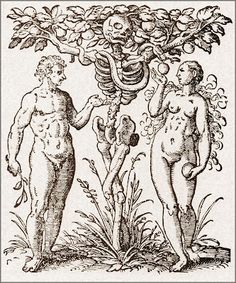
Perhaps we talk what we “know” to death. Is that in the definition “to know”? To shrink, reduce, fit-to-one’s-size, assimilate?
Is communication inherent complicity? The effort at taking a complex and messy, wholistic, excessive, leaky, mysterious and comprehensive lived-experience and rat-tat-tatting away at it with letters and sounds, symbols and utterances toward some acceptance, some convergence of ‘meaning’ necessarily equaling its crucifixion, its disappearance, its waste? If we manage to twist and contort it to language have we wrung it of reality? Making a different one? A communicable one? A humanly manageable one?
I know (for one) that when I seek to inscribe, assay, proclaim or declare “what happens” – as soon as some assent or understanding seems achieved I sense the evisceration of the expression. Whether it’s descriptive, imaginative, poetic, academic or pragmatic…forcing it, wrenching it, seducing and eliciting it (sentencing it) into vocabulary, into dialogue, into verbiage…leaves me with a variant experience than the one I sought to transfer.
I mean this…we arrive at…this. I feel, perceive, desire this…it comes out hackneyed and damaged. Holy crap!…this occurred! – Can I just say? Will you let me tell? – and then…what proceeds is an entirely different occasion…a wounded, striated, cut and assembled collage that never equals the issue.
Convergence. Its own beautiful, extravagant phenomenon. But not quite expression. Not quite translation. Not quite… Always saying more than I intended and less than I meant. Always saying less than I intended and different from what I meant. Language. Open, flexible, ambiguous, gargantuan…and limited, boundaried, sensible, requiring…
I try, tried, keep trying. And never. Each utterance a signing off. Each proclamation death-sentencing its sensation. Each squeezing toward the dictionary, no matter how scrambled and undone, redone, invented, inverted, still wringing the beauty to beast.
I said I love you. It came out conditioned. Assented to. Agreed. & Compromised.
I said I want you. Interpreted “if…”
I said I am… emitting particulars and contradictions.
I said I wish… conditioning demands.
I wanted to say. To sing. To whisper.
Vocabling calm and certain and saturation.
Sounding like need and fear and some small evil.
Echoing an anxious desperation.
There is this……..which verses that……and do not equal.
So I am alone
As are you
and then this
between
and same
and different
mix –
some third business –
contorted angle
wound and rendered
wrapped about
and wriggled
writhing
&
struggling
to be
near
what it
is
I love you.
On Plasticity: Being Ourselves, Able to be Ourselves
My birthday recurred. Post-40 in a thriving family of 6, there are not many days deemed “special” that end up being about oneself as the father, caretaker, partner, provider, no matter how small the scope of the surround. Soccer games and music lessons; feeding times and laundering; all keep going on – birthday or no. The exhaustion continuous activity and felt responsibility breeds seems to increase in proportion to the numbers signifying one’s years upon earth.
But there are flourishes and touchings – like small miracles – proffered patience, generosity and deference gifted one’s way as the children mature. I received momentously considered and thoughtfully creative presents and offerings from my brood, including the effort of travel (a 5-hour drive for a 3-hour meal), some self-deferrals of wants and demands for a day, shared and repurposed objects and much love and affection.
In the midst of which my brother-in-law texted: “And what have YOU done for YOU today?”
***********************************************************************
Isn’t nearly everything we do for ourselves in some way? I thought. Caring for those we love, providing for their needs and responding to their living feeds our hope that we might be valuable partners and parents. Enabling others’ satisfactions or play, achievements or events provides a goodness and gladness to our sense of identity. WHAT DO I (or would I) WANT? [If things revolved around ME? – What would I select for MYSELF, my TIME, my ACTIVITIES, were my surround and environment conducive, supportive, adaptive and compliant – attuned to MY wishes and feelings, desires and preferences – as its Center and Hub?]
This engendered heavy pause. Followed by weeping. Since my youth I’ve pleased people. Especially those I crave being pleasing to. Ever considering: if I find them, serve them, fuel them, tend to their whims and their moods and their wants and don’t fail them – they’ll have NO REASON not to accept and acknowledge me, enjoy and delight in me…perhaps even come to NEED and to LOVE me!
Still most of these persons have come and then gone – not needing an enthusiastic audience-of-me, my support systems or enthralled amour, cooking skills, cab driving, housekeeping, therapeutic attunement, nursing or cock…so much as an “Other,” I suppose. An other alike with mixed needs, wants and cares, fears, doubts and preferences…uncertainties.
WHAT WOULD I WANT?
Being malleable, self-deprecating, at-your-service and adaptive in order to eventuate my longed-for (but not fully realized) purposes of belonging, chosenness, appreciation, acceptance and love, predisposed me to the Phenomena of Plasticity.
That organisms jostle and interact, adjust, emerge, revise and alter in accord with their environments and one another toward an imagined maximum survivability came as no surprise to me.
That my brain and body bend and twist, reconfigure and rework themselves toward perceived pleasures, building likewise to avoid potentially death-dealing pains, forms an accurate metaphor of my experience.
Do this, try to be that, retrain the brain, assimilate languages, nuances, behaviors and tastes, become parent and scholar, musician and lover, friend and coworker to an enormous variety of persons, places, and things (or situations).
Sounds desirable! After all, we’re fascinated and entangled in networks and viruses, Renaissance-personages and extensive applications and sites – world seems participatory, fluid, collaborative and self-responsive – play-doh, silly putty, plastics, rubber and earth. Water, air, flesh and fire. Living would seem to be a plastic rather than static affair – examine a corpse! (and observed long enough, even then we’re not done and prove pliable and transforming).
************************************************************
Yet for me came a hitch as I pondered all this. A lifetime spent adapting, responding and recursiving change for results that never quite arrive in a reality where even those chances will cease…
WHAT DO YOU WANT FOR YOURSELF?
When the question is put to me: “What is it, right now, you prefer?” it turns out, among many acknowledgedly diverse and contradictorily complex cognitive-affective responses – I USUALLY KNOW WHAT I’D PREFER. Very few options taste best to me in any given moment, and their range and scope are slim!
And then there’s the fact that I feel great admiration towards those who speak their mind and express their desires in a direct manner! They still may compromise and adapt, but both adults and children who proclaim what they feel and want, prefer or need, ever impress me. I (on the other hand) tend to try constantly to guess and anticipate what those around me prefer or desire before asking into my own – as if to say – if there’s room or time after all of you…I’d sure like to…but by then I’m too tired.
***********************************************************
So how plastic are we? How multiple, really? Since age 7 or 8, 12 or 15, my core desires have been pretty consistent: Read. Write. Love. Sex. Explore. Make. At any given moment, regardless of conditions or surround, regardless of the options even, my litany of WHAT I WOULD DO FOR MYSELF usually boils down to this brief list. In addition to which, I usually have a good idea of who, where, what, when, and sometimes how I’d go about each of the same – if conditions, environment and possibilities were dependent on ME.
I’ve definite tastes and predilections, ways I like to feel in what venues, activity-biases and condition proclivities (even though those nearest me often say they’d never know it by my choices).
Maybe the Phenomenon of Plasticity hypothesis runneling its now-scientific way through the cosmos and further than cells is a living CAPACITY but not necessarily a QUALITY? Accident not essence? Perhaps plasticity suits the powers-that-be, our politico-socio-cultural nowthen (STEM disciplines, Markets, Politics & Capital, Networks & Technologies) that would love for us adapt and adjust, go-along and “flow” as if its “natural,” “observable” and “scientific fact”? (At the moment).
I’m not disputing it’s COOL – our abilities to change and flex, evolve and habituate, refashion and conform – and indeed it’s often necessary for our survival – but there’s a gap, hesitation, incompleteness to the story. It doesn’t “FIT” to experience, or only partially so. Something’s being assumed underneath.
And what is that? Why have I preferred preferring others to my own, yet not ceased having my own all these years?
How would I be if I believed ALL were equally plastic? That it wasn’t my job to adjust to everyone, remake to everything around me, instead insisting upon their/its relative capacity to reshape and orient to me as well?
WHAT WOULD I WANT if I could “be myself” (express my consistent biases and longings, behaviors and thought-trajectories, mood-palette and drives) in environments in which I was enabled/able to be/do so? A surround that exercised the capacity of plasticity in relation to ME?
NOT EITHER/OR
Granted, some do, (those that stick around or don’t realize a choice) and in varying degrees, but I seldomly bank on that and announce or convey myself…usually I hedge against abandonment or rejection – fear of pains winning out over hopes of pleasure.
That’s “natural” too, the disciplines say – but there are so many counter-examples: ones who openly state their “I would prefer not tos” or “I would prefers…” What have they got on me in this plasticized universe?
**************************************************************
There’s expression: I prefer finding questions. Ferreting unknowns.
FOR myself – there, I’ve done it. At least once today.
09.22.2015
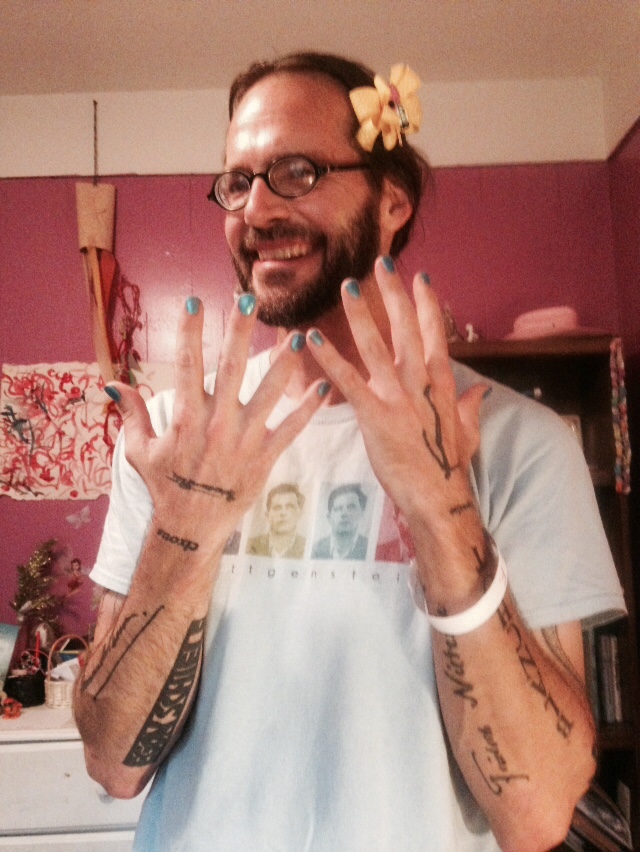
I am not a scholar. I know that now.
I am middle-aged.
I have pursued no discipline, field, or “area of knowledge” to its limits.
“Core literature.”
Librarian. “Litterateur” (awful sound). These.
Exploring fields: science, literature, philosophy, history, critical thought – through the “core literature” – the Canons of the Field.
Only so far.
Not to the ends.
What a novelist needs. Knowledge a little beyond average, a little obsessive, a little “never satisfied.”
A librarian: able to discourse with “Scholars” in any field – enough terminology, vocabulary, “core knowledge.”
“Jack of all trades, king of none.”
Yes, that.
Librarian. Litterateur. (I don’t know what else to call it).
Me.
Degrees in Classical Music, Theology, Philosophy, Information Science, Art & Critical Thought.
It’s something.
But not “scholarship”.
Core Knowledge.
Trying to be human.
Trying to know what I need to know to be that.
Trying to be.

“If there is any irreverence in my own work, I hope it is the irreverence I bear in mistrusting my own sincere self, which then sincerely mistrusts the irreverent me. If there is a bottom to this, I think it is a life’s work”
-Mary Ruefle-
Student Magazine of IISER Mohali
Music, Musicology, and related Matters
a photographic pilgrimage to Orthodox Christian monasteries across the continent
Meandering Through a Literary Life
Orthodox Christianity, Culture and Religion, Making the Journey of Faith
Erik Kwakkel blogging about medieval manuscripts
"That's the big what happened."
Networking the complexity community since 1999
 All my Words are Silent