Alias Alive at the Ends

Always too late.  This is the message of disaster.  We are too late to the scene, and undone.

Even thinking and emotion.  Even love, can’t keep pace with disaster, with entropy, with chaos.

Death always outruns us.  World and chance incessantly out-maneuver.  We are small.  Very small.  Infinitessimal, as it were, in our finitude.

Thus begins our own story of destruction: we are born.  Perhaps conceived (of).  Perhaps even further back, before developing.  Prior to evolution.  The brokenness.  The cracks.  The destitution.

Arising of accidents.  Formed of the fractures.  We become.

In other words – doomed from the start.  Our ends preceding beginnings – the beginning began at the end.

At the point of ‘exist’ – our last chapter.”

This would be Alias, grieving his friend, in two colors.  The living, the dead, the to and the from.

Laramie dies, and is absent (if memory serves).

Alias keeps after his death – loving Lucy, and children, performing labor and sin and its necessary too much – in his office with paper and pen.

He pauses and looks to the window.  Birdsong, stray cats, and the leaves.

L. is gone, but he’s not. Just inevitable.

*

He perceives it as some kind of race – but death always the tortoise that outruns the hare – and is needed.

No more.

Lucy calls.

No more.

Hears the children.

No more.

Senses purpose –

*

The pen stays on – marking the book.

Alias.  Alias alive.

Laramie.  Laramie ceased.

Spiders and sunlight and dust – all alone.  All all-one.  All “the Same” in some mystical way, called the Real.  The Real that repeatedly ends – its beginning.  The Ends, then.  The end.

We are. Are we not.

knottyhands

Beginning this way, I have jettisoned my goal.

No one is able to say precisely when it will rain, until it is raining.  Not this one.  Nor…

At times it is raining.


When will I be here? Or, better, perhaps – When am I here?  (Already?  Again?)  How?

Am I when and where I love you?  And how?  Forego why, too complicated.


Say “I am this one who loves you” now and now and now again.  As if a presence on repeat, differently again.  Registers and tones; layers, levels, circumstance; sense/nonsense and the liquid continuum between.

Who are you?

Say “you are the one this one loves.”  Or the many.  Or the one this one loves in relation to I.  Or the other-than-one loving other-than-one, here, now, again, again, differently.

When is this love?  And how?  Dropping why in the craggy abyss, as it dissipatively floats, up and away.  Where is this love?

I begin.  It is raining.  Say that you are.  If I say that you are, or how, when, or why, I have failed what I set to inscribe (you).  Say now.  I just missed it.  Say love, saying what?

I’m aware of your absence with pain I can’t tell.  I say “love.”  I say “miss.”  I say “yearn.”  Goal discarded.

Please say that you are.  I will be that relation.  Will not.  And I am.

It is raining.  What it?  Say I am and you are.  Less than one and still more, it’s becoming.  Undone.  The suture begins in the cut.  We are we.  We might be, when we are.  Now and now, say now, and is differently.

We’re unfound in this you and this I inter-change.  Inter-change-able as we.  And we’re not.  Either you or an I as these two, but not quite, there’s an extra: BETWEEN.

Which is nothing, like water in air, molecules known by connections.  Re-cognized.  Understanding might pull them apart, separate, while reason(s) constructs some assemblage.

Say I love you, as this one to this.  Say it’s so, without knowing, ‘cause with.  In between, together; understanding, a part; reasoning a sort of equation.

Where am I?  I appear in this with.  Who are you?  This one forming between.  When now comes it is raining, again, again different.  Some of the notion we are.

Report: Beginning from the Endless End: A Community of Thinking: The Experience of the European Graduate School

Apply Now: Begin your MA/PhD this Summer 2016 in Saas-Fee, Switzerland

Report: Beginning from the Endless End: A Community of Thinking: The Experience of the European Graduate School

“the center of thought is that which does not let itself be thought”

– Maurice Blanchot

Perhaps a community. 

A community “risking a fragile resilience” (Philip Beesley).

“Distinguishing the indistinguishable.”  “Compatible Incompatibilities.”  “The Origin is Empty.”  “The path to truth is truth itself.”  “More than 1, less than 2.”  We are always with without. 

I feel rich, calm, a sense of belonging.  And loss.  In my second year of a PhD program at the European Graduate School, nestled far and away in the Swiss Alps, in the canton of Saas-Fee.  It is June, it is chilly, high, quiet, separate.  Far from the searing plains of Kansas.  Far from my employment, my partner, my children.  Far from domestic duties and sustaining (endless) chores.  Removed, set apart, drawn up to the mountains, the rivers, the snow.  Another language, an other culture, a situation of difference.

Mladen Dolar, following many great others, tells us we must “slow our temporality.”  That we can “only do philosophy if we pretend to have all the time in the world.”  How could this be done within the everyday?

It feels monastic almost.  30-40 humans from all over the world gathered to hear, speak, inquire and reflect.  Many silences.  All impassioned by the above – the difficult work, accidental work, error-filled work of “distinguishing the indistinguishable” finding “compatible incompatibilities,” facing the “empty origins,” and setting onto the path that has no end, in the risk of a “bad infinity” – of selecting or creating or imagining impossible tasks and eternally postponing them, finding no conclusions, resolutions, foundations – everything put into question, everything problematized, intervened – “the truth is mediation, a passage.”  The happening, the process, of thinking.  So we believe.  And so we gather.  With eminent leaders, guides, mentors (for example, this session: Slavoj Zizek, Helene Cixous, Philip Beesley, Christopher Fynsk, Mladen Dolar, Jean-Luc Nancy, Keller Easterling, Chris Kraus, Alenka Zupancic, Benjamin Bratton, Werner Hamacher, Anne Carson…and more…).  We hear from them, we question, we think with them, think FOR other thought drawn toward us (Hegel, Aristotle, Plato, Heidegger, Foucault, Lacan, Freud, Deleuze, Blanchot, Spinoza, Holderlin, Goya, Beckett, and on…).  What lives, what continues in our seemingly endless end.  What might in-form and unsettle us, what might disturb and enliven us, how we might change-in-relation, again and again and again…

To “take all the time in the world” for 30 days.  To read closely.  To be overwhelmed.  To exhaust.  To end again and again, to fail in hopes to fail better.  To “start in a bad way, in order to arrive in the good.”  The process and problems.  Our “selves” in becoming, the one and the two and the many – always with lack.  Negativity, absence.  “Nothing is identical to itself.”  The “greatest order and disorder exist as one.”  “Constancy is slipperiness and change.”  How do we dwell there and evince.  How do we act to find out?  There is always the other, another, a lack that we seek.  That is nothing, just lack.  Drives and desires and neuroses.  The community of thinkers.

Some of us question “what is wrong with us?”  Why a surplus enjoyment of troubling existence?  Why identities founded on nothing?  “Philosophy always arrives too late” (Hegel).  We can only begin at the ends.  Against nothing.  Yet toward.  And it is here I feel valued.  Here recognized.  Here is a home.  I belong.  In a timelessness of knowing in time.  An everywhere of nobodies anywhere.  Senses replete with mountains and rain.  Clear air and short breaths.  An absence of tasks.  Singular tasks.  Monumental tasks (for me).  That need all of the time in the world.  Are all of the time of the “world”.  Senseless letters.  Turbulent being.  In media res – in the middle of things – when outside already inside, inside where something’s always left out.

My collegiate journals from decades ago are riddled in their margins with: “to be the writer of loss,” “to be the philosopher of grey,” “to compose absence.”  A longing for empty origins since thinking began.  Repetition.

I walk for the body to process.  I dream of sharp thorns in my feet, of lost items, of absence and language and two shades of grey.  Rain comes through the clouds in the fog.  “The end is in the beginning, and yet you go on,” “My mistakes are my life,” – Samuel Beckett.  And so, and yet, I go on.  Intensively, demandingly, having “nothing to write, having no means to write it, and being forced by an extreme necessity to keep writing.” – Maurice Blanchot.

I miss those I hold nearest.  And I love them – how indecipherable the term – further description annuls it.  To say the unsaid or unsayable.  I am confused and elated.  Inspired and exhausted.  Drawn forward through despair.  And I love this experiencing.  It belongs.

“If nothing were substituted for everything, it would still be too much and too little.”
― Maurice BlanchotThe Writing of the Disaster


On Being Other

On Being Other

(after Heidegger, on Holderlin)


Broken off from origin: gods, family, homeland.

Early switched direction – turning back, against, since.

No belonging.  No church, no community of mortals.

Reliant on the peaks and the abyssal.

No lasting love, but efforts toward convention –

when giving up –

even offspring, domesticity,

varietous employment,

almost friends.

No lasting commerce, always in-between,

feeling resistance and restraint,

constraints of discipline and need,

of longings, love, and lust.

Searching Other

fueled by others – across the times –

creators of the peaks and their abysses.

Oscillation.

Not yet rational, it commences –

undone in the unknowing, uncertain constant flow

generates turbulence toward an opening

or a gap, some kind of fold –

“run up hard against the unsayable.”

the closing line is a quotation from Heidegger’s

lectures on Holderlin’s poems “Germania” & “The Rhine”

The Madness of Information: Stiegler, Pharmakon, Therapeutics?

Greatly appreciated for thinking…

S.C. Hickman's avatarThe Dark Forest: Literature, Philosophy, and Digital Arts

information-overload

Everybody gets so much information all day long that they lose their
common sense.
……….—Gertrude Stein, “Reflection on the Atomic Bomb” (1946)

It is a very sad thing that nowadays there is so little useless information.
……….—Oscar Wilde, “A Few Maxims for the Instruction of the
Over-Educated” (1894)

F. T. Marinetti in his epochal 1909 “Futurist Manifesto,” (in)famously quipped:
“Time and space died yesterday.” Paul Virilio derided this collapse of the timespace continuum into a virtual world of excessive information, saying,

“There are eyes everywhere. No blind spot left. What shall we dream of when everything becomes visible? We’ll dream of being blind.” (The Vision Machine)

Virilio would also prophesize that the “…reconciliation of nothing and reality and the suspension of time and space by high velocities replace the exoticism of journeys with a vast expanse of emptiness.” (The Information Bomb) Those who index such things tell us that…

View original post 2,148 more words

Impossible objects – Possible beginnings

Question-Mark-HD-Wallpaper15

“We enter into thought, and especially our own, only by questioning”

-Maurice Blanchot-

This then, an impossible object with possible beginnings.  What says, what writes, what IS – all filled up with what is NOT.

Capture, mediation, confluence.  The impossible attempts, the radical effort: I attempt to SAY, to INSCRIBE, that which is incapable of being said, inscribed, touched or revealed: experience, THIS-NOW-HERE, YouMe.

This is what, then, I will create / not-be-able-to-create.

click here for more…

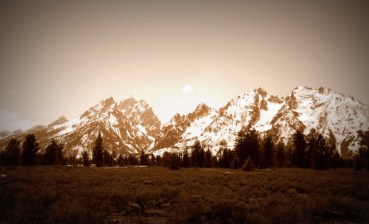
Laramie, still

Teton-Range

Marc hasn’t approached such things in a very long time, having left ranches for cities decades ago.  He’s never perceived his father this way – a sodden, curled lump, a heavy heap of human – laying not far from a dissolving and evaporating campsite.  Still.

Alias ponders “still as stasis or persistence or both/and?” in his notebook in his study.  “Most often I use ‘still’ with some indication of both – stubborn, persistent, continual, unmoving – obstacles.”

Son standing over his father.  Father, fallen, humped, underfoot of son.  A stubborn statue, status, state.  Something resilient, resolute, apparently ineradicable and permanent – as far as permanence goes.

“Sons stumped by their fathers.  Fathers blocking their sons.” Alias wrote as Lucy re-entered their provisional home (what “home” is not?).

Laramie lay still, sopping, weighing more than any many should, it seemed to Marc.  Now fathering the labor of his unfortunate offspring, hovering over it/him like a bent tree, not quite as strong, but still stuck and rooted.

“The child is father to the man…still,” Alias jotted, telling Lucy that he’s stuck in the awful muddling middle of things, still wanting several things to be possible at once, believing they ought appropriately have right to be – including (but not limited to) both of their happinesses and satisfaction… fulfillments… but unable to see quite how, and for some strange reason thinking acutely of Laramie, wondering about him today – where he is and how – and all of their good, promising, talented grown children, and why they all increasingly feel alone, distant, farther from one another with age, in spite or in direct conflict with his feeling of the relative, mandatory, even necessary import and significance of these very few – very few consistent, momentous, continual and crucial relations – one another, their some sort of shared offspring or circumstanced charges, numbered friends, one another… handful of humans they ‘trust’ ‘still’ – and the vagaried ambiguity of all of these terms.

Marc stares:  his father: a persistent stasis: there, still.  His mother.  What now?  Himself?  His wife, sister, the children?  And there… here… Laramie Paul Backstagger… still.  Present.  Here.  Present.  Still.

Lucy, in annoyed concern – Alias inebriated, anxious, composing, fantastical, undone – suggests they simply call Anna or Marc, Maribel or Laramie his own self, and check in if he’s so concerned, so (“apparently”) troubled and unsettled about them.  But Alias, of course, of matter-of-course, of persistent stubborn stasis, replies, sighing: “Whatever.  I’m overwhelmed.  Over-reacting, under-developed, undone… Forget about it.  Sorry.  How was your walk – your outsiding?”

Marc prods the body with his boot.  His father weighs too much.  Too heavy.  Too absent.  Too still.  Sensei had startled his mother Maribel, returning to the ranch stables alone.  Who startled his sister Anna, startling Marc via telephone, still.  And now here, miles from anywhere, hating, prodding, regretting, wishing this sodden, sullen lump of heavy matter wasn’t his lifeless father, Laramie, his mother’s errant husband, his sister’s rugged hero, the persistent stasis of his dad.

Tension reigns, still.  Vitality.  Forces working upon and with forces.  Matter and space and energy and time, perhaps.  At the very least a conflicted Alias in tangled tango with his beloved antagonist Lucy, unaware, intuitive, confused and undone, while Marc is shoving his inert father, Maribel quivers, Anna waits, and Lucy huffs down the hall.  Life keeps pressing on and stopping, still.

Becoming What and Who

I would find it difficult to praise this work enough and urge you to engage it if you share a deep love of creating and participating in literature and works of art.

Toward a Reading of Forms – by Jean Rousset

rousset120

Everything Trying

Peter-Trevelyan-10_incompleteness

Kurt Godel’s Incompleteness Theorems

Everything Trying: Practical Philosophy

I’ve been thinking a lot this weekend about a kind of “credo,” or some sort of explicatory description regarding foundational experiencing that informs my perspective on being / world / living.  I.e., what have I experienced in 45 years of surviving as a human organism – as a bookseller, musician, philosopher, father, academic librarian, various conventional-cultural-relationally-roled son / spouse / sibling / friend / coworker / writer; student of multiple disciplines – that comes so close to a similarity or repetition, a near-consistency, that it evinces as near as I can imagine to a belief or pattern, a compiling evidence or seeming-steadiness, structuring a framework for my perception and navigation of being a living thing.

As a bookseller, librarian, and philosopher (“professionally” for nearly two decades) – I find I operate with a kind of conviction (yet to be foiled) – that ANYthing ANYone can concoct or intuit as a query, theory, illusion or idea, dream / hope / fantasy or wondering, can be uncovered pre-existing SOMEwhere in the recorded history of homo sapiens.  I interpret this as indicating boundaries and borders of our specific kind of organism – albeit changing, adapting, extending and diminishing over and throughout time – limits or inherent finitude to our capacities, contextual whelmings, procedural experiencings of being human kind.

Conceptual development, creative expression, technological or theoretical “advance” or novel efforts or elucidations, all seem to come about as recombinations, complex reformulations, convergences or collaborative emergences and collusions of ever-present conundrums.  The sphere of human being bubbles at mysteries and limits, “realities” intrinsic to our kind of existing.  We seem to design and develop varieties of “tools” with which to supposedly plumb and plunder the ever-expanding cosmos of unknowing, but also seem to be simply drilling differing holes into an amorphous void – conjuring observations and explanations, combining fanciful analyses and results – constrained and directed by our “tools” of inquiry (whether conceptual hypotheses, technological apparatus, socio-political experiments, mythico-religious imaginings, practical experiences, and so on).

We are limited beings, with (to our aspect) unlimited potential.  Over millennia, this would not seem to be the ‘case” of the world.  We are limited at every angle and turn – another being alongside many other sorts of beings and organisms, each restrained by our compositions and abilities, our frailties and affordances.

(Apparently) potentially endlessly individuated differings and nuances of activity-in-the-world / also (apparently) insuperably restricted frontiers to our possible activities-with-the-world.  Like any other species (given our “ways-of-inquiry” or “points-of-view/sensing”) we arise or arrive via incredibly (and genuinely unknown) complex processes and will likely desist and depart via incredibly (and genuinely unknown) complex processes.

Given the limitations of our kind of being – with ALL things composing our surround and withins – it would appear:

  1. There is an inherent IRREDUCIBILITY to our existing and its conditions
  2. There is an apparent INEXHAUSTIBILITY to its potential recombinations, convergences, deformations and in-formations, and
  3. These things are essentially UNSAYABLE / INEFFABLE – non-computable, sayable, expressible, conceivable – to the kinds of being we happen to occur as.

Principles we only (it seems to me) slightly comprehend – incompleteness, complexity, irreducibility, relativity, and so forth – whatever these ideas’ standing might be in relation to anything we might posit as “reality” – (only ever from our miniscule, or relatively very limited sphere-of-experiencing) – combine to intimate that:

  1. We are “of the stuff” that any/every-thing else is, and therefore (in the conjectural “scheme-of-things”) are likely to appear and vanish in similar fashion…with any consistency / repetition (or “universal”) occurring as something we might term CHANGE, and…
  2. We are faced with options on a scale of AFFIRMATION / MEANING / SIGNIFICATION or PASSIVISM / NIHILISM / SURVIVALISM / ENDURANCE in regard to our occurrence and election/selection of guiding behaviors, traditions, emotions, sensations, intentions and interpretations of existing.

Innately, as it were, we elect/select these recursions and available gamut-of-human-existing ideas, processes, habits and practices (beliefs, behaviors, relations, stances) – all funded and founded on arbitrary groundings in individuated recombinations and experiencings suited to an effort at survival, that might be characterized (scalarly) on a wave-patterned range of “living” – each variable individuating occurrence (“self”) may characterize from “more-thriving” to “more-surviving” – or roughly resembling individuated differentiations of what we might interpret as experiencings of “pleasure” or “pain” and ever-changing self-selecting imaginings of ends or goals (telos).

For some of us, the very play and experimentation of extending and investigating limits and grounds, via the widest variety of human endeavor and activities we can surmise or imagine (currently) is a sort of curious “thriving” in itself.  I would call this something along the general web of “philosophizing” – but finds its application and practice in ANY human capability.  Whether adventurers, scientists, artists, inventors, warriors, parents, killers, children or politicians – ANY human might be experimenting and investigating, attempting to extend and elucidate (for their particularized occurring) their limits and grounds… what distinguishes what we might think of as philosophy or conceptual-knowledge involves a notable self-illusion-conviction of “reflection” or “recursive inquiry” (something variously nominated “awareness,” “thought,” “wisdom,” “faith,” or “fantasy”).

With the caveat (doubling as a confession of faith) – that the “whole ball of wax” as we are able to conjecture it – is ALWAYS BECOMING – with never a moment of stasis or rest.  There is never a moment to pin down or set grounds or fundamentals on – multi-relational interactive complexities never cease BECOMING other.  So even this “credo” is in flux…and will alter without notice.  Exactly as the living…

Compulsion, I suppose…

par example: https://creativisticphilosophy.wordpress.com/2016/04/24/formalizability-in-the-english-language/

Discursive Tangles

SighForSignificance-1

Increasingly I find myself filled with the desire of simply saying what I think about.  To some generative effect.

“We live.  We die.  We wish the living mattered.”

But “that’s too simple,” you say.  “Everyone knows that.”

And you’re right, again, and it’s the best that I can do.

Not that I don’t do other things, in living.  I hold jobs and work for pay (at nearly ANYthing) to keep a home, feed and educate my children, and attempt to convince them to try to try.

And then there’s the dynamo of desire.  Urges and drives, lusts and obsessions simply to have someone who will allow me to be close to them – to touch them and smell, listen and taste, copulate and serve and talk back and forth.  I don’t expect them to love me.  I’ve long given up being wanted or desired.  Can’t imagine I’ve ever considered myself necessary to someone or something.  For connection – to world, to literature and art, to thoughts and conversations, to knowledge and nature.

“No matter,” He says, “Try again.  Fail again.  Fail better,” He says.

I cannot.  Oh I try.  I try.  I try again.  But never imagine proximity of others not involving pity, and my failure seem ever further from their marks.  Not better.  I’m 45 now!  Or 80!  No matter.

No matter, indeed.

No matter, at all.  Perhaps.  I know this, that, some other stuff.  No matter. So I crave and wish and hope.  Failing further, and worse, never better.

Long hours of days pleasing others (or trying).  No matter.  Family and employers, students and friends.  No matter.  Perhaps?

But to say something simply.  How that?  I feel caught in a tangle of discourses.  What language to say in?  What field?  How to be heard, perhaps evaluated, to “count” or to “matter.”  I read something years ago by Nathalie Sarraute comparing the dreams or demands of Dostoevsky and Kafka to be recognized…no, acknowledged  (“From Dostoevsky to Kafka” in The Age of Suspicion). To matter.  Appear.  Have a voice.

Said simply:

“We live.  We die.  We wish the living mattered.”

Selah.